 Save
Save There's a Tuesday night I can't shake from memory—my friend texted asking if I could throw together dinner in twenty minutes, and all I had were noodles, butter, and a bulb of garlic staring at me from the counter. What came together that evening was so unexpectedly good that she asked for the recipe before she'd even finished eating. That's when I realized the magic wasn't in complexity; it was in letting a few honest ingredients speak for themselves.
My partner watched me make this during a particularly hectic week, and by the third night of consecutive bowls, they stopped complaining and started asking me to make extra. Something about the smell of garlic browning just slightly in butter seems to dissolve whatever stress the day brought home with us.
Ingredients
- Wheat noodles (300 g): Lo mein, spaghetti, or ramen all work beautifully—pick whichever you have or prefer, and don't worry about being precious about it.
- Unsalted butter (3 tbsp): This is your foundation, so use real butter if you can; it browns slightly and builds a subtle richness that plant-based versions will mimic but not quite replace.
- Garlic (5 cloves, minced): The more you mince, the more surface area releases those essential oils—don't use a press, just take thirty seconds with your knife.
- Soy sauce (2 tbsp): The backbone of everything; it's what makes this taste unmistakably Asian without pretending to be anything fancy.
- Dark soy sauce (1 tbsp, optional): This deepens color and adds a subtle sweetness that regular soy sauce can't quite reach.
- Oyster sauce (1 tbsp, optional): Use mushroom oyster sauce if you're cooking vegan—it adds a savory depth that transforms the whole bowl.
- Toasted sesame oil (1 tbsp): Buy the small bottle and keep it somewhere cool; this ingredient has a short shelf life and tastes noticeably different when it's gone rancid.
- Sugar (1 tsp): Just enough to balance the saltiness and round out the flavors without making anything sweet.
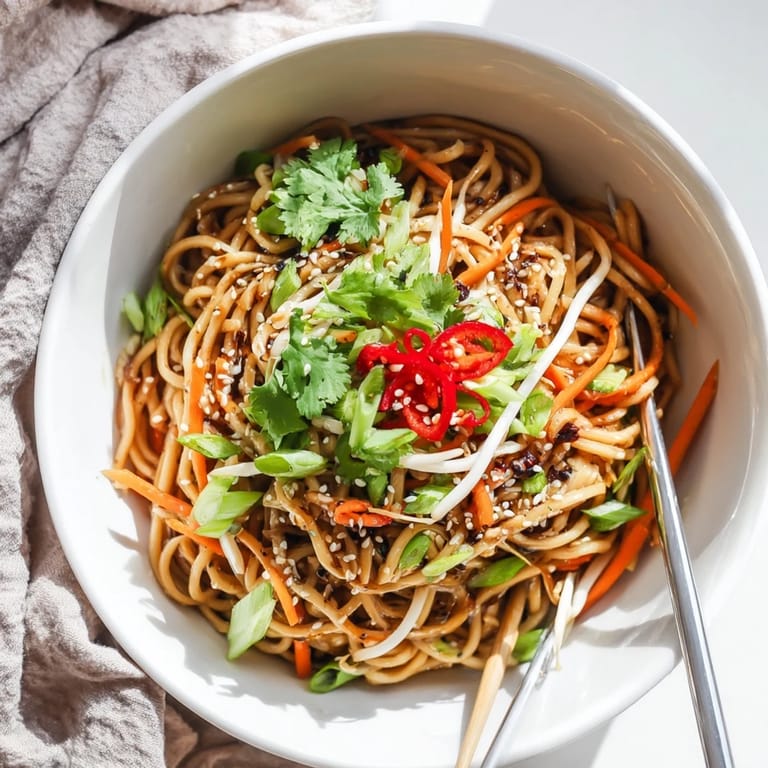
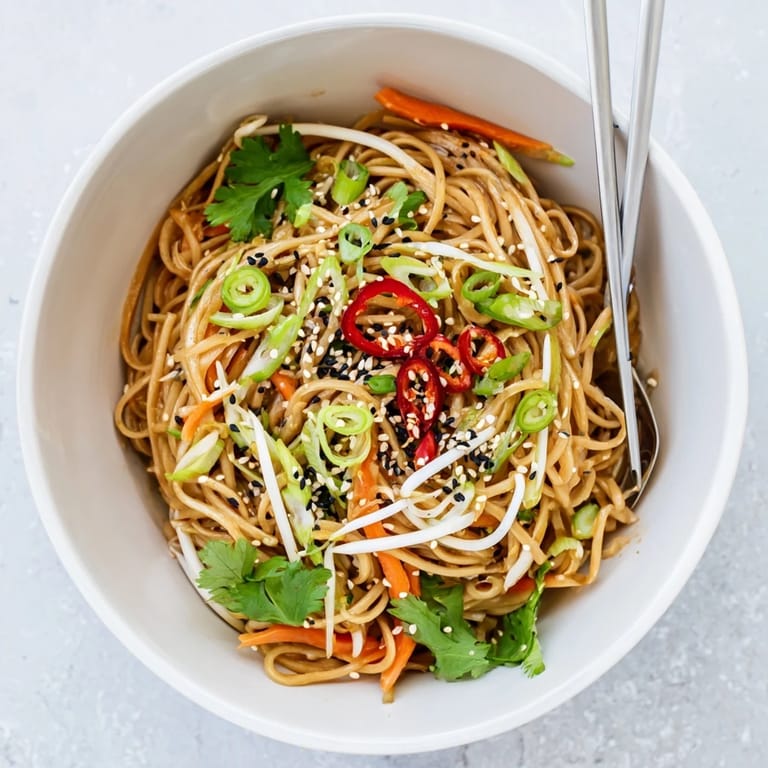
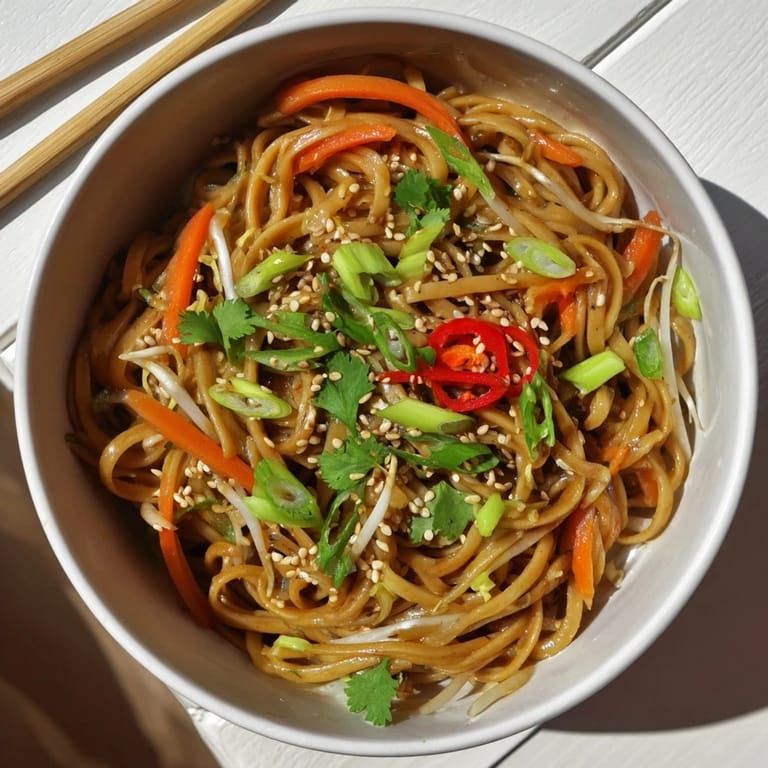
- Green onions, sesame seeds, chili, cilantro, bean sprouts, carrot: These are your texture and freshness insurance—pick what appeals to you, but aim for at least two or three to keep things interesting.
Tired of Takeout? 🥡
Get 10 meals you can make faster than delivery arrives. Seriously.
One email. No spam. Unsubscribe anytime.
Instructions
- Set your noodles to boil:
- Get water salted generously and bring it to a rolling boil while you prep everything else. Cooking noodles to al dente means they'll have a slight resistance when you bite—they'll soften a bit more when tossed in the hot sauce, so don't cook them all the way through.
- Melt butter and wake up the garlic:
- In a large skillet or wok over medium heat, let the butter melt fully, then add your minced garlic and listen for that immediate sizzle. You want the garlic fragrant and just beginning to turn golden at the edges, not brown and bitter—this takes about ninety seconds and the smell will tell you when it's right.
- Build the sauce:
- Pour in your soy sauce, dark soy sauce, oyster sauce, sesame oil, and sugar all at once, then stir constantly for about thirty seconds until everything combines into a glossy, unified sauce. You should see slight bubbles forming and smell the deep, complex aroma of soy and sesame mingling with that toasted butter.
- Toss the noodles to coat:
- Add your drained noodles straight into the skillet and use two utensils—tongs and a wooden spoon work best—to lift and turn the noodles continuously for about two minutes. Every strand should be glistening and coated, and if any sauce pools at the bottom, keep tossing until it distributes evenly.
- Finish with a final kiss of heat:
- Keep the pan moving for another minute or so until the noodles are hot all the way through and the sauce has clung tightly to everything. When you see a slight gloss and the noodles move as a unified, cohesive mass, you're done.
- Plate and crown with toppings:
- Divide the noodles into bowls while they're still warm, then scatter your chosen garnishes over the top—the heat slightly softens the cilantro and sesame seeds while the chili and raw vegetables add brightness and contrast.
 Save
Save My sister brought her new partner over for a casual dinner, and this bowl somehow became the conversation starter—turns out they'd both been craving something exactly like this but didn't know what to call it. That's when I understood that comfort food doesn't need a story; it just needs to taste like someone cared enough to get the details right.
Building Depth with Optional Layers
The dark soy sauce and oyster sauce aren't strictly necessary, but they're the difference between a good noodle bowl and one that makes you close your eyes for a second. Dark soy sauce adds color and a whisper of sweetness, while oyster sauce contributes an umami punch that feels almost meaty—I learned to use both sparingly because a little goes a long way. If you're cooking for someone vegan, mushroom oyster sauce delivers that same depth without any animal products, and honestly, I can't taste the difference.
The Protein Question
This bowl is vegetarian as written, but it's begging for something substantial if you're looking to make it a complete meal. Pan-fried tofu cubes absorb the sauce beautifully and add a creamy texture, sautéed shrimp bring a briny sweetness, and grilled chicken strips keep things lean and simple. I've made each version multiple times, and the sauce carries everything equally well—it's genuinely one of those recipes that's flexible enough to work with whatever protein you're in the mood for.
Customization and Adjustments
The quantities I've given you are a starting point, not gospel—some nights I want more sesame oil, other times I crave less soy sauce and a touch more sugar to balance things out. Taste as you go, especially with soy sauce, because different brands vary wildly in saltiness. Keep these quick adjustments in mind for next time you make it:
- Add garlic incrementally if you're uncertain; you can always add more, but you can't take it back.
- Keep a small spoon nearby and taste the sauce before the noodles go in—this moment is your last chance to adjust seasoning.
- If the sauce tastes too salty, a squeeze of lemon juice or splash of rice vinegar can brighten and balance everything instantly.
 Save
Save This is the kind of recipe that earns a permanent spot in your rotation because it's reliable, quick, and tastes like you know what you're doing even on nights when you're just winging it. Every time you make it, you'll discover some small thing—a different noodle shape, an extra vegetable, a slightly higher heat—and that's when cooking stops feeling like following instructions and starts feeling like playing.
Recipe Q&A Section
- → Can I use different types of noodles?
Yes, you can use lo mein, spaghetti, ramen, udon, or rice noodles. Just adjust cooking time according to package instructions.
- → How do I make this dish vegan?
Substitute plant-based butter for regular butter and use mushroom oyster sauce instead of traditional oyster sauce. The dish remains equally flavorful.
- → Can I add protein to this noodle bowl?
Absolutely. Pan-fried tofu, sautéed shrimp, grilled chicken, or soft-boiled eggs make excellent additions. Add them just before serving.
- → What can I substitute for oyster sauce?
Use mushroom oyster sauce for a vegan option, or substitute with hoisin sauce or additional soy sauce mixed with a pinch of sugar.
- → How do I store leftovers?
Store in an airtight container in the refrigerator for up to 3 days. Reheat in a skillet with a splash of water or in the microwave, stirring occasionally.
- → Can I make this gluten-free?
Yes, use gluten-free noodles and replace soy sauce with tamari. Check that all other sauces are certified gluten-free.