 Save
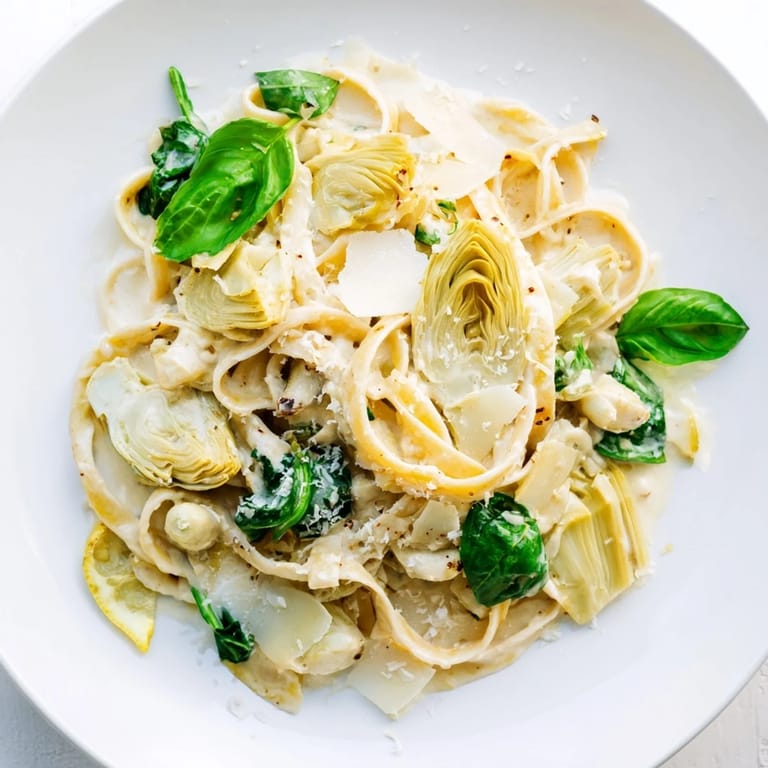
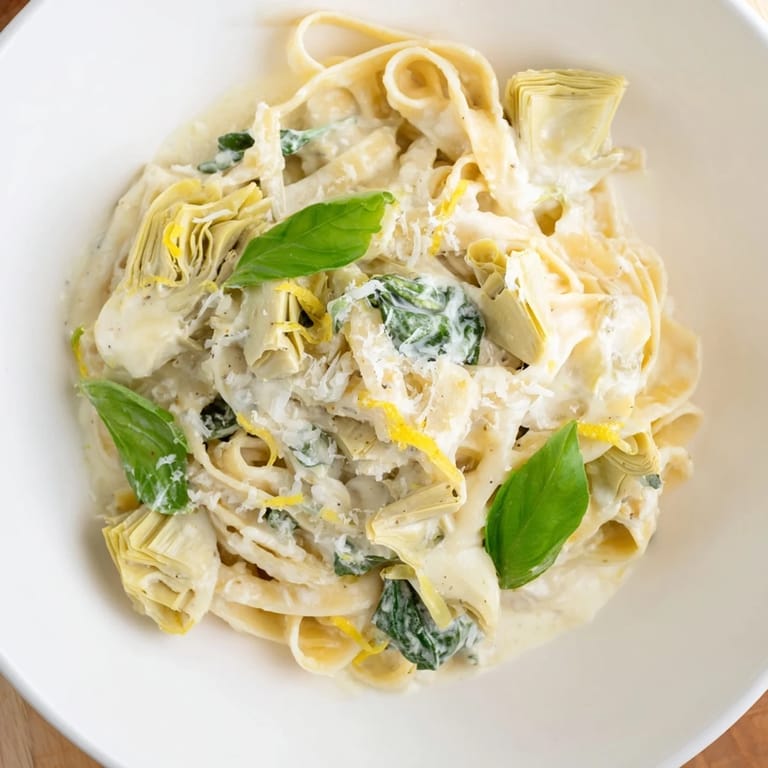
Save There's something almost magical about the moment lemon juice hits a hot pan of cream and artichokes—the way the kitchen suddenly smells bright and alive. I stumbled into this dish on a quiet Tuesday night when I had a can of artichokes and half a lemon languishing in my fridge, and I thought, why not build something around that? Twenty minutes later, I had pasta so silky and fragrant that my housemate actually paused mid-conversation to ask what I was making.
I made this for my sister after she complained about restaurant prices, and watching her twirl the pasta and close her eyes while tasting it was one of those small victories that makes cooking worthwhile. She asked for the recipe immediately, then admitted she'd probably just call me to make it again—which honestly felt like the highest compliment.
Ingredients
- 350g fettuccine or linguine: The wider, ribbon-like shape catches the cream sauce better than thinner pastas, and al dente is non-negotiable here—a minute too soft and you lose that pleasant resistance.
- 1 can artichoke hearts (400g), drained and quartered: Canned works perfectly and honestly saves you from wrestling with a fresh one; just make sure to drain them well so you're not adding extra liquid.
- 2 cups baby spinach (optional but recommended): It wilts down to almost nothing and adds a gentle earthiness that balances the brightness of the lemon.
- 2 cloves garlic, minced, and 1 small shallot, finely chopped: These two are your flavor foundation—the shallot brings subtle sweetness while garlic adds depth, and mincing them fine means they meld into the sauce rather than announcing themselves.
- Zest of 1 lemon and juice of 1 lemon: Use a microplane or zester for the zest so you get those little flavor bombs without the bitter white pith, and save the juice for the very end so it stays bright and fresh.
- 200ml heavy cream: This is what makes the sauce luxurious; don't swap it for half-and-half or things get too thin and watery.
- 60g grated Parmesan cheese: Freshly grated if you can manage it—the pre-shredded stuff has anti-caking agents that don't melt as smoothly.
- 2 tbsp unsalted butter: Butter and olive oil together create a richer sauté base than either one alone.
- 2 tbsp extra-virgin olive oil, salt, black pepper, and red pepper flakes: The salt and pepper are obvious, but red pepper flakes add a whisper of heat that wakes everything up.
- Fresh basil or parsley for garnish: This is the final touch that says you actually cared—tear or chop it just before serving.
Tired of Takeout? 🥡
Get 10 meals you can make faster than delivery arrives. Seriously.
One email. No spam. Unsubscribe anytime.
Instructions
- Start the pasta:
- Bring a large pot of salted water to a boil—the water should taste like the sea—and cook your pasta to al dente according to the package time. Before draining, fish out about half a cup of that starchy pasta water and set it aside; you'll use it to loosen the sauce later if needed.
- Build the aromatic base:
- While the pasta bubbles away, warm olive oil and butter in a large skillet over medium heat. Once the butter's foaming, add your shallot and garlic, letting them soften and turn golden for about two minutes—you want fragrant, not burnt.
- Toast the artichokes:
- Toss in the artichoke quarters and let them cook for a few minutes until they pick up some color on the edges. This brings out their nutty flavor and keeps them from tasting canned.
- Add brightness and greenery:
- Stir in the lemon zest and spinach if you're using it, and watch the spinach wilt into the warm oil—this takes barely a minute. The kitchen will smell incredible at this point.
- Create the cream sauce:
- Pour in the heavy cream and let it warm through, then reduce the heat and stir in the Parmesan, lemon juice, salt, pepper, and red pepper flakes. This is where everything comes together—taste it now and adjust seasoning to your preference.
- Marry pasta and sauce:
- Drain your pasta and toss it right into the skillet, using a little reserved pasta water if the sauce seems thick. The starch in the water helps everything cling together in a silky, luxurious way.
- Finish and serve:
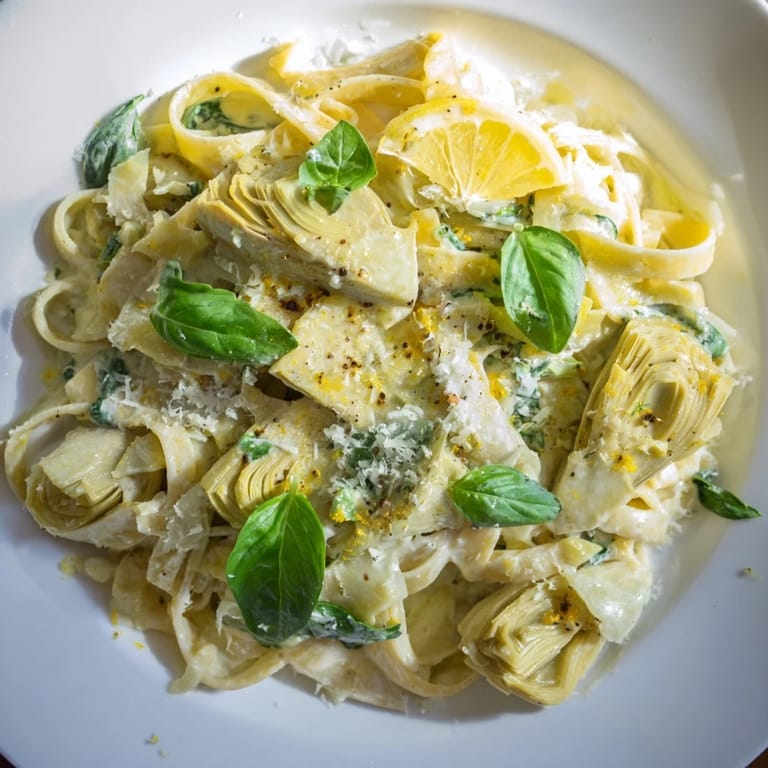
- Transfer to plates or a serving bowl immediately, shower with fresh basil or parsley and extra Parmesan, and eat while it's still steaming.
 Save
Save This became one of those dishes I make when I need to feel capable in the kitchen, when a really good meal doesn't need to take hours or require ingredients I can't pronounce. It's become my answer to 'what's for dinner tonight' more often than I expected.
Why This Works
Artichokes have this meaty, slightly mineral quality that pairs beautifully with acid and richness—the lemon cuts through the cream so you never feel weighed down, and the Parmesan adds a savory depth that keeps things interesting. It's the kind of balance that makes a simple dish feel polished.
Adapting This Recipe
This recipe is incredibly flexible depending on what you have or what you're in the mood for. I've added cooked shrimp and it became elegant enough for company, and I've thrown in roasted cherry tomatoes when they were in season and it was suddenly different but just as satisfying. Even leaving out the spinach and just doubling the artichokes works beautifully if that's what's in your pantry.
Making It Your Own
The formula here is simple: tender pasta, a silky sauce with one bright element and one rich element, and something to finish with. Once you understand that, you can swap almost anything—fresh peas instead of spinach, different herbs, even a splash of white wine if you want to get fancy. The beauty of this dish is that it's a template as much as it is a recipe.
- If you're vegan, coconut cream or cashew cream actually works remarkably well, and nutritional yeast does interesting things in place of Parmesan.
- For protein, both chicken and shrimp are natural choices, but even white beans would be wonderful stirred in at the end.
- The wine pairing suggested in the original notes is genuine—a crisp white wine really does elevate the whole experience if you're pouring glasses at the table.
 Save
Save This is one of those meals that somehow feels both comforting and refined, which honestly is all I ask from food these days. Make it tonight.
Recipe Q&A Section
- → What pasta type works best for this dish?
Fettuccine or linguine are ideal due to their ability to hold creamy sauces well, but any long pasta can be used.
- → Can I substitute fresh artichokes for canned ones?
Yes, fresh artichokes can be used but require parboiling and trimming, which takes more preparation time than canned hearts.
- → How do I achieve a silky sauce texture?
Reserving pasta water and adding it gradually to the sauce helps create a smooth, creamy consistency that clings to the pasta.
- → Is spinach necessary in the dish?
Spinach adds color and mild bitterness but is optional; the sauce is flavorful on its own without it.
- → What herbs complement this pasta?
Fresh basil or parsley provide an aromatic finish and a pop of color that enhances the dish's freshness.
- → Can this dish be made vegan?
Replacing heavy cream and Parmesan with plant-based alternatives allows for a creamy vegan version without sacrificing taste.