 Save
Save The first time I made falafel from scratch, I was standing in my kitchen at sunset, watching the oil shimmer in the pan and smelling that unmistakable warm spice blend that suddenly made everything feel Mediterranean. My neighbor had just brought me dried chickpeas from her garden, insisting I'd understand the difference once I tasted homemade falafel. She was right—that crispy outside, fluffy inside texture changed everything for me. Now whenever I roll these little golden spheres into warm pita, I think of how something so simple to eat turned out to be such a small ritual of care.
I remember making these for my friend Sarah on a random Tuesday when she was going through a rough patch, and watching her eyes light up when she bit into that first pocket completely shifted the mood in the room. She asked for the recipe that same day, and now it's become our standing lunch tradition whenever life gets messy. There's something about assembling these pockets together—everyone chooses their own toppings, and somehow we all end up laughing about something—that turned food into connection.
Ingredients
- Dried chickpeas (1½ cups, soaked overnight): Soaking matters more than you'd think—it helps them blend into a fluffy mixture instead of a dense paste, and the texture will be noticeably better than canned.
- Fresh onion (½ small, roughly chopped): Raw onion gives the falafel a sharp brightness that balances the warm spices and keeps them from tasting one-note.
- Garlic (3 cloves): Three cloves sounds shy until you taste it—they cook down into almost nothing but add depth that makes people guess what that mysterious flavor is.
- Fresh parsley and cilantro (½ cup each): These aren't optional flavoring; they're the backbone of the taste, so use the most fragrant bunch you can find.
- Ground cumin and coriander (1 tsp each): Toast them in a dry pan first if you have the time—it wakes them up and makes the whole dish taste more intentional.
- Cayenne or chili flakes (½ tsp, optional): I skip this sometimes and add hot sauce at the table instead, which gives people control over their own heat level.
- Baking powder (½ tsp): This tiny amount is the secret to that incredible fluffiness; don't skip it or substitute.
- All-purpose flour (2 tbsp): Just enough to help everything hold together without making them dense or gummy.
- Vegetable oil (for frying): Use something neutral like canola or peanut oil—avoid olive oil because its smoke point is too low and it'll burn before the falafel crisps.
- Tahini (½ cup): The creamy heart of the sauce, and honestly, quality matters here because it's tasted straight.
- Lemon juice (2 tbsp): Fresh lemon brightens tahini's earthiness and ties the whole pocket together.
- Pita bread (4, warmed): Warm them in a dry pan or oven just before serving so they're soft enough to stuff but structured enough not to tear.
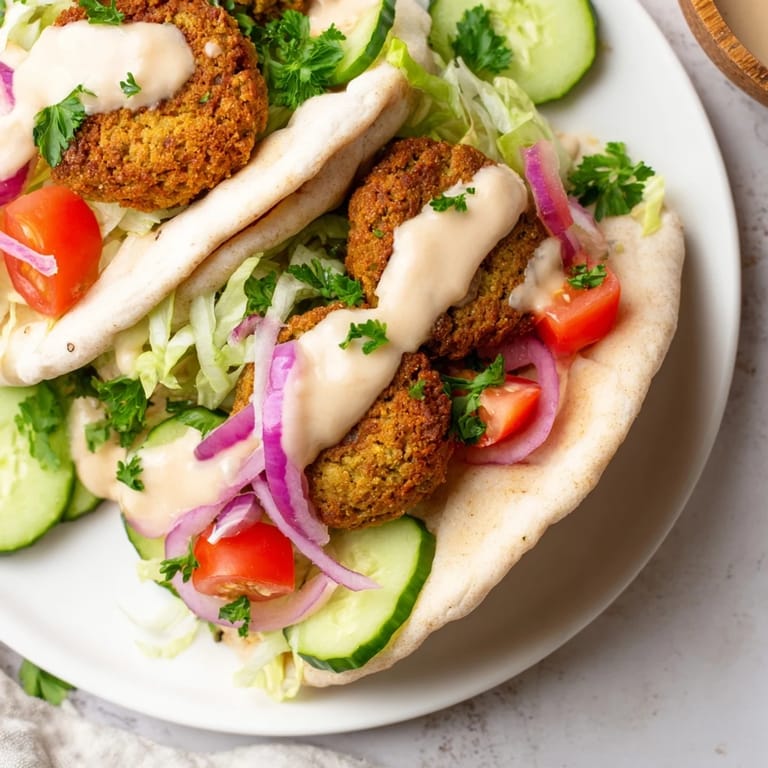
- Fresh vegetables (lettuce, tomatoes, cucumber, red onion): Cut everything right before assembly so it stays crisp and the textures feel alive against the warm falafel.
Tired of Takeout? 🥡
Get 10 meals you can make faster than delivery arrives. Seriously.
One email. No spam. Unsubscribe anytime.
Instructions
- Drain and dry your chickpeas:
- Pat them completely dry with a kitchen towel—any moisture hanging around will make the falafel dense instead of fluffy. This is the unsexy step that actually matters.
- Pulse everything into coarse mixture:
- Process the chickpeas with onion, garlic, herbs, and spices until it looks like wet sand with small pebbles; don't over-blend into a paste or you've lost the whole texture game. Stop and check often because this takes maybe 30 seconds of actual pulsing.
- Mix in the binders and chill:
- Fold in baking powder and flour gently, then refrigerate for at least 30 minutes so the mixture holds together better when you form it. Wet hands or a falafel scoop make this step easy and honestly kind of meditative.
- Heat oil to the right temperature:
- Use a thermometer if you have one—350°F is the sweet spot where they turn golden in 2–3 minutes without burning. If your oil isn't hot enough, they'll absorb too much oil and feel greasy.
- Form and fry in batches:
- Gently shape the mixture into 1½-inch balls with wet hands, then slide them into the hot oil a few at a time. Crowding the pan drops the temperature and causes them to stick together, so resist that urge to rush.
- Watch for that golden moment:
- They're done when they're deep golden brown on all sides, usually 2–3 minutes per side depending on size. Transfer to paper towels to drain while they're still warm.
- Whisk the tahini sauce smooth:
- Combine tahini, lemon juice, garlic, and salt, then add cold water gradually while whisking—it'll seize up at first, then suddenly become creamy and pourable. Taste and adjust lemon juice or salt to your preference.
- Assemble with intention:
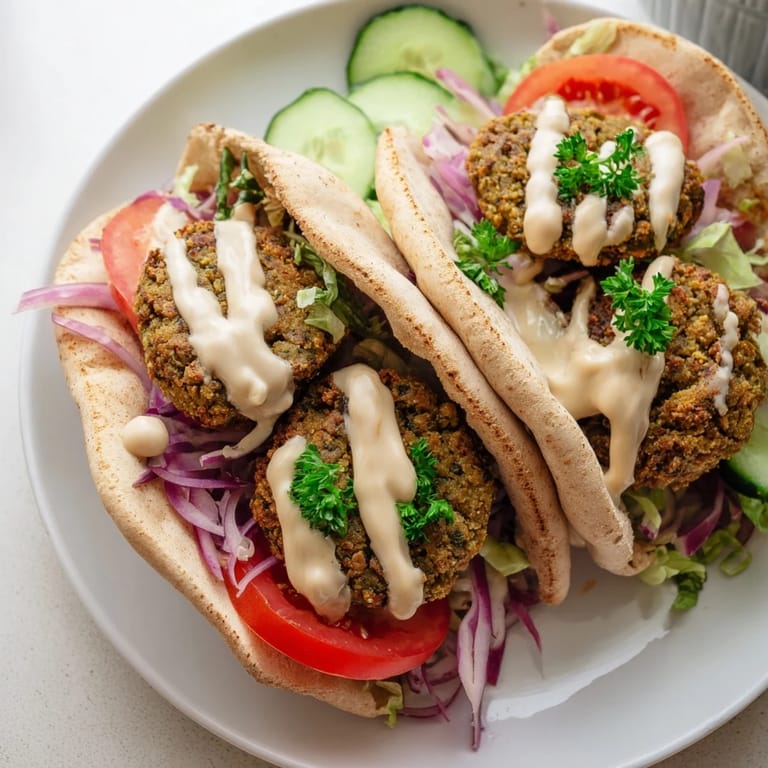
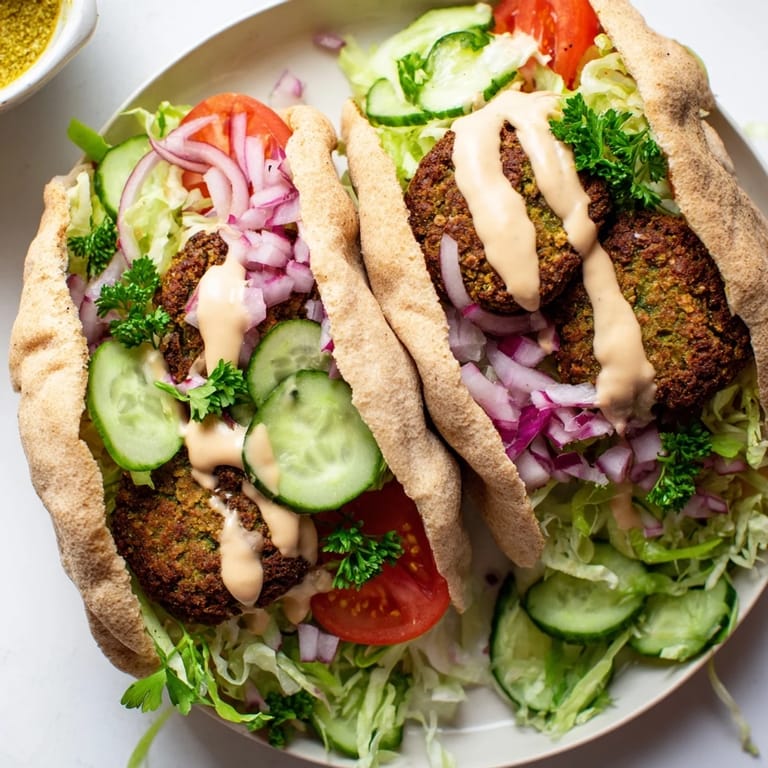
- Warm your pitas, cut them open, and layer in lettuce, tomatoes, cucumber, and red onion first so they hold the falafel in place. Top with 3–4 warm falafel pieces, drizzle generously with tahini sauce, and finish with fresh parsley.
 Save
Save There's a moment right after you pull the first batch of falafel from the oil when your kitchen smells like everything warm and spiced, and you realize you've made something that tastes like a memory even though you just invented it. That's when falafel stopped being a recipe for me and became a reason to gather people around a table.
Why Soaking Chickpeas Makes All the Difference
I learned this the hard way after trying to make falafel with canned chickpeas and watching them collapse into the oil like tiny sad pebbles. The difference is moisture—dried chickpeas that have been soaked release starches when you process them that help bind everything together naturally, while canned chickpeas are already soft and release too much liquid. Once I switched to soaking overnight, everything changed, and I suddenly understood why my Egyptian neighbor insisted on doing it the old-fashioned way.
The Tahini Sauce Secret
The first time my tahini sauce broke into a grainy mess, I almost threw it out until I remembered watching someone whisk it back to life with patience and cold water. Now I know that tahini seizes when it's straight from the jar because of the oil content, and the only way through is slow addition of water while whisking constantly. It feels counterintuitive—adding water to make it creamy—but that's exactly what's happening, and the moment it turns silky is worth every stroke of the whisk.
Serving and Storage Wisdom
These are meant to be eaten warm, standing in your kitchen or sitting around a table with people you like, because that's when the pita is still soft and the falafel still has that crispy-outside warmth. If you have leftovers, store the falafel and sauce separately in airtight containers for up to three days, and warm the falafel gently in a 350°F oven for about 5 minutes before serving.
- Assemble the pockets right before eating so the vegetables stay crisp and the pita doesn't get soggy.
- Set out extra tahini sauce on the side because people always want more, and it's better to have it available than to ration it.
- Offer hot sauce or extra lemon wedges so everyone can adjust the flavors to their own taste and feel like they're making something their own.
 Save
Save Making falafel at home is one of those small kitchen victories that feels bigger than it should, and I hope these pockets become your go-to answer when you want something that tastes like care, effort, and honestly just really good food.
Recipe Q&A Section
- → What type of chickpeas are best for falafel?
Dried chickpeas soaked overnight provide the ideal texture and flavor for falafel, ensuring they hold together well during cooking.
- → Can falafel be baked instead of fried?
Yes, baking at 400°F (200°C) for 20–25 minutes, turning halfway, creates a lighter alternative with a crispy exterior.
- → How is tahini sauce made smooth and pourable?
Gradually whisk cold water into tahini, lemon juice, garlic, and salt until it reaches a smooth, pourable consistency.
- → What vegetables complement falafel in pita pockets?
Fresh lettuce, diced tomatoes, sliced cucumber, and red onion add crispness and fresh flavors to the falafel pita.
- → Are there any common allergens in this dish?
This dish contains sesame from tahini and wheat from pita and flour; gluten-free alternatives can be used if needed.