 Save
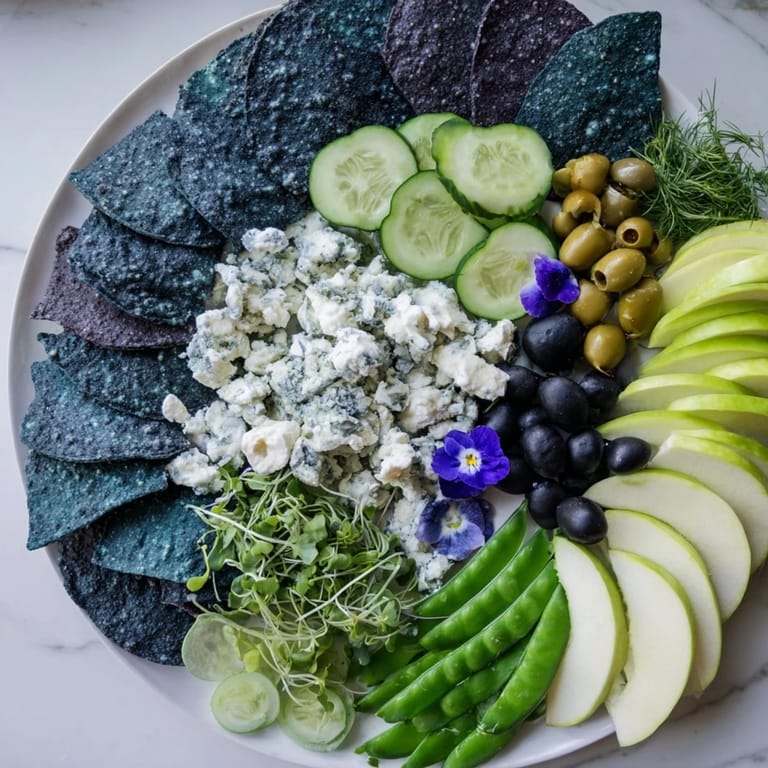
Save I'll never forget the first time I saw a seafood platter arranged like an ocean wave at a gallery opening in my friend's coastal town. It was so stunning that guests stopped mid-conversation just to admire it before eating. That moment inspired me to create this vegetarian version—a Deep Sea Ocean Wave that celebrates the beauty of blue and green ingredients arranged in flowing curves. Now whenever I make it, I'm transported back to that magical evening where food became art.
I learned the power of this platter when I brought it to a dinner party where conversation had grown quiet. The moment I set it down, everyone leaned in. One guest asked if it was too beautiful to eat, and I laughed saying that was the whole point—feed both the eyes and the stomach. Watching people break through those blue chips and discover the creamy cheeses beneath reminded me that food is about creating moments, not just filling plates.
Ingredients
- Blue cheese, crumbled (100 g): This is your ocean's depth—that rich, tangy anchor that makes the whole platter feel intentional. I learned to crumble it just before assembly so it stays vibrant and doesn't oxidize into a duller shade.
- Creamy goat cheese, cut into small rounds (100 g): The softer counterpoint to blue cheese, goat cheese rounds are surprisingly easy to form if you chill the log first and use a warm knife—they become little clouds of creaminess.
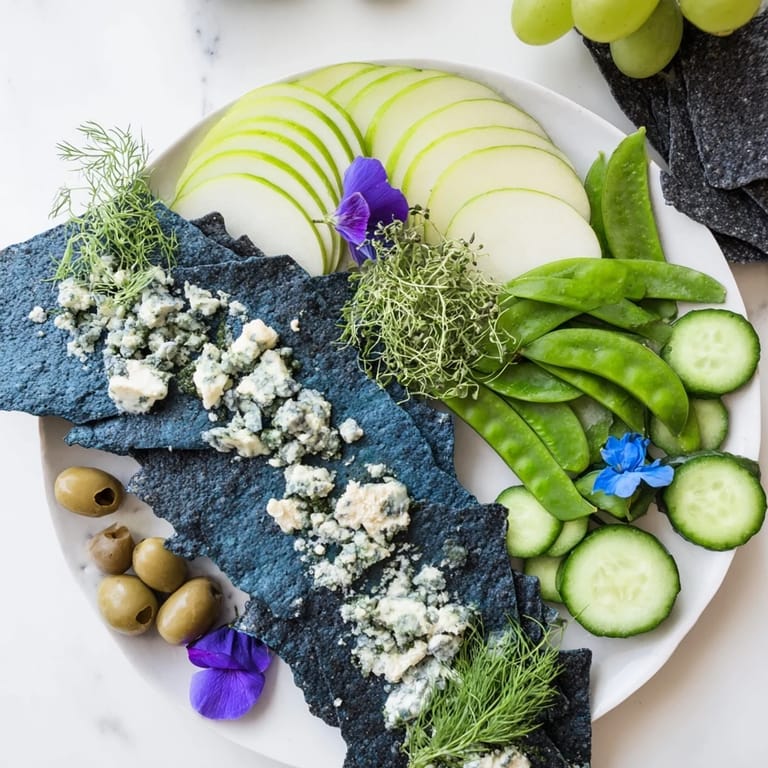
- Blue corn tortilla chips (100 g): These form the wave's dramatic crest. The deeper blue-purple color makes the arrangement pop way more than regular tortilla chips ever could.
- Seaweed rice crackers (50 g): They taste like the ocean and add authentic texture—their delicate shape lets you layer them without competing for visual attention.
- Green olives, pitted (12): Choose larger ones if you can find them; they become little jewels in the composition and require less fussing around.
- Cucumber, thinly sliced (1 small): Slice these just before serving so they stay crisp and don't weep water onto your other ingredients.
- Green bell pepper rings (1 pepper, sliced): The waxy surface of bell peppers keeps them looking glossy and fresh longer than softer vegetables.
- Sugar snap peas (1 handful): These stay satisfyingly crisp all evening and their natural curve mirrors the wave motion beautifully.
- Green apple, thinly sliced (1 small): Toss these with a squeeze of lemon juice to prevent browning—it's a small step that protects your masterpiece.
- Green grapes (1/2 cup): These little spheres nestle into the curves and add sweetness that balances the tanginess of the cheeses.
- Fresh dill sprigs: More than garnish, dill smells like the sea and ties the whole theme together—don't skip this.
- Microgreens and edible blue or purple flowers (optional): These are the final flourish that separates a nice platter from one that looks like it belongs in a magazine.
Tired of Takeout? 🥡
Get 10 meals you can make faster than delivery arrives. Seriously.
One email. No spam. Unsubscribe anytime.
Instructions
- Envision Your Wave:
- Before you arrange anything, imagine the wave crashing across your platter. Which direction should it flow? I usually create mine moving left to right, but let your platter's shape guide you. This mental picture prevents second-guessing yourself mid-arrangement.
- Create the Wave's Crest:
- Lay down your blue corn chips in a bold, sweeping curve—this is the dramatic peak of your ocean wave. Don't worry about perfection; slight irregularity makes it feel more natural and organic. Press them gently so they stay in place but don't crush them.
- Establish Depth with Blue Cheese:
- Scatter your blue cheese crumbles along and just behind the chip line. Watch how the blue deepens as you layer it—this is where the visual magic happens. The crumbles catch the light differently than the chips, creating dimension.
- Add Texture with Goat Cheese and Crackers:
- Arrange goat cheese rounds and seaweed crackers in gentle arcs that mirror your main wave. Think of these as the wave's movement continuing—each element following the curve without crowding.
- Fill the Curves Intentionally:
- Now comes the part where it gets fun: nestle green olives, cucumber slices, and bell pepper rings into the spaces between your major elements. Let them follow the wave pattern rather than filling randomly. I like to create little pockets of color rather than one uniform band.
- Scatter Fresh Elements:
- Tuck sugar snap peas, apple slices, and grapes into your arrangement. These lighter, fresher elements should feel like they're floating on the wave rather than anchoring it. Stand back occasionally to see how the colors balance.
- Finish with Flourish:
- Finish with fresh dill sprigs tucked throughout, and scatter microgreens and edible flowers if you're using them. These last touches transform a nice platter into something that makes people stop and stare. I usually add these just 15 minutes before guests arrive so they stay perky and vibrant.
- Serve with Purpose:
- Place small tongs or cocktail picks nearby—your guests will appreciate the invitation to dig in without hesitation. Serve immediately so everything stays at peak crispness.
 Save
Save The real magic happened at a birthday celebration when a usually quiet guest asked if they could take a photo before eating. Suddenly everyone was capturing their own shots, sharing to social media, and the platter became more than appetizers—it became the centerpiece of the whole party. That's when I realized this dish isn't just about feeding people; it's about creating a moment they'll remember and share.
Arranging with Color Theory
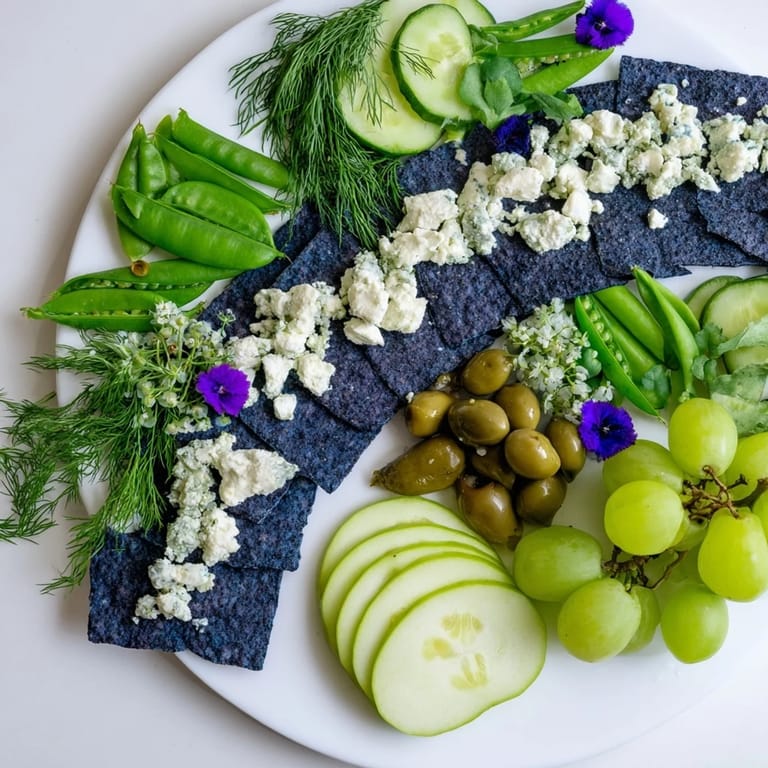
Here's something I discovered through trial and error: blue and green can sometimes feel too cool together if you're not intentional. The secret is breaking up the blues and greens with warm accent colors. The cream of the goat cheese and the pale green of the grapes provide crucial breathing room so your palette feels rich rather than flat. Think of your composition in thirds—blues dominate one area, greens flow through another, and the lighter neutrals tie it all together. This approach transformed my arrangements from looking nice to looking absolutely intentional.
Cheese Selection and Pairing
The combination of blue and goat cheese is surprisingly sophisticated despite being super simple. Blue cheese brings boldness and minerality, while goat cheese offers a delicate creaminess that mellows the whole experience. I used to think these cheeses would clash, but they're actually perfect partners—their contrasting textures and flavors create complexity without requiring any fancy techniques. If you find yourself working with blue cheese that tastes overly sharp, look for ones labeled milder or aged in caves—the aging process sometimes softens the intensity beautifully.
Making This Platter Your Own
While the blue and green theme is stunning, don't feel locked into it. I've made variations with purple cabbage and blueberries, or with striations of white cheese through everything for a different ocean effect. The wave concept is flexible enough to accommodate your pantry and your creativity. The principles stay the same—choose your anchor colors, build texture with varied ingredients, and let composition do the heavy lifting instead of relying on complicated techniques.
- For a vegan version, try cashew cheese or store-bought vegan cheese rounds—they arranged beautifully and no one noticed the difference
- Add protein by incorporating chickpea-based cheese or even roasted chickpeas tucked into the arrangement
- If you're serving this with wine, the platter works gorgeously alongside light, crisp whites like Sauvignon Blanc or even sparkling water with lime
 Save
Save This platter taught me that sometimes the simplest recipes create the biggest impact. There's real beauty in raw, fresh ingredients arranged with intention—no cooking required, just presence and care. Bring this to your next gathering and watch what happens.