 Save
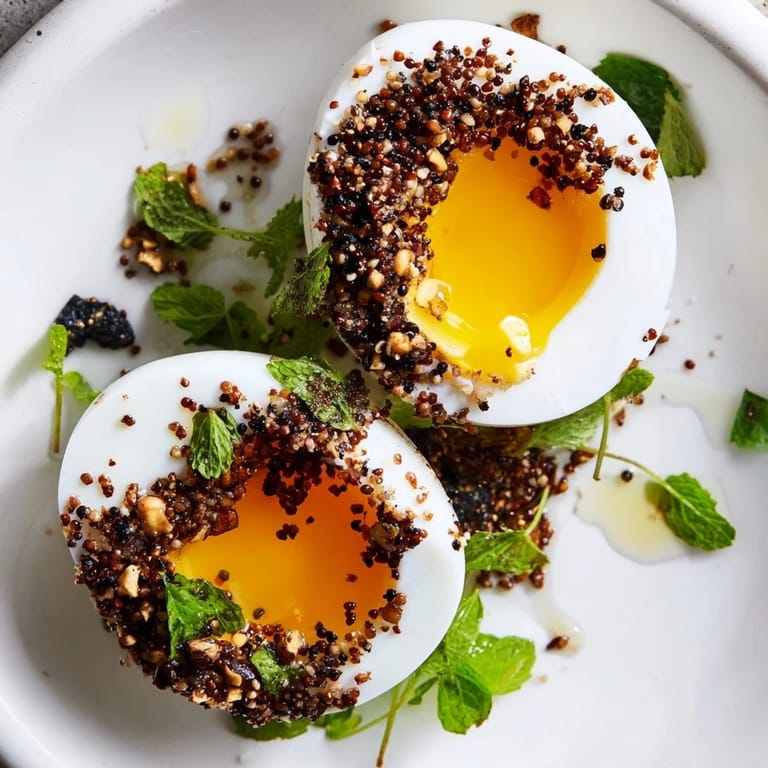
Save My neighbor from Cairo once brought over a small jar of dukkah and cracked two boiled eggs onto a white plate, drizzled them with olive oil, and scattered the spice mix across the top with the confidence of someone who'd done this a thousand times. I watched her take the first bite and realized I'd been eating eggs all wrong my whole life. That moment sparked an obsession that's now become my favorite way to start any weekend, and honestly, the simplest dishes often teach us the most about flavor.
I made this for my sister one Sunday when she was visiting, and she sat at the kitchen counter dunking pieces of warm pita into the broken yolks mixed with dukkah and oil. She didn't say much, just kept reaching for more bread, and that's when I knew this dish had real power—the kind that makes people forget to talk and just eat.
Ingredients
- Eggs: Use large eggs, and don't skip the ice bath; it stops the cooking instantly and gives you that perfect jammy yolk every time.
- Dukkah Spice Mix: Store-bought is fine if you're rushed, but homemade tastes alive in a way that's hard to describe until you try it.
- Fresh Parsley: The mild green that keeps everything from getting too heavy; chop it fine so it scatters like confetti.
- Fresh Cilantro: Brings a citrusy edge that wakes up your palate.
- Fresh Mint: A whisper of coolness that balances the warmth of the spices.
- Extra Virgin Olive Oil: This isn't a supporting player; use something you actually like to taste, because you will taste it.
- Sea Salt and Black Pepper: Finish seasoning at the table so everyone can adjust to their taste.
Tired of Takeout? 🥡
Get 10 meals you can make faster than delivery arrives. Seriously.
One email. No spam. Unsubscribe anytime.
Instructions
- Boil the Eggs:
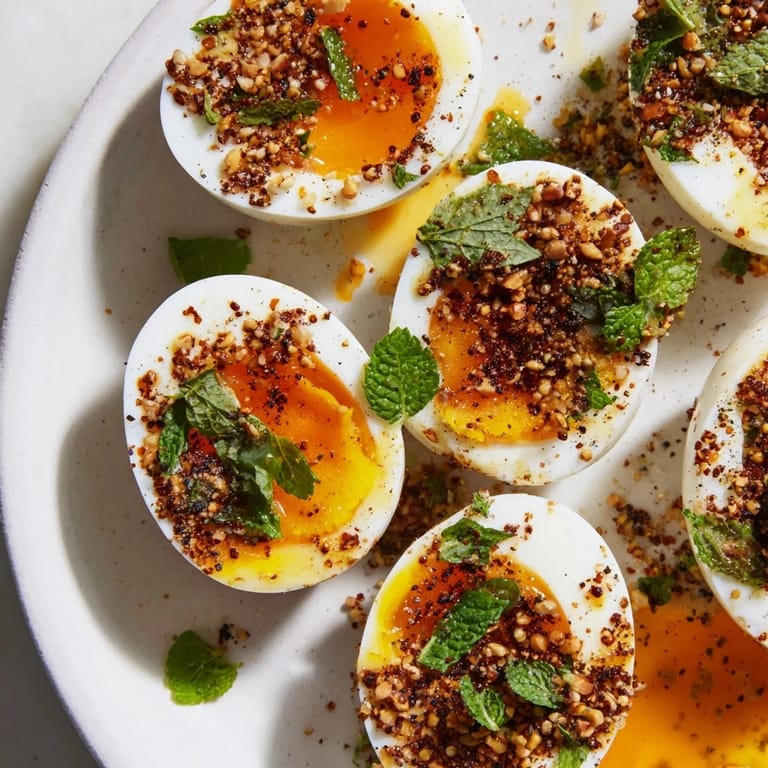
- Bring a medium pot of water to a gentle boil and carefully lower the eggs in with a spoon. Simmer for 7 minutes if you love a soft, runny yolk that coats everything, or 9 minutes if you prefer them more set but still creamy in the center.
- Shock and Cool:
- Use a slotted spoon to transfer the hot eggs directly into a bowl of ice water. Let them sit for 2 to 3 minutes; this stops the cooking and makes the shells peel away almost by themselves.
- Peel with Care:
- Gently crack and roll each egg against the counter, then peel under cool running water if the shell is being stubborn. The water helps separate the membrane from the white.
- Slice and Arrange:
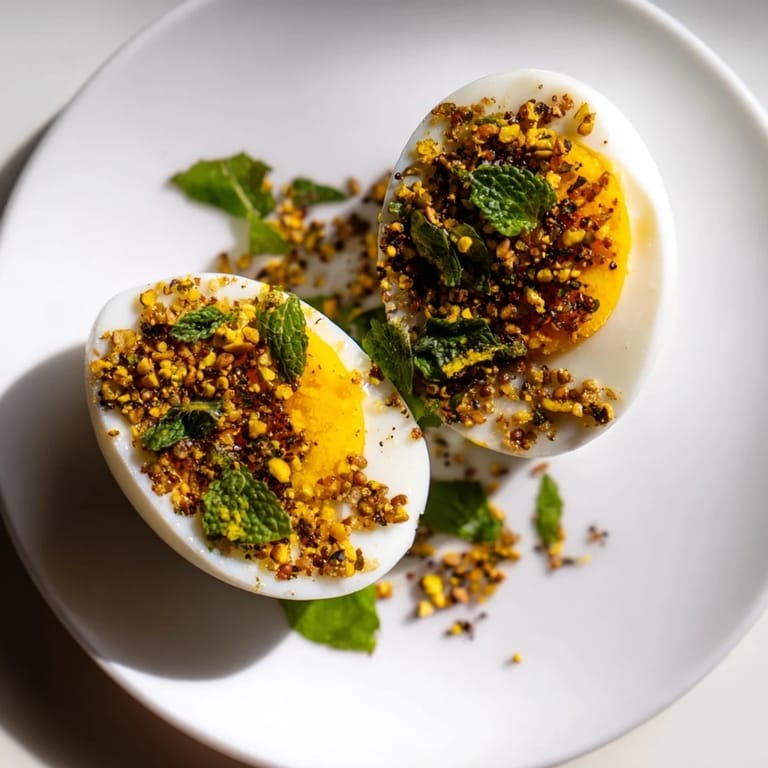
- Cut each egg in half lengthwise and arrange them on a serving platter with the yolk side up, like little edible flowers waiting for their final touches.
- Dress the Eggs:
- Drizzle everything generously with olive oil, then sprinkle the dukkah over the top with a confident hand. The oil helps the spice stick and makes every bite cohesive.
- Add the Herbs and Season:
- Scatter all three fresh herbs across the platter, then finish with a pinch of sea salt and freshly ground pepper. Taste one as you go so you know when it's right.
- Serve Right Away:
- Don't let them sit long or the yolk will set and you'll lose that luxurious moment. Serve with crusty bread or warm pita if you have it.
 Save
Save There's something about the quiet of a weekday morning when you crack into a soft yolk and watch it pool around the dukkah, and suddenly breakfast feels luxurious. That's the real magic of this dish.
Why Dukkah Changes Everything
Dukkah is an Egyptian spice blend built on toasted nuts, seeds, and warm spices that taste nothing like anything premixed you've probably bought before. The hazelnuts give it body, the sesame adds a subtle nuttiness, and the toasted coriander and cumin bring a warmth that makes eggs taste like you've unlocked a secret flavor they were always supposed to have. When you sprinkle it over soft-boiled eggs and fresh herbs, you're not just seasoning breakfast; you're building a whole experience.
Making Your Own Dukkah
If you want to go the homemade route, it takes maybe 10 minutes and changes how you think about this dish. Toast the nuts and seeds in a dry pan until they smell incredible and turn just a shade darker, then let them cool completely before pulsing in a food processor. Don't over-process; you want texture and crunch, not a powder. Once you've made it once, you'll find yourself sprinkling it on everything from yogurt to roasted vegetables.
Variations and Kitchen Moments
I've made these eggs in every way imaginable—soft-boiled, hard-boiled, even poached when I was feeling brave—and they all work beautifully with the dukkah and herbs. The beauty of this recipe is that it's flexible enough to match your mood and what you have on hand, which is why I keep coming back to it week after week. Some mornings I add a squeeze of fresh lemon juice right before eating; other times I serve them with warm pita and just let people build their own bites.
- Poached eggs work wonderfully if you want something extra elegant for brunch guests.
- A drizzle of tahini sauce on the side adds creaminess and makes the whole thing even more decadent.
- Don't skip the lemon juice if you have a fresh lemon; it brightens everything up.
 Save
Save This recipe taught me that the best dishes don't need to be complicated; they just need good ingredients and attention to small details. Make this once and you'll understand why my neighbor guarded her dukkah jar like treasure.
Recipe Q&A Section
- → What is dukkah and how does it enhance the dish?
Dukkah is a traditional Egyptian mix of toasted nuts, seeds, and spices that adds a crunchy texture and nutty, aromatic flavor, elevating the eggs with its unique taste.
- → How should the eggs be cooked for best results?
Simmer eggs gently for about 7 minutes for jammy yolks or 9 minutes for firmer yolks, then cool in ice water before peeling and slicing.
- → Can I use homemade dukkah for this dish?
Yes, homemade dukkah made from toasted hazelnuts, sesame seeds, coriander, cumin, black peppercorns, and fennel seeds offers a fresh and flavorful alternative.
- → What herbs complement the dukkah-spiced eggs best?
Fresh parsley, cilantro, and mint finely chopped add brightness and freshness that balance the warm, nutty spices.
- → Are there any suggested serving options?
Serve the eggs drizzled with olive oil and sprinkle with dukkah and herbs alongside crusty bread or warm pita for a complete feeding experience.