 Save
Save The first time I made fattoush, I was standing in a friend's kitchen on a warm afternoon, watching her arrange vegetables with the kind of casual precision that comes from cooking the same dish a hundred times. She handed me a pita chip still warm from the oven, and I bit into it expecting crunch but finding something more—a subtle earthiness from the sumac that made everything click. That one bite changed how I thought about salads entirely.
I made this for a dinner party once and watched my grandmother—who usually picks at salads—eat three helpings. She kept asking what made the dressing taste "like sunshine," which is probably the best compliment I've ever received for anything I've cooked. That moment taught me that good food isn't about impressing people with technique; it's about creating something that makes them want to keep tasting.
Ingredients
- Mixed greens (4 cups): Use whatever combination feels right—romaine holds up beautifully to dressing, arugula adds peppery depth, and spinach makes it slightly more substantial without becoming heavy.
- Cherry tomatoes (1 cup, halved): Their sweetness balances the sharp sumac, and halving them lets the dressing coat each piece instead of sliding off whole ones.
- Cucumber (1 diced): Choose one that feels firm and crisp, not the pale watery kind that waters down everything it touches.
- Bell pepper (1, diced): Red and yellow peppers taste sweeter than green, which feels right here alongside the tangy dressing.
- Radishes (4, thinly sliced): They provide a sharp, peppery bite that prevents the salad from feeling too soft or predictable.
- Green onions (3, sliced): Both the white and green parts matter—use them generously for a onion-forward freshness.
- Fresh parsley and mint (1/4 cup each, chopped): These herbs are what transform a vegetable collection into something that tastes alive and intentional.
- Pita breads (2): Look for fresh pita if you can find it; stale pita chips never quite reach that perfect crispy-not-burnt stage.
- Olive oil (good quality): Use your best olive oil in the dressing where its flavor shines, and regular oil for the chips where heat matters more than nuance.
- Sumac (2 teaspoons total): This is the secret ingredient that makes people ask what you did differently—it's tart without tasting acidic, warm without being spicy.
- Fresh lemon juice (2 tbsp): Never use bottled; the brightness of fresh lemon is what makes the whole dressing sing.
- Red wine vinegar (1 tbsp): It adds complexity and prevents the dressing from tasting one-dimensional.
Tired of Takeout? 🥡
Get 10 meals you can make faster than delivery arrives. Seriously.
One email. No spam. Unsubscribe anytime.
Instructions
- Heat your oven and prep the pita:
- Set the oven to 375°F and cut pita bread into bite-sized pieces—aim for roughly the size of a crouton so they toast evenly. This usually takes two minutes of focused cutting.
- Toast the pita chips until golden:
- Toss the pita pieces with olive oil, sea salt, and sumac, then spread them on a baking sheet in a single layer. Bake for 8 to 10 minutes, stirring halfway through, until they smell toasted and look golden around the edges. They'll continue to crisp as they cool, so pull them out when they look just barely done.
- Make the dressing while chips cool:
- In a small bowl, whisk together your olive oil, fresh lemon juice, red wine vinegar, ground sumac, minced garlic, salt, and pepper. Taste it—it should make your mouth water a little, with bright acidity and a subtle earthiness from the sumac.
- Assemble your vegetables:
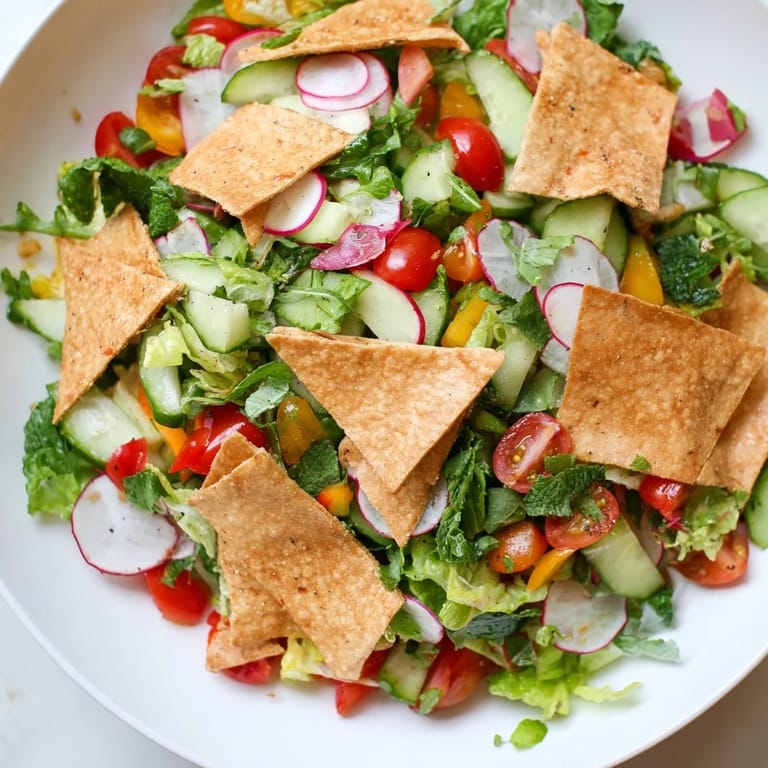
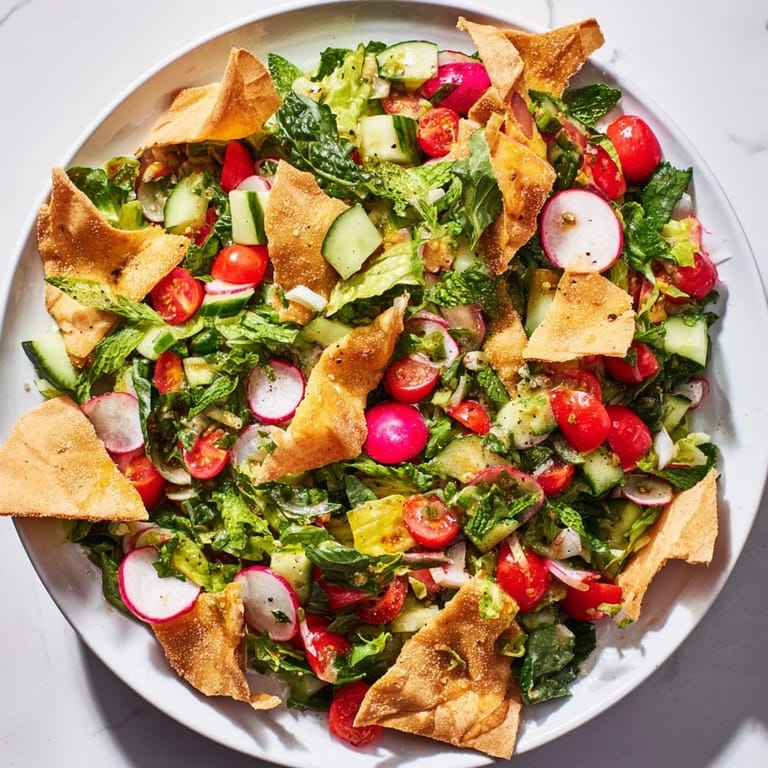
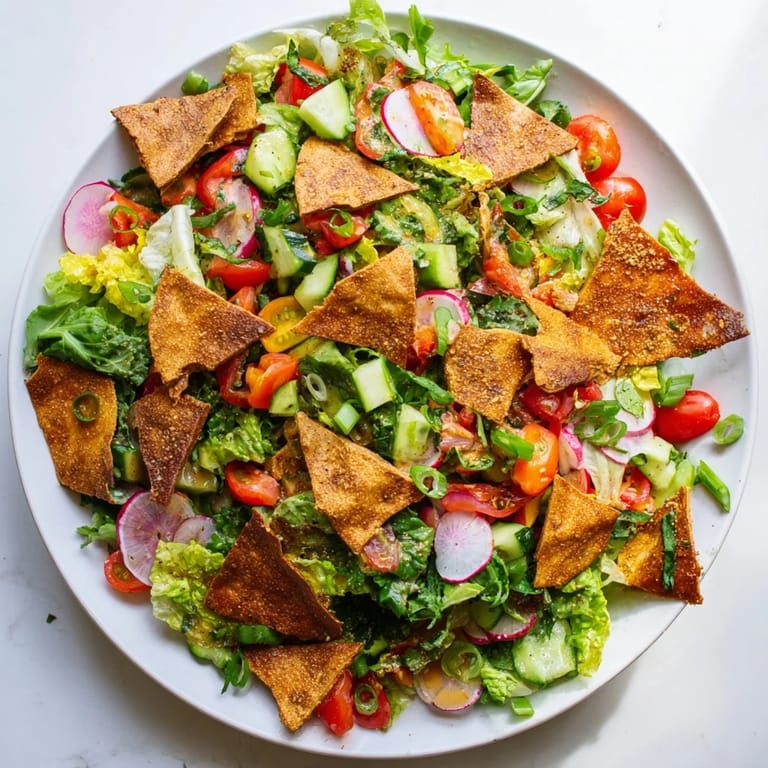
- In a large bowl, combine all your greens, tomatoes, cucumber, bell pepper, radishes, green onions, parsley, and mint. This is where you can take a breath and appreciate how colorful everything looks before you dress it.
- Dress the salad gently:
- Pour the dressing over the vegetables and toss with your hands or salad tongs, moving slowly enough that you don't bruise the delicate greens. Everything should glisten, not swim.
- Top with chips at the last moment:
- Scatter the cooled pita chips over the top just before serving, so they stay crispy and don't soften into the dressing. This is non-negotiable if you want that crucial textural contrast.
 Save
Save I've learned that the best meals often happen when someone lingers at the table, fork in hand, just eating and talking. This salad does that—it's substantial enough to feel like real food, but light enough that you never feel too full to keep going. It's become the thing I make when I want people to feel welcome and cared for without making a fuss.
Why Sumac Changes Everything
Sumac is the ingredient that makes strangers ask for recipes. It has a tartness that feels almost citrusy, a warmth that almost feels spicy, and a kind of ancient earthiness that makes people taste something they can't quite identify. Once you use sumac in a dressing like this, you start seeing it everywhere—in Middle Eastern kitchens, in Persian stews, in spice blends that have been passed down for centuries. It's worth seeking out at Middle Eastern markets or online, because store-bought versions sometimes substitute it with hibiscus, which tastes sharp in a less pleasant way.
Timing and Temperature
There's a specific window where this salad is at its absolute best—after the pita chips have cooled enough to not wilt everything but still warm enough that they smell irresistible, and before the greens have had time to absorb too much dressing. This is why I always tell people to make the chips first, then the dressing, then finally assemble everything. It's a rhythm that works.
Variations and Flexibility
Once you understand the basic structure of this salad, you can move things around based on what's in your kitchen or what you're craving. In summer, I add more herbs and sometimes crumbled feta if I have it on hand. In winter, when tomatoes taste like sadness, I've made it with roasted vegetables and it was still wonderful. The core formula—crisp greens, bright dressing, textural crunch—stays the same.
- Try adding pomegranate seeds for a jewel-like pop of color and tartness in the cooler months.
- Crumbled feta or labneh makes it feel richer and more substantial if you're serving it as a main course.
- Grilled chicken or chickpeas turn this into a complete meal without changing the fundamental character of the dish.
 Save
Save This salad reminds me that sometimes the most satisfying food is the simplest—vegetables at their peak, dressed with intention, and finished with something that adds texture and surprise. It's a recipe I keep making because it never gets old.
Recipe Q&A Section
- → How do I make the pita chips crunchy?
Toss pita pieces with olive oil, sea salt, and sumac, then bake at 375°F (190°C) for 8–10 minutes, turning once until golden and crispy.
- → Can I substitute the greens in this salad?
Yes, you can use romaine, arugula, spinach, or a mix to suit your taste or availability.
- → What gives the salad its tangy flavor?
The sumac in both the pita chips and dressing, combined with lemon juice and red wine vinegar, provides the refreshing tang.
- → Is this dish suitable for a dairy-free diet?
Yes, as prepared it contains no dairy ingredients, making it suitable for dairy-free preferences.
- → How can I make this gluten-free?
Use gluten-free pita or omit the pita chips altogether to keep the salad gluten-free.
- → What herbs are included for freshness?
Fresh parsley and mint are chopped and mixed into the salad for a bright, fresh flavor.