 Save
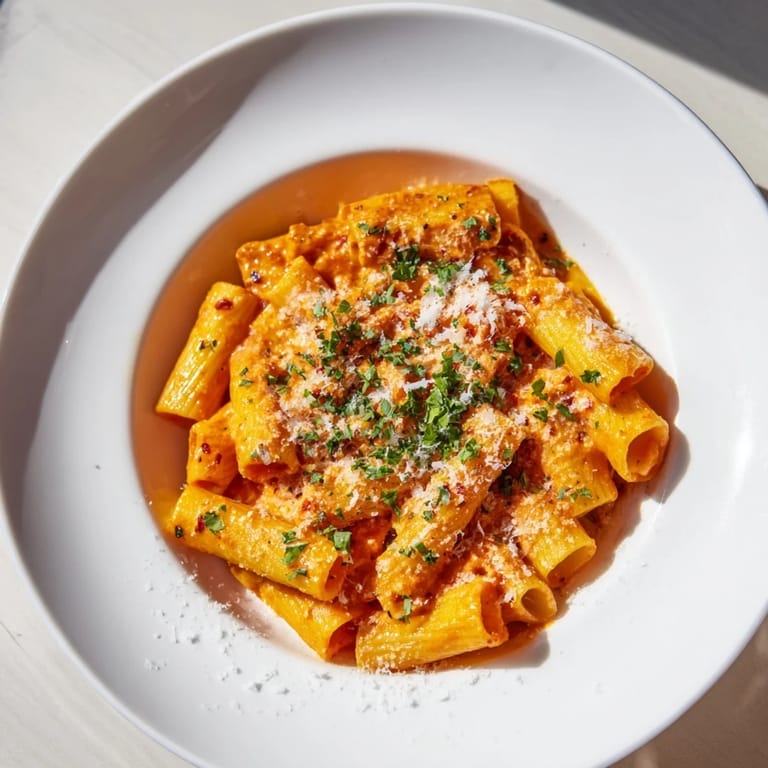
Save The first time I made this dish, I wasn't chasing virality—I was chasing comfort on a Tuesday night when nothing in my pantry felt quite right. I'd seen the buzz about this creamy, spicy rigatoni everywhere, but what hooked me was how simple it seemed: tomato, cream, vodka, heat, done. Twenty minutes later, my kitchen smelled like a Roman trattooria mixed with the kind of warmth you want on your tongue, and I understood why everyone was talking about it. This isn't fussy cooking; it's the kind of dish that makes you feel like you've unlocked a secret.
I remember feeding this to my partner on a random Thursday, and he kept twirling his fork like he was in some movie montage, not sitting at our kitchen counter in sweats. He asked where I'd learned to cook Italian food, and I had to laugh because I'd found it on my phone fifteen minutes before he came home. That's when it clicked: sometimes the best meals aren't about skill—they're about choosing ingredients that know what to do with each other.
Ingredients
- Rigatoni (400 g): The ridges catch the sauce like little hands, and that matters more than you'd think—smaller tubes let it slip right through.
- Olive oil (2 tbsp): Use one you actually like tasting, because it's speaking here, not hiding.
- Shallot (1 small, finely chopped): Milder than onion, more graceful—mince it small so it melts into sweetness as it cooks.
- Garlic (2 cloves, minced): Don't skip the mincing; chopped chunks turn bitter and bossy.
- Red chili flakes (1 tsp, adjustable): Start conservative—you can always add more heat, but you can't take it back.
- Tomato paste (60 ml): The concentrated heart of this sauce; let it caramelize in the pan before adding liquid to deepen its color and intensity.
- Vodka (60 ml): It's not about getting drunk, it's about chemistry—the alcohol carries flavors the water can't and then evaporates cleanly.
- Heavy cream (120 ml): Full-fat matters here; the emulsion needs fat to hold everything together in that silky way.
- Parmesan (60 g, grated): Freshly grated from a block if you can; pre-grated stuff has anti-caking powder that breaks the sauce's texture.
- Salt and black pepper: Taste as you go—the Parmesan and cream are already salty, so less is more.
- Butter (2 tbsp, unsalted): The final whisper of richness; add it at the very end when heat is low.
- Fresh parsley (2 tbsp, chopped): Green brightness against all that cream—essential, not decorative.
Tired of Takeout? 🥡
Get 10 meals you can make faster than delivery arrives. Seriously.
One email. No spam. Unsubscribe anytime.
Instructions
- Get the water going:
- Fill a large pot with salted water—generously salted, like seawater—and bring it to a rolling boil. This is where your pasta gets its first flavor, so don't rush it and don't underseason.
- Cook the pasta:
- Add rigatoni and cook to al dente, which means it should have just a tiny bit of resistance when you bite it. Reserve about half a cup of that starchy water before you drain—this liquid is your secret ingredient for adjusting the sauce later.
- Begin the sauce foundation:
- While pasta cooks, warm olive oil in a large skillet over medium heat. Once it's shimmering, add your finely chopped shallot and let it soften for 2-3 minutes until it goes translucent and sweet.
- Build the aromatics:
- Add minced garlic and chili flakes, stirring constantly for about a minute—you'll know it's right when your kitchen fills with that warm, toasty, slightly spicy smell that makes you hungry all over again.
- Deepen the tomato:
- Stir in tomato paste and let it sit undisturbed for 2-3 minutes, allowing it to caramelize slightly in the pan. This step transforms it from raw to rich, deepening its flavor from bright red to a darker, more complex color.
- Add the vodka:
- Pour in vodka carefully—it might pop slightly—and stir everything together. Let it simmer for 2-3 minutes so the alcohol cooks off and the tomato flavors intensify in a way that's almost magical.
- Introduce the cream:
- Lower your heat, then slowly stir in heavy cream, keeping the simmer gentle and constant. Watch as the sauce transforms into something silky and unified, which takes about 2-3 minutes.
- Emulsify with Parmesan:
- Remove from heat briefly and add grated Parmesan, stirring gently until it's completely melted and the sauce has that glossy, luxurious finish. Taste and season with salt and fresh cracked pepper—remember, Parmesan is already salty.
- Bring it together:
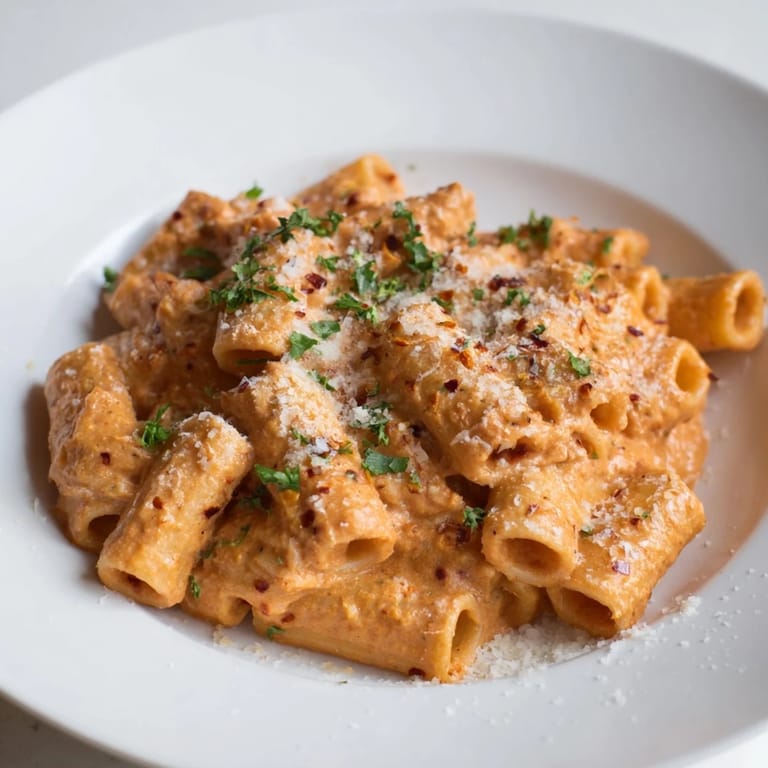
- Add your drained pasta to the sauce and toss gently, coating every tube. If the sauce looks too thick, add reserved pasta water in small splashes until you reach that creamy consistency where it clings to the pasta but still flows.
- Finish with butter and parsley:
- Stir in unsalted butter off the heat, then scatter fresh chopped parsley across the top. Serve immediately while everything is hot and the parsley is still bright green.
 Save
Save The thing that stayed with me wasn't the food magazine moments or the pretty plating—it was my mom tasting it and saying, 'This tastes like you figured something out.' And I think she meant that sometimes you don't need a culinary school education; you just need ingredients that trust each other and enough courage to let them do what they know how to do.
When Cream Sauce Goes Wrong (And How to Fix It)
My first attempt ended in a broken, separated mess because I panicked and cranked the heat up when the sauce looked thin. Turns out, cream and cheese need gentleness—high heat scrambles the emulsion faster than you can say 'disaster.' Now I keep the temperature low, add liquid slowly, and remember that patience isn't boring, it's architectural. If your sauce does break, don't panic; pour it into a blender with a splash of cream and pulse until it comes back together, then finish reheating gently in the pan.
The Spice Calibration Conversation
Start with one teaspoon of chili flakes if you like gentle heat, and genuinely consider that one teaspoon of aggressive chili flakes hits differently depending on whose mouth it's entering and what they had for breakfast. I made this for friends once and realized too late that my 'medium spicy' was their 'someone call emergency services.' Now I keep extra cream nearby and remind people that red chili flakes can hide for a minute before they strike. The heat blooms slowly, so taste after everything is mixed and you can always add more, but you can't take it back.
Beyond the Classic Version
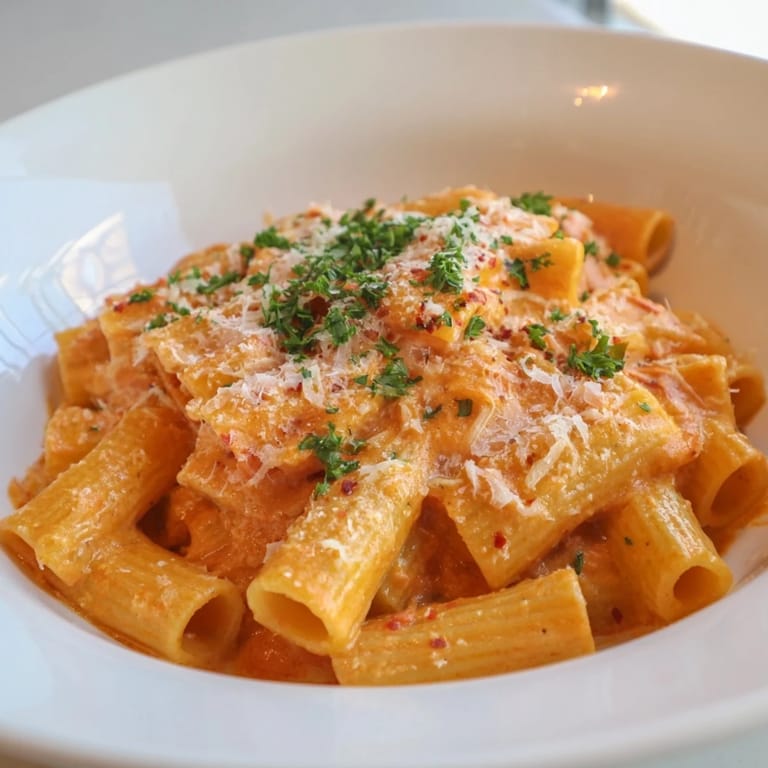
The beauty of this sauce is how it welcomes additions without losing itself—sautéed mushrooms add an earthy depth, fresh spinach wilts in at the last second and tastes like you planned ahead, and a handful of crispy bacon pieces turn it into something your partner will request weekly. Fresh thyme scattered on top instead of (or alongside) parsley gives it an herbaceous complexity that feels less casual and more intentional. Even a pinch of nutmeg stirred in whispers through the whole thing, and nobody can quite figure out what makes it taste so elegant.
- Sautéed mushrooms should go in after you've finished the sauce, just warmed through so they stay tender.
- Spinach wilts in during the last 30 seconds of cooking and turns a beautiful dark green.
- Crispy bacon bits add texture contrast and a salty-smoky note that makes people ask for your secrets.
 Save
Save This dish became my proof that the simplest recipes, made with attention and real ingredients, can taste like someone spent hours in the kitchen. Make it for people you want to impress or for yourself on a night when you deserve something that feels like luxury.
Recipe Q&A Section
- → What makes the sauce spicy?
The sauce includes red chili flakes which provide a gentle heat that can be adjusted to taste.
- → Can I prepare this dish vegan?
Yes, by using plant-based cream and cheese alternatives and omitting the butter, you can make a vegan version.
- → How do I achieve a creamy sauce consistency?
Simmering heavy cream with tomato paste and vodka creates a silky texture, and reserved pasta water can be added to loosen the sauce if needed.
- → What pasta type is best for this dish?
Rigatoni is ideal due to its ridges and tube shape, which hold the rich sauce well.
- → Can I add extra vegetables?
Yes, sautéed mushrooms or spinach can be added for additional flavor and nutrition.