 Save
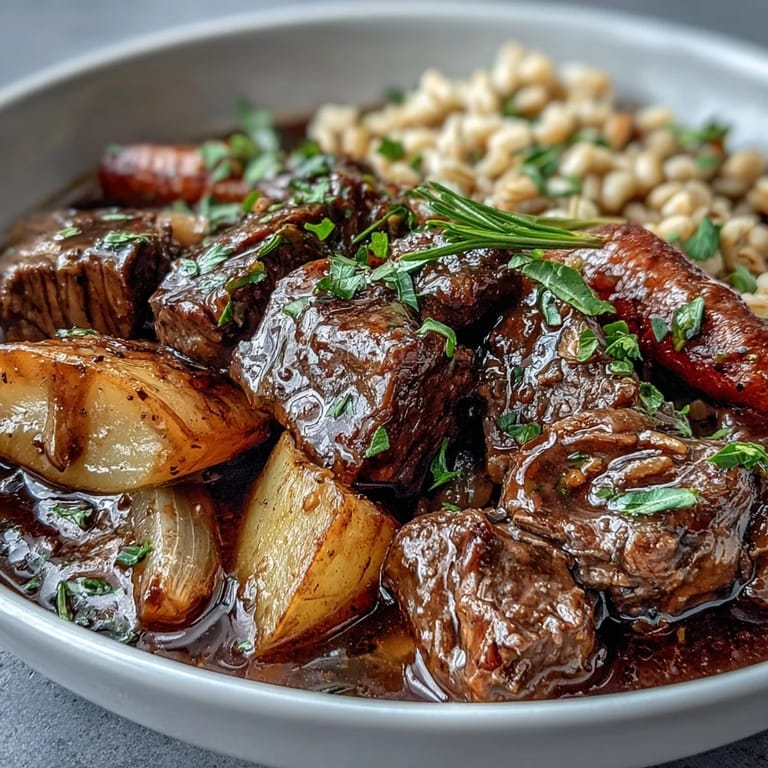
Save There's something about the smell of Guinness reducing in a pot that makes you stop whatever you're doing and pay attention. A friend brought a bottle to my kitchen on a gray Saturday afternoon, and we ended up creating this stew almost by accident, tossing in whatever root vegetables we had hanging around. Two hours later, the whole house smelled like a cozy Irish pub, and I understood why this dish has stayed in my cooking rotation ever since.
I made this for a dinner party during the first real cold snap of November, and my neighbor actually came over just because he caught the aroma drifting across the yard. Watching people's faces when they tasted it—that moment when they realized what the depth of flavor was—made me feel like I'd stumbled onto something genuinely special. It became the dish people started requesting whenever the weather turned.
Ingredients
- Beef chuck (2 lbs, cut into 1-inch cubes): Chuck has the perfect marbling to break down into tender, melt-in-your-mouth pieces during the long braise—don't skip the browning step because those caramelized edges are where the flavor lives.
- Olive oil (2 tablespoons): Just enough to get a good sear on the meat without the stew becoming too oily.
- Yellow onion, garlic, carrots, parsnips, celery (1 each or as listed): This aromatic base is the foundation that makes everything else taste better—don't rush the sautéing because caramelizing the onions adds sweetness that balances the beer.
- Potatoes and rutabaga (as listed): The potatoes soften and thicken the broth naturally while rutabaga adds an earthy, slightly sweet undertone that catches people off guard in the best way.
- Tomato paste (1 tablespoon): A small amount concentrates umami and rounds out the flavor without making the stew taste tomatoey.
- Pearl barley (3/4 cup, rinsed): Rinsing removes the starch so it doesn't make the stew gluey, and barley absorbs flavor like a sponge while adding a wonderful chewy texture.
- Guinness stout (1 can or bottle): The beer reduces and mellows during cooking, leaving behind a subtle roasted, almost chocolate-like depth that you won't identify as beer but will make people ask what your secret ingredient is.
- Beef broth (4 cups) and water (1 cup): The combination gives you enough liquid to cook the barley and vegetables without the stew becoming a soup—use good quality broth if you can because it matters.
- Thyme, rosemary, bay leaves, Worcestershire sauce: These dried herbs and the Worcestershire create the savory backbone—trust the amounts because they work in concert, not competing.
- Salt and black pepper: Don't skip seasoning the beef before browning; it creates a better crust and keeps you from having to oversalt the finished stew.
Tired of Takeout? 🥡
Get 10 meals you can make faster than delivery arrives. Seriously.
One email. No spam. Unsubscribe anytime.
Instructions
- Get your pot ready and brown that beef:
- Heat olive oil in your Dutch oven over medium-high heat until it shimmers—you want it properly hot so the beef develops a golden crust rather than steaming. Season the beef with salt and pepper, then work in batches so the meat actually browns instead of crowding the pot and releasing moisture; this takes about 5 minutes per batch and makes a real difference in the final flavor.
- Build the aromatic base:
- In that same pot (don't clean it, those browned bits are liquid gold), add your diced onion and let it soften for 3 to 4 minutes while you scrape up all the fond from the beef. Then add your garlic, carrots, parsnips, celery, potatoes, and rutabaga, cooking for another 5 minutes so everything starts to get tender and the kitchen smells even better than it already does.
- Deepen the flavor with tomato paste:
- Stir in the tomato paste and cook it for just 1 minute—this small step concentrates the umami and prevents it from tasting raw in the finished stew. You'll notice the paste caramelizes slightly against the pot's hot surface, which is exactly what you want.
- Bring it all together:
- Return the browned beef to the pot, then add the pearl barley, Guinness, beef broth, water, thyme, rosemary, bay leaves, and Worcestershire sauce, stirring everything to combine. The mixture should look a bit loose at this point, but that's perfect because the barley and vegetables will absorb liquid as they cook.
- Low and slow is the way:
- Bring everything to a boil over medium-high heat, then immediately reduce the heat to low and cover the pot. Simmer for 1.5 to 2 hours, stirring occasionally so nothing sticks to the bottom, until the beef is completely tender when you poke it with a fork and the barley has softened but still has a slight bite to it.
- Finish with finesse:
- Remove the bay leaves and taste the stew—add more salt, pepper, or a splash of Worcestershire if it needs it. If you prefer a thicker stew, mash a few of the potatoes and vegetables gently against the side of the pot to release their starch and thicken the broth.
 Save
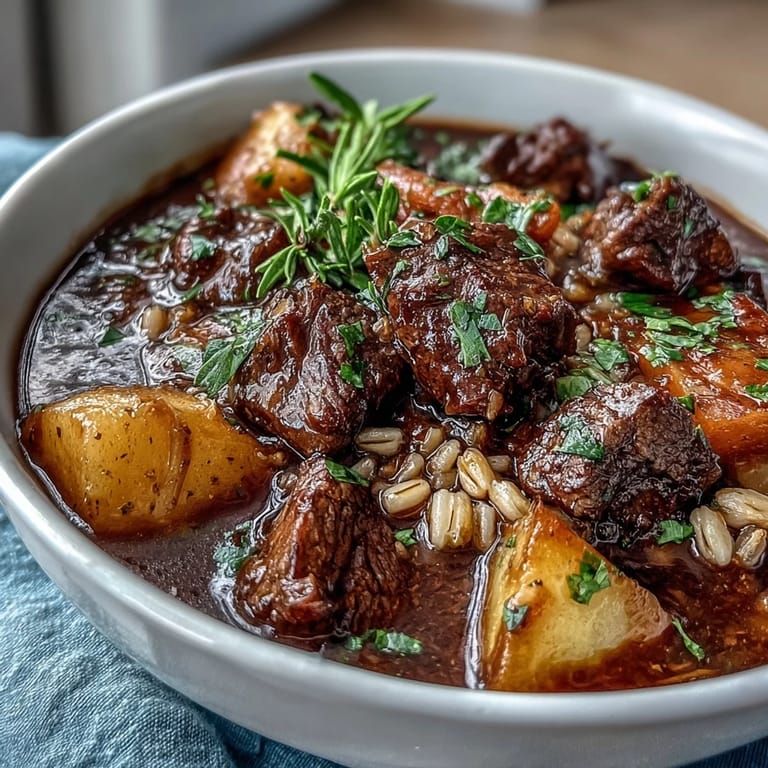
Save My partner took one spoonful of this stew and said, 'This tastes like you've been making it for years,' which is maybe the highest compliment a home cook can receive. That moment made me realize this dish had somehow become the kind of meal that goes beyond just feeding people—it's the thing you make when you want someone to feel looked after.
Why This Stew Feels Different
Most beef stews taste like beef stews—warm, hearty, familiar. But the Guinness shifts something in the equation, adding layers that make you taste it again and wonder what you're experiencing. It's not that you taste beer; it's that the beer has transformed into something deeper, almost chocolatey and mysterious. The roasted notes from the stout complement the caramelized beef and earthy root vegetables in a way that regular beef broth simply can't match, creating a complexity that builds throughout the meal.
The Magic of Root Vegetables
Root vegetables in a long braise become something entirely different from their raw selves—the potatoes soften and thicken the liquid, carrots turn sweet, and that rutabaga adds an unexpected earthiness that ties everything together. I learned to peel them all before starting because cold, slippery vegetables and a sharp knife aren't a great combination when you're hungry and tired. The variety of textures and flavors means every spoonful is slightly different, which keeps the eating experience interesting even when you're halfway through a big bowl.
Making This Your Own
The beautiful thing about this stew is that it's forgiving enough to adapt to what you have on hand or what you're craving that day. I've added parsnips when they were cheap at the market, swapped in celeriac for rutabaga, and once threw in a handful of mushrooms because they needed to be used. The base is strong enough to handle variations without falling apart, which is the mark of a recipe that actually works in real kitchens.
- If you want it alcohol-free, simply replace the Guinness with an additional cup of beef broth and add an extra teaspoon of Worcestershire sauce to keep the depth.
- Fresh parsley sprinkled on top at the end adds brightness and a little visual pop that makes the stew feel finished rather than just cooked.
- This stew actually tastes better the next day once the flavors have had time to marry together, so don't hesitate to make it ahead and reheat it gently before serving.
 Save
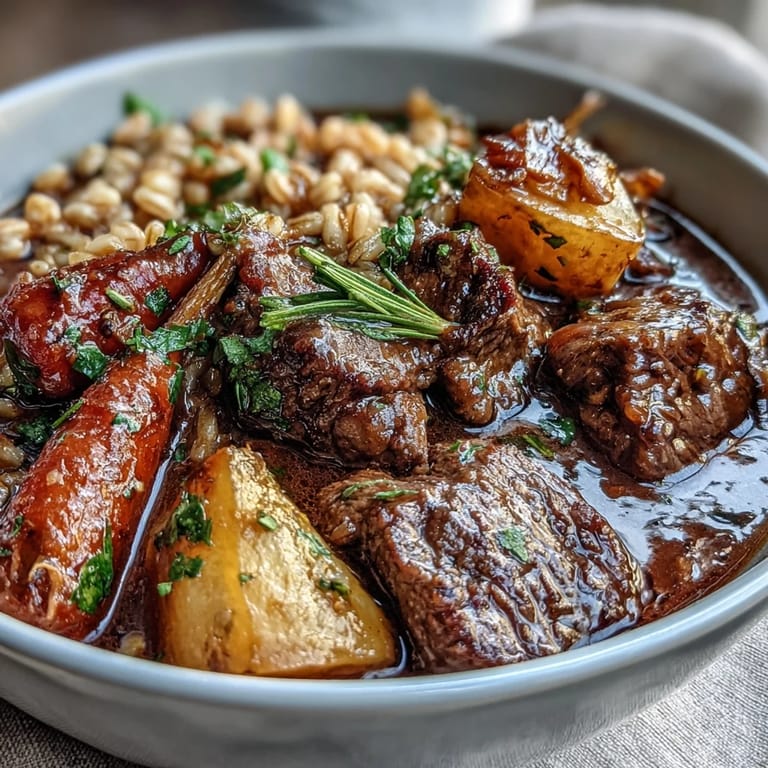
Save This one-pot wonder has earned its place in regular rotation because it delivers exactly what it promises: warmth, depth, and the kind of satisfaction that sticks with you long after dinner ends. Make a big pot and don't apologize for how good your house smells.
Recipe Q&A Section
- → What cut of beef works best for this stew?
Beef chuck is ideal due to its marbling and tenderness after slow cooking, which adds rich flavor and keeps the meat moist.
- → Can I substitute Guinness with a non-alcoholic option?
Yes, replacing Guinness with extra beef broth or a non-alcoholic stout maintains flavor without the alcohol content.
- → How does barley contribute to the stew?
Pearl barley adds a pleasant nutty flavor and thickens the stew, giving a hearty, chewy texture that complements the beef.
- → What root vegetables can I add or swap in this dish?
Carrots, parsnips, celery, potatoes, rutabaga, or turnips are great options. Sweet potatoes and celeriac can also add unique flavors.
- → How can I thicken the stew's broth?
Mashing some of the potatoes and vegetables against the pot sides before serving releases starches that naturally thicken the broth.
- → Is it better to brown the beef before simmering?
Yes, browning creates a flavorful crust and caramelizes the meat, enhancing the stew’s depth and richness.