 Save
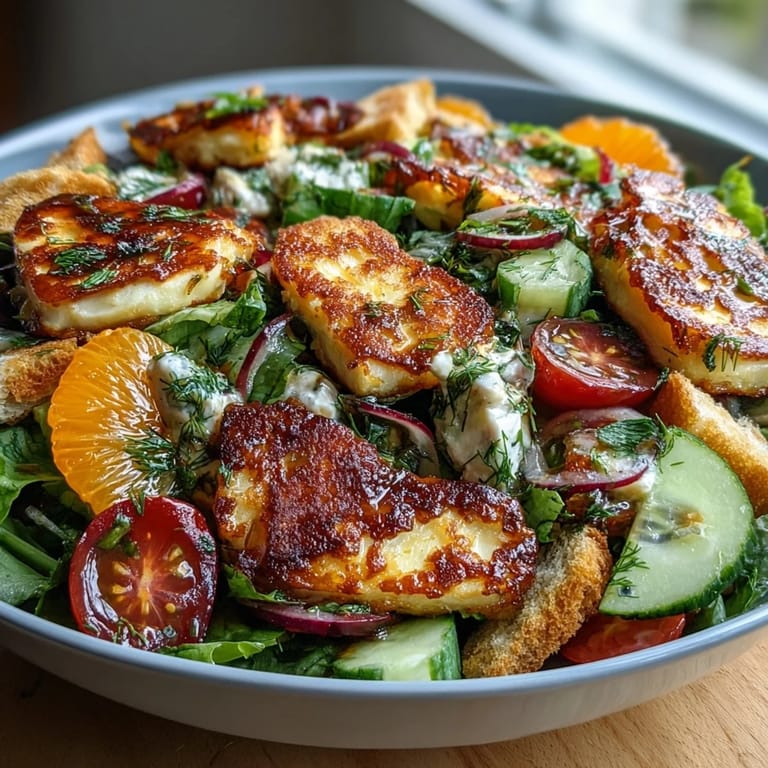
Save There's a moment in late winter when blood oranges hit the market and suddenly everything feels possible again. I was wandering through a Mediterranean grocery near my flat, still in that post-holiday fog, when I spotted a pyramid of them—deep crimson, almost jewel-like. On impulse, I grabbed a few, then noticed fresh halloumi nearby, and somehow a fattoush came together that afternoon. It wasn't planned or fussy; it was more like my hands remembered what my tired brain needed: brightness, crunch, warmth, and a little playful heat all at once.
I made this for my neighbor one evening when she mentioned feeling stuck in a cooking rut. She arrived skeptical about fried cheese in a salad—I remember her raised eyebrow—but one bite changed everything. She went quiet for a moment, then asked for the recipe before dessert even happened. That's when I knew this dish had something special about it, something beyond the sum of its parts.
Ingredients
- Halloumi cheese, sliced into 1 cm thick pieces: This is the star, the thing that separates this from any ordinary salad. It needs to be thick enough to hold its shape when fried but thin enough to get properly golden and slightly crispy at the edges.
- Blood oranges, peeled and segmented: Their deep color and subtle tartness are worth seeking out, though regular oranges work if you're in a pinch; just know the visual drama will be a bit less dramatic.
- Mixed salad greens (romaine, arugula, parsley, mint): Don't use iceberg; this needs leaves with actual personality and a bit of structure to hold up against the warm halloumi.
- Cucumber, diced: Fresh and cool, it grounds the richness and adds that essential watery crunch.
- Cherry tomatoes, halved: They should be ripe and sweet; this is not the place for mealy January tomatoes.
- Red onion, thinly sliced: The sharpness cuts through the richness beautifully, so don't skip this or swap it out.
- Radishes, thinly sliced: They add a peppery bite and an almost floral crunch that makes everything taste fresher.
- Sourdough bread, cut into cubes: The tang of sourdough matters here; it echoes the citrus in a subtle way that makes sense together.
- Extra virgin olive oil: Use the good stuff for the dressing, the kind you actually enjoy tasting.
- Fresh lemon juice: Always fresh, never bottled; you'll taste the difference immediately.
- Pomegranate molasses: This is the secret weapon, the ingredient that makes people ask what you did differently. It's tangy and deep and adds complexity that lemon alone can't achieve.
- Sumac: It brings a citrusy, almost floral tartness plus a beautiful dusty color; it's not optional, so hunt it down at any Middle Eastern market or online.
Tired of Takeout? 🥡
Get 10 meals you can make faster than delivery arrives. Seriously.
One email. No spam. Unsubscribe anytime.
Instructions
- Toast your croutons:
- Preheat your oven to 200°C and toss those sourdough cubes with olive oil and a generous pinch of sea salt. Spread them out on a baking tray—don't crowd them—and let them bake for 8 to 10 minutes until they're golden and make that satisfying crunch when you bite one.
- Fry the halloumi until it's gloriously golden:
- Heat a non-stick skillet over medium heat and place each halloumi slice in without crowding the pan. You'll hear it sizzle almost immediately, and after 2 to 3 minutes per side, they'll develop this beautiful caramelized edge while staying creamy inside; transfer to a paper towel to drain just for a moment.
- Build your greens foundation:
- In a large salad bowl, gently combine your mixed greens with the cucumber, cherry tomatoes, red onion, radishes, and blood orange segments. This is meditative work; take your time arranging things because the colors matter as much as the flavors do.
- Whisk the dressing into harmony:
- In a small bowl, combine the extra virgin olive oil, fresh lemon juice, pomegranate molasses, sumac, black pepper, and sea salt. Whisk it together until it tastes balanced—not too sharp, not too mellow, something that makes you want to taste it straight from the bowl.
- Bring everything together:
- Add the warm halloumi and crispy croutons to the salad bowl, then drizzle the dressing over everything. Toss gently but thoroughly, trying not to break apart the delicate orange segments.
- Serve immediately:
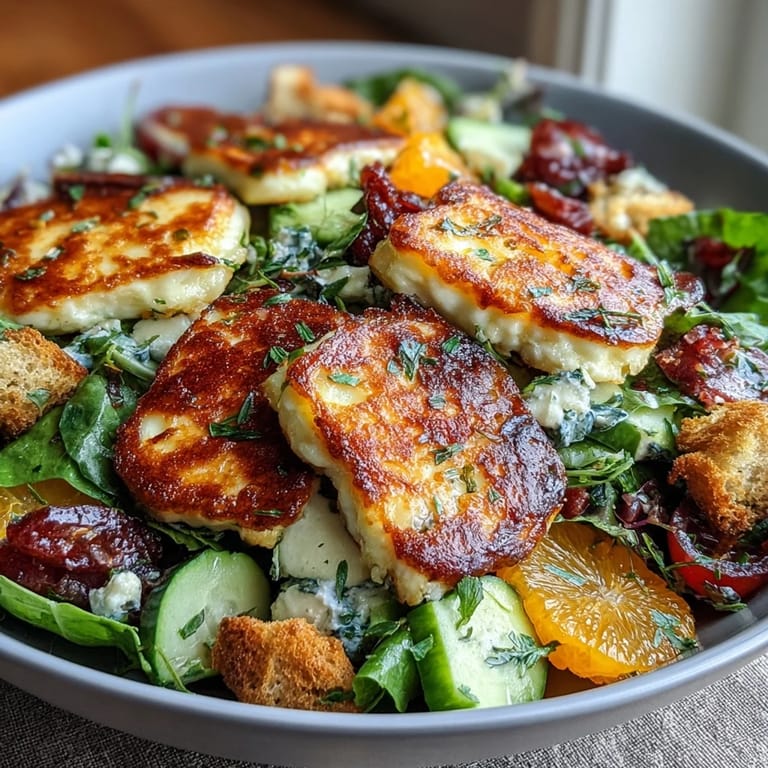
- The whole point is that contrast between warm cheese and cool greens, so don't let this sit around. Get it on plates and into people's mouths while the halloumi is still radiating heat.
 Save
Save There's something about this salad that transcends the ordinary. It became the dish I made when I wanted to show someone I was thinking about them, when I wanted to turn an ordinary Tuesday into something memorable.
The Warm and Cold Dance
The real genius of this dish lives in that tension between temperatures. The halloumi arrives at the table still releasing gentle warmth, its edges crispy and almost caramelized, while the greens and citrus are cool and refreshing. It's a conversation between extremes, and somehow they get along perfectly. Your palate stays engaged with each bite because it's never quite expecting the next temperature shift.
When Citrus Meets Savory
Blood oranges bring something special that regular oranges can't quite match—there's an earthy undertone beneath the sweetness, almost like there's soil and complexity hiding in there. When you pair that with the pomegranate molasses and sumac in the dressing, you're creating a flavor story that feels Middle Eastern and bright and completely deliberate. The cheese doesn't fight against the citrus; instead, it gets lifted by it, tasting richer and more nuanced than it would on its own.
Making It Your Own
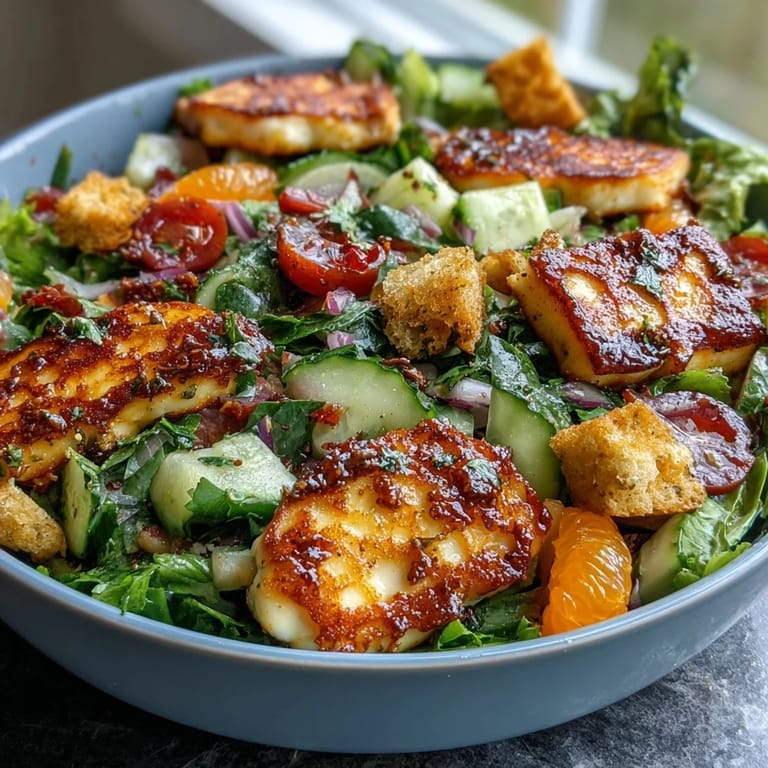
This is a salad that's open to interpretation once you understand the core logic—the warm, the cool, the tangy, the crispy. I've added roasted pistachios when I wanted more earthiness, swapped in pomegranate seeds instead of regular garnish, even tossed in some crispy chickpeas for extra protein when I was particularly hungry. The point is to trust your instincts and build from there.
- Toasted pistachios or walnuts add richness and a completely different kind of crunch than the croutons provide.
- If blood oranges aren't in season, pink grapefruit works beautifully and brings its own tart personality to the party.
- A handful of pomegranate seeds sprinkled on top at the end creates both visual drama and little bursts of unexpected tartness.
 Save
Save This salad feels like a small act of rebellion against boring dinners. It's proof that you don't need hours or a long list of impossible-to-find ingredients to create something genuinely exciting on a plate.
Recipe Q&A Section
- → Can I make this ahead of time?
Prepare the dressing and croutons in advance, but fry the halloumi just before serving for optimal texture. Assemble everything immediately before eating to prevent the croutons from becoming soggy.
- → What can I substitute for halloumi?
Paneer, firm feta, or grilled chicken breast work well. For a vegan option, try fried tofu or omit the cheese entirely and add extra nuts for protein.
- → How do I choose ripe blood oranges?
Look for fruits that feel heavy for their size with smooth, brightly colored skin. The deep crimson flesh indicates peak sweetness and antioxidant content.
- → What is sumac and where can I find it?
Sumac is a tart, lemony spice made from ground berries. Check Middle Eastern grocers, well-stocked supermarkets, or the international aisle. Lemon zest makes a reasonable substitute.
- → Can I use regular oranges instead?
Absolutely. Navel or Valencia oranges work perfectly, though you'll miss the stunning red color. Pink grapefruit or a mix of citrus varieties creates equally delicious results.