 Save
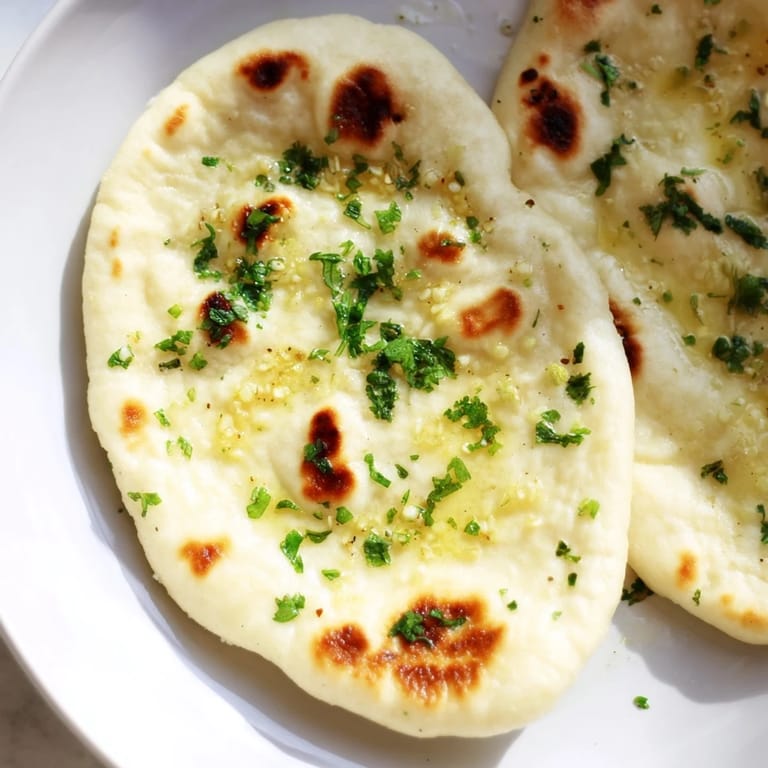
Save There's something magical about watching dough puff up in a hot skillet—that moment when a flat disc suddenly balloons with steam and browns into something you actually want to tear into. I discovered this with garlic naan on a quiet weeknight when I realized I had yogurt, flour, and a skillet but no energy to order takeout. Twenty minutes later, my kitchen smelled like a proper Indian restaurant, and I understood why people keep coming back to this bread.
I made this for my sister who'd been talking about missing Indian food from her college days, and watching her bite into a warm naan and close her eyes was worth every bit of flour dust on my counter. She asked for the recipe before she even finished eating, which is basically a standing ovation in our family.
Ingredients
- All-purpose flour (2 cups): The backbone of tender naan—don't sift it obsessively, just spoon and level.
- Instant dry yeast (1 teaspoon): Make sure it hasn't been lurking in your cabinet for three years; fresh yeast makes the dough rise properly.
- Warm water (1/2 cup): Test it on your wrist like baby formula—too hot kills the yeast, too cold and nothing happens.
- Plain yogurt (1/4 cup): This is the secret to softness; it creates steam and tenderness that flour and water alone can't achieve.
- Vegetable oil (1 tablespoon): Keeps the dough from sticking without making it greasy.
- Salt and sugar (1/2 teaspoon and 1 teaspoon): Salt flavors everything, sugar feeds the yeast.
- Unsalted butter (3 tablespoons), minced garlic (3 cloves), and cilantro (2 tablespoons optional): This is where the magic happens—brush it on immediately while the naan is still hot so it actually soaks in.
Tired of Takeout? 🥡
Get 10 meals you can make faster than delivery arrives. Seriously.
One email. No spam. Unsubscribe anytime.
Instructions
- Mix your dry ingredients:
- In a large bowl, whisk together flour, sugar, yeast, and salt, breaking up any lumps in the salt so it doesn't create surprise salty pockets later.
- Bring the dough together:
- Pour in warm water, yogurt, and oil, stirring with a wooden spoon until you have a shaggy, somewhat messy dough that's starting to come together.
- Knead for smoothness:
- Transfer to a lightly floured surface and knead for 5 minutes, using the heel of your hand and folding it back over itself until it's smooth and elastic and feels almost alive under your hands.
- Let it rest:
- Cover the dough with a damp kitchen towel and let it sit for 10 minutes—this isn't a long proof, just enough time for the gluten to relax so rolling becomes easy.
- Prepare your garlic butter:
- While the dough rests, mix melted butter with finely minced garlic, making sure the garlic is small enough that it won't roll off the bread.
- Shape into ovals:
- Divide dough into 6 equal pieces, rolling each into an oval about 1/4 inch thick—don't stress about perfect shape, rustic ovals are more charming anyway.
- Heat your pan properly:
- Get your skillet or cast-iron pan very hot over medium-high heat; you want it hot enough that the naan starts bubbling immediately, but not so hot that the outside burns before the inside cooks.
- Cook until puffed:
- Place one naan in the hot pan and watch it—after 1 to 2 minutes you'll see bubbles forming and the bottom getting golden. Flip it over for another 1 to 2 minutes on the second side until you see brown spots.
- Brush immediately:
- As soon as the naan comes off the heat, brush it generously with garlic butter and sprinkle cilantro if you're using it; the heat helps everything absorb.
- Keep warm and repeat:
- Stack finished naans on a plate loosely covered with a kitchen towel while you cook the rest, so they stay warm and soft without getting soggy.
 Save
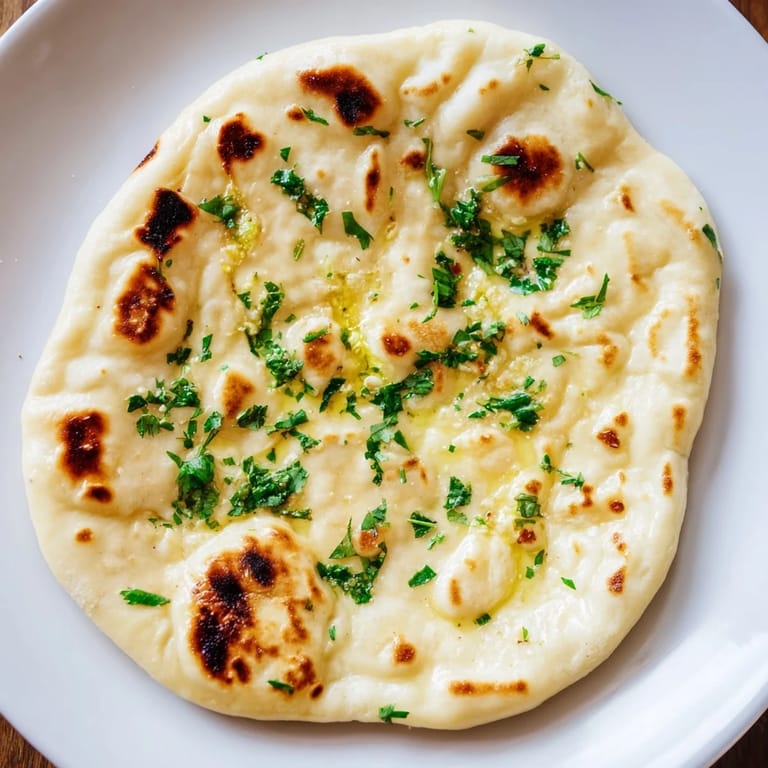
Save There was a moment when my partner came home, caught the smell, and just stood in the doorway with a look of pure contentment. He didn't even ask what I was making—he just followed his nose to the kitchen and ate two naans before they'd even cooled down.
The Magic of Yogurt in Dough
Yogurt does something special in bread dough that's hard to explain until you taste it. It adds moisture and tang, but more importantly, it creates steam inside the dough as it cooks, making each naan puff up and turn wonderfully tender instead of tough. I learned this the hard way by trying to make naan with just water once, and the difference was so obvious that I've never skipped it since.
Timing and Temperature Matter
Getting the skillet temperature right is the real skill here, not the cooking itself. If your pan is too cool, the naan will cook through without browning, which is sad. If it's too hot, the outside chars before the inside has a chance to puff. Medium-high heat is the sweet spot where you get beautiful golden spots and that incredible puffy texture at the same time.
Serving and Storage
Naan is best eaten immediately, while it's still warm and soft, but life happens and sometimes you need to make these ahead. Wrap finished naans in a clean kitchen towel to keep them warm and soft, and they'll stay good for an hour or so. If you want to keep them longer, let them cool completely, then wrap and freeze them—reheat in a dry skillet for 30 seconds on each side and they'll taste almost fresh.
- Serve alongside curry, dal, or soup, or use them as wraps for roasted vegetables and yogurt sauce.
- Make these ahead of a dinner party so you're not cooking while guests are arriving—just reheat at the last minute.
- Leftover naan makes an excellent breakfast with scrambled eggs or a simple spread of butter and jam.
 Save
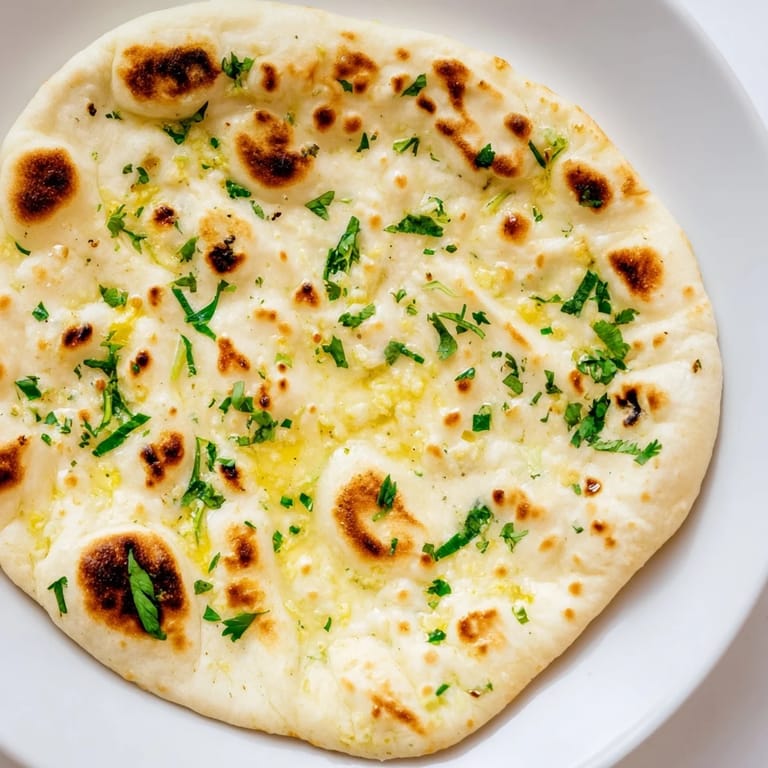
Save Homemade naan feels like a small luxury, but it's actually easier than most breads and tastes so much better than store-bought that you'll wonder why you ever settled for anything else. Once you've made it once, you'll find yourself making it regularly.
Recipe Q&A Section
- → What ingredients make the naan soft and fluffy?
The combination of plain yogurt and instant dry yeast helps create a soft, airy texture in the naan.
- → How is the garlic butter prepared for the naan?
Unsalted butter is melted and mixed with finely minced fresh garlic, then brushed onto the hot naan right after cooking.
- → Can this bread be cooked without a skillet?
A cast-iron pan or any heavy-bottomed skillet works best for even heating and browning, but alternatives like a griddle can be used.
- → How long should the dough rest before cooking?
The dough should rest covered for about 10 minutes to help it relax and improve texture.
- → Are there optional toppings to enhance flavor?
Sprinkling nigella seeds or sesame seeds before cooking adds extra flavor and aroma to the bread.