 Save
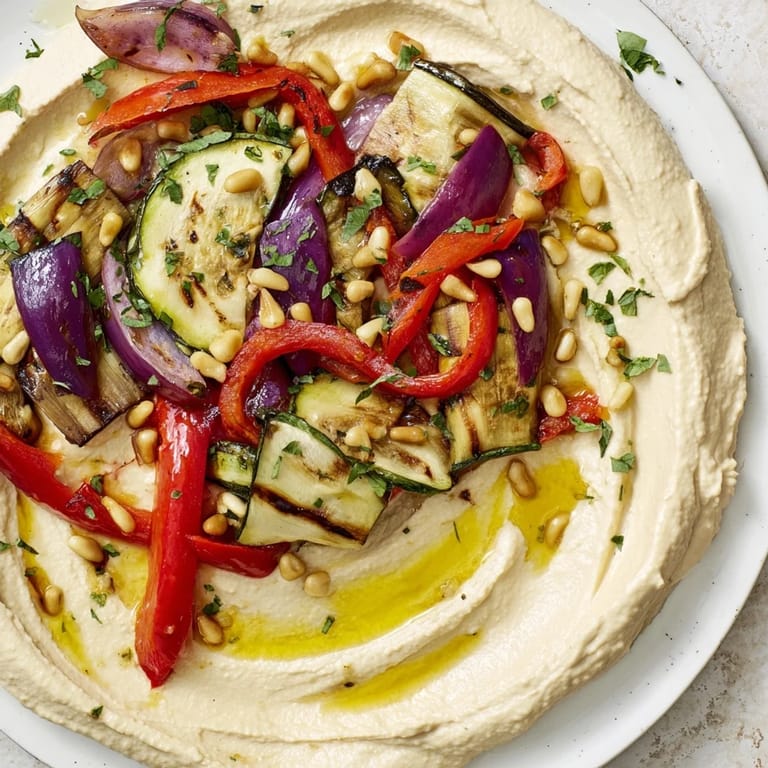
Save There's something almost magical about the moment tahini catches the light as it swirls into chickpeas—that instant when separate ingredients become something utterly creamy and luxurious. I discovered this hummus on a weeknight when I had nothing but a can of chickpeas and desperation, and somehow it turned into the thing everyone asks me to make now. The roasted vegetables on top aren't just garnish; they're the whole reason this dish feels special, with their charred edges and smoky sweetness playing against the cool, velvety base.
I made this for a dinner party once and watched my skeptical brother—who claims to dislike eggplant—eat three platefuls without comment. That quiet satisfaction on his face when he realized what he'd been enjoying was worth more than any compliment. Ever since, I've learned that this dish has a sneaky way of converting people.
Ingredients
- Canned chickpeas: Honestly, dried chickpeas would work, but canned saves you hours and the hummus comes out just as silky—nobody needs to know your secret.
- Tahini: This is the backbone of everything creamy here, so don't skimp on quality or your hummus will taste thin and sad.
- Fresh lemon juice: Bottled just won't cut it; the brightness you get from real lemons makes an actual difference.
- Garlic clove: Just one—trust me, it's enough to whisper through the whole thing without screaming.
- Extra-virgin olive oil: Use the good stuff for the processor blend and save some for the final drizzle, where it actually gets tasted.
- Ground cumin: The secret spice that makes people ask what you did differently.
- Red bell pepper, zucchini, red onion, eggplant: These are suggestions, not laws—use whatever looks good at the market or whatever's been sitting in your crisper drawer.
- Smoked paprika: This is what gives the vegetables that restaurant-quality char flavor even though your oven is definitely not fancy.
- Pine nuts: Toast them yourself or they taste like sadness, and yes, that matters.
- Fresh parsley and sumac: These are the final whispers of flavor that make people think you know what you're doing in the kitchen.
Tired of Takeout? 🥡
Get 10 meals you can make faster than delivery arrives. Seriously.
One email. No spam. Unsubscribe anytime.
Instructions
- Heat your oven and get the vegetables ready:
- Preheat to 425°F while you cut everything into roughly similar sizes so they cook evenly. Toss them with oil, smoked paprika, salt, and pepper—this is where the magic starts.
- Let the vegetables get beautifully charred:
- Spread everything on a baking sheet in a single layer and roast for 22 to 25 minutes, giving them a stir halfway through so nothing burns on one side.
- Build your silky hummus base:
- While the oven does its work, throw chickpeas, tahini, lemon juice, garlic, olive oil, cumin, and salt into a food processor. Blend until completely smooth, then add cold water a tablespoon at a time until you reach that perfect creamy texture that spreads but doesn't collapse.
- Toast the pine nuts until golden:
- In a dry skillet over medium heat, stir pine nuts constantly for 2 to 3 minutes until they smell incredible and turn light golden—this takes less time than you think, so watch them carefully.
- Create your canvas:
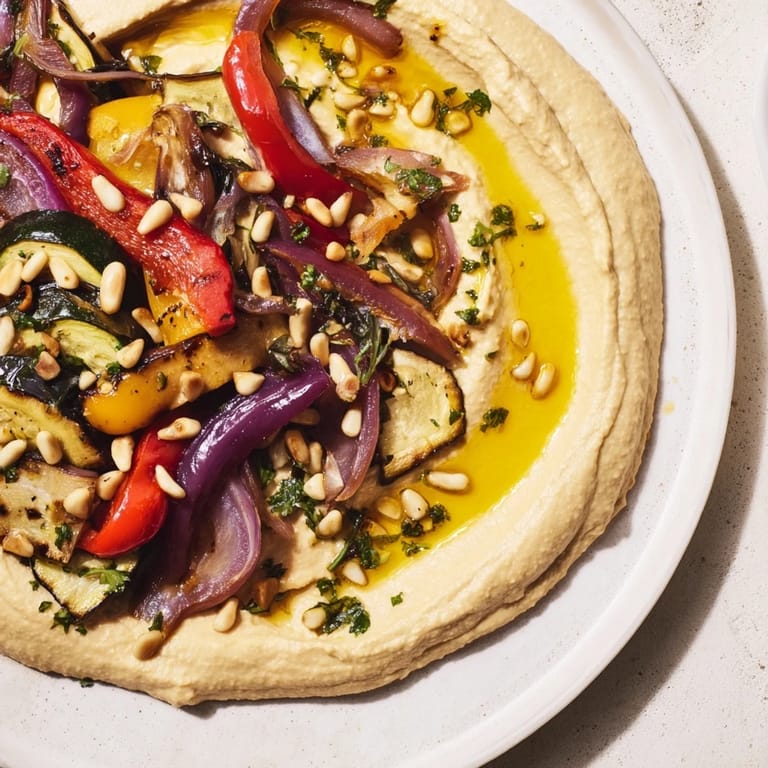
- Spread the hummus onto your serving platter in a casual swoosh using the back of a spoon, leaving it slightly textured so the vegetables and oil can pool in the cracks.
- Build the dish:
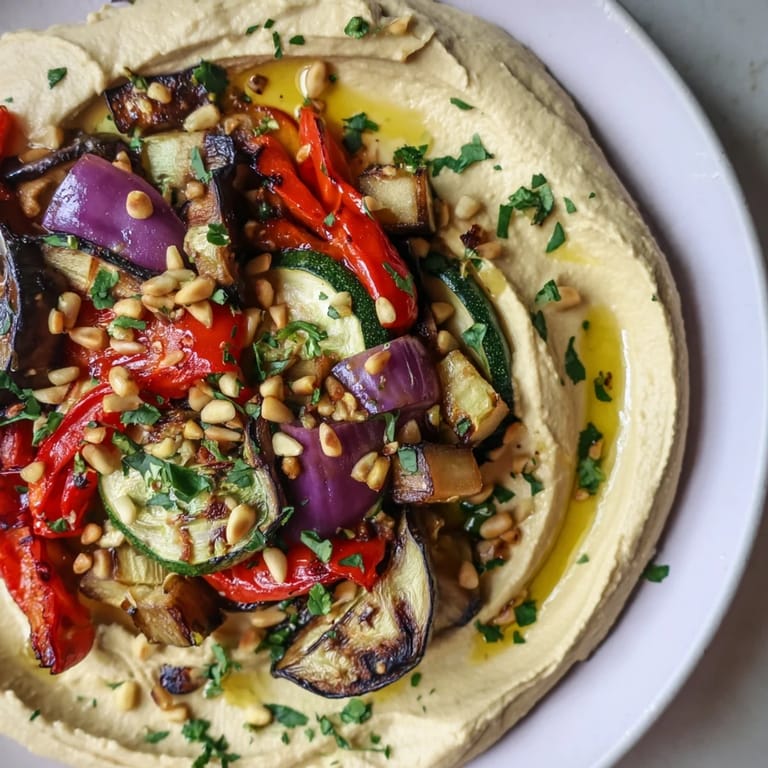
- Top your hummus canvas with the warm roasted vegetables, scatter the toasted pine nuts and fresh parsley over everything, then finish with a generous drizzle of olive oil and a pinch of sumac if you have it.
 Save
Save I remember sitting on my kitchen stool at midnight once, spoon in hand, eating the leftovers straight from the bowl while my partner slept, and thinking this was somehow more satisfying than the fancy dinner we'd had earlier. Food doesn't always need an audience to matter.
The Secret of Sesame and Chickpeas
Tahini gets all the attention, but it's really the partnership between tahini and chickpeas that creates hummus magic. The chickpeas provide body and earthiness while the tahini brings richness and that silky mouthfeel that makes you close your eyes mid-bite. I learned to respect this balance after overprocessing hummus into oblivion once and getting something closer to chickpea butter than the cloud I was aiming for.
Roasting for Real Char, Not Just Heat
The difference between vegetables that have been heated and vegetables that have been charred is everything in this dish. Charring isn't an accident—it's intentional caramelization that brings sweetness and smokiness. Don't be afraid of the dark bits; those are flavor molecules that have gone through a delicious transformation. The vegetables should look slightly battered and bronzed, not polished and pristine.
Serving and Variations
This dish works as a dip with pita, a side dish, or honestly just a bowl of comfort with a spoon. Sometimes I serve it at room temperature, other times warm, and both are correct. The vegetables can shift with seasons—use whatever looks alive at your market, whether that's carrots, mushrooms, cauliflower, or the zucchini your neighbor keeps leaving on your porch.
- Add a spoonful of harissa or red pepper flakes if you want heat and complexity that makes people lean in closer.
- Make it a grain bowl by serving over warm farro or couscous for something more substantial.
- Toast the serving platter under warm water before spreading the hummus so everything stays at the temperature it deserves.
 Save
Save This dish taught me that sometimes the simplest combinations, built with intention and good ingredients, become the meals people remember. Serve it warm, serve it at room temperature, serve it however makes you happy.
Recipe Q&A Section
- → What vegetables work best for roasting?
Bell peppers, zucchini, red onion, and eggplant create a smoky, tender mix, but carrots or cauliflower can also be great seasonal substitutes.
- → How do I achieve a creamy hummus base?
Blend chickpeas with tahini, lemon juice, garlic, cumin, olive oil, and cold water, adding water gradually until a smooth, whipped texture forms.
- → Can the pine nuts be toasted in advance?
Yes, toasting pine nuts beforehand helps unlock their nuttiness and can be done shortly before serving to keep them fresh and crunchy.
- → What seasoning enhances the roasted vegetables?
Smoked paprika, salt, and freshly ground black pepper provide a deep, smoky flavor that complements the natural sweetness of the veggies.
- → How can I add extra heat or spice?
Incorporate a spoonful of harissa or sprinkle chili flakes over the roasted vegetables or hummus base to bring a gentle kick.
- → Is this suitable for gluten-free diets?
Yes, this dish is naturally gluten-free if served without bread or alongside gluten-free options.