 Save
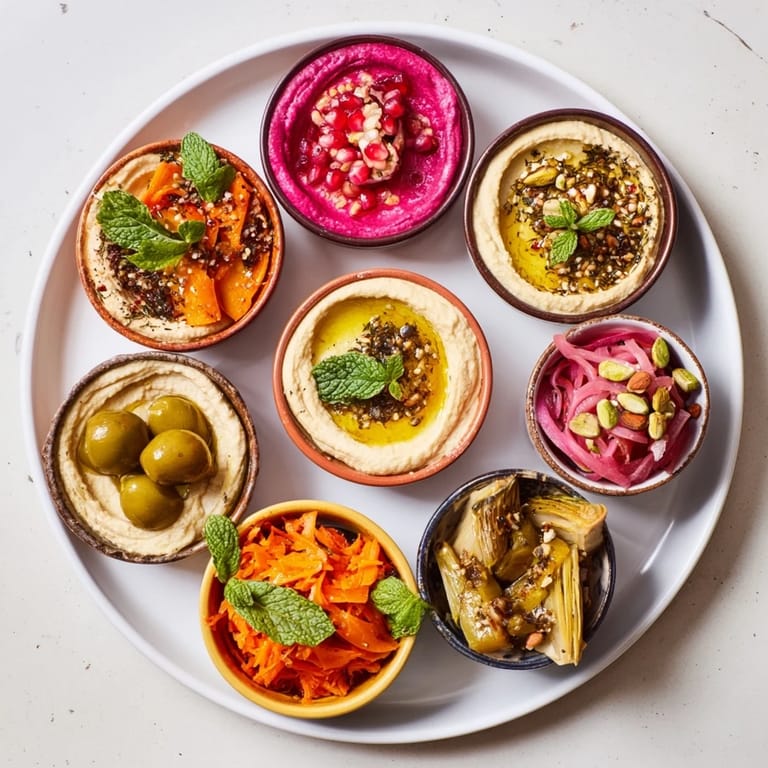
Save I discovered Moroccan tile mosaics during a trip to Marrakech, wandering through the medina with no particular plan. A family invited me into their home, and the first thing they presented wasn't a meal but an experience—a large wooden board scattered with small bowls of vibrant dips, jewel-toned vegetables, and warm bread. I realized then that this wasn't just food; it was an edible version of the zellige tiles I'd been admiring on their walls. Every color, every texture, every flavor had its place in a larger, more beautiful whole. When I came home, I spent weeks recreating that feeling in my own kitchen, and now whenever I arrange this platter, I'm transported back to that afternoon of unexpected generosity and discovery.
The first time I served this to friends, I was nervous about whether the combination would work. But as they gathered around the board, something magical happened. They stopped trying things in a polite, linear way and started trading bites, mixing flavors, discovering combinations I never would have thought of. Someone paired the muhammara with preserved lemon in a way that made me close my eyes. Another person dunked a corner of pita into three different dips at once and declared it genius. I realized the platter wasn't just beautiful—it was an invitation to play together, to make mistakes and discoveries side by side.
Ingredients
- Classic hummus: The creamy anchor that appears in nearly every Moroccan spread. If you're making it from scratch, add a touch more lemon than you think you need—acidity makes it sing.
- Baba ganoush: Silky, slightly smoky, and the best vehicle for discovering why eggplant matters. The char is everything here.
- Muhammara: A red pepper and walnut revelation that tastes like autumn in a bowl. The walnuts give it body and earthiness that plain dips lack.
- Labneh or Greek yogurt with zaatar: Tangy, creamy, and dressed with that herbaceous sumac-and-thyme blend that makes you taste it and immediately understand Middle Eastern flavors better.
- Roasted red peppers: Sweet and jammy when done right. If using jarred, drain them well or they'll make everything soggy.
- Marinated artichoke hearts: They bring a tender-yet-substantial texture and a subtle briny depth that keeps people reaching back.
- Moroccan carrot salad: Shredded carrots with lemon, cumin, and parsley—bright, crunchy, and a flavor profile that feels both familiar and exotic.
- Preserved lemon slices: The soul of Moroccan cooking. Their intensity and floral saltiness are irreplaceable. If you can't find them, a thin lemon slice isn't the same, but it's better than nothing.
- Mixed Moroccan olives: Green, purple, brined, marinated—the variety matters because each type contributes a different pitch to the overall flavor.
- Quick-pickled red onions: Razor-thin slices that have softened just enough to lose their harsh bite but kept their snap. They're the brightness that cuts through richness.
- Cornichons or baby gherkins: Tiny pickled cucumbers that add crunch and vinegar sharpness in the most elegant way possible.
- Roasted almonds and pistachios: Unsalted nuts taste better here than salted ones. They bring earthiness and satisfy the need for something substantial in every bite.
- Toasted sesame seeds: A finishing flourish that adds nuttiness and crunch. Toast them yourself just before serving if you can—the difference in flavor is real.
- Baguette, sliced and toasted: The bread needs to be sturdy enough to hold dip without crumbling. Toasting it twice—lightly on the cut side first, then with a brush of olive oil—creates a perfect carrier.
- Mini pita breads, quartered: Softer than baguette, more forgiving, and easier for guests to manage one-handed.
- Pomegranate seeds: Pure visual magic and tiny bursts of sweet-tart juice that surprise your palate in the best way.
- Fresh mint and cilantro: Not just garnish—these herbs are flavor bridges that make flavors pop without adding salt.
- Sumac: A tangy spice that tastes like lemon's purple cousin. Sprinkle it just before serving so it doesn't lose its color and brightness.
- Extra virgin olive oil: The final gift, drizzled over everything. Choose one you genuinely love drinking straight.
Tired of Takeout? 🥡
Get 10 meals you can make faster than delivery arrives. Seriously.
One email. No spam. Unsubscribe anytime.
Instructions
- Prepare your dips with intention:
- Make hummus, baba ganoush, and muhammara ahead if you can—flavors deepen as they sit. Spoon each into a small bowl and taste as you go. Does it need more lemon? A whisper more garlic? Trust your palate. Drizzle the Greek yogurt with olive oil and dust it with zaatar so it looks intentional and tastes complex.
- Arrange your vegetables and pickles:
- These should be prepped but arranged no more than a few hours before serving. Roasted peppers go in one bowl, their sweetness contained. Marinated artichokes in another, quartered so they're easy to grab. The carrot salad should be tossed just before plating so it doesn't weep liquid everywhere. Preserved lemons and pickled onions each get their own small vessel—they're strong personalities that need their own space.
- Distribute olives, nuts, and seeds:
- Use separate bowls for each. This isn't laziness; it's respect. It lets your guests make choices, and it makes the platter look more intentional and abundant. Almonds in one, pistachios in another, sesame seeds in a tiny bowl where they won't scatter everywhere.
- Toast your bread with care:
- If using baguette, slice it on the bias—it looks more elegant and toasts more evenly. Brush both sides with a little olive oil and toast at 375°F until the edges just begin to color. You want crispy on the outside, still a tiny bit yielding within. Warm mini pitas gently in a dry skillet or wrapped in foil in the oven so they soften without drying out.
- Build your mosaic with rhythm:
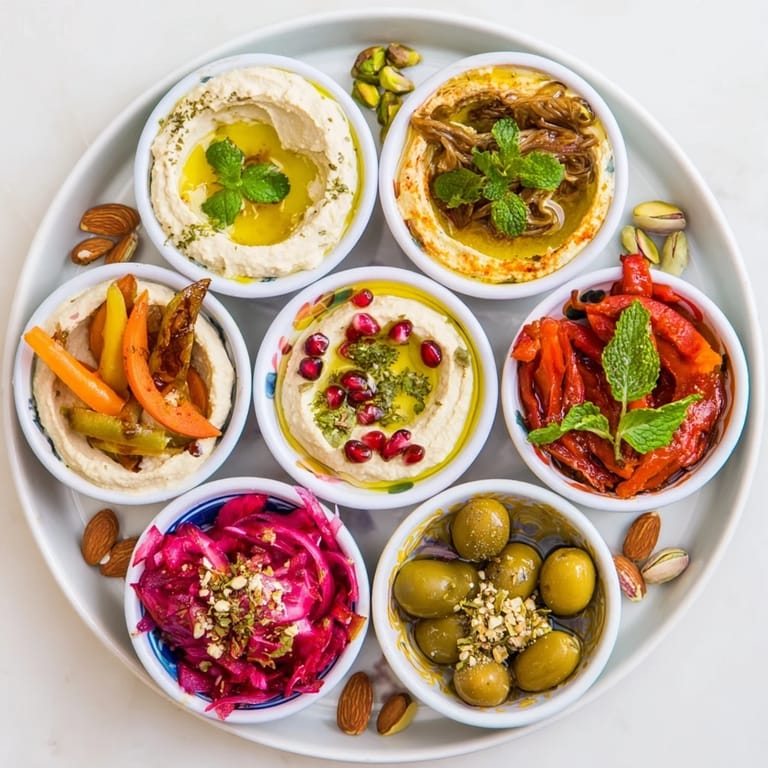
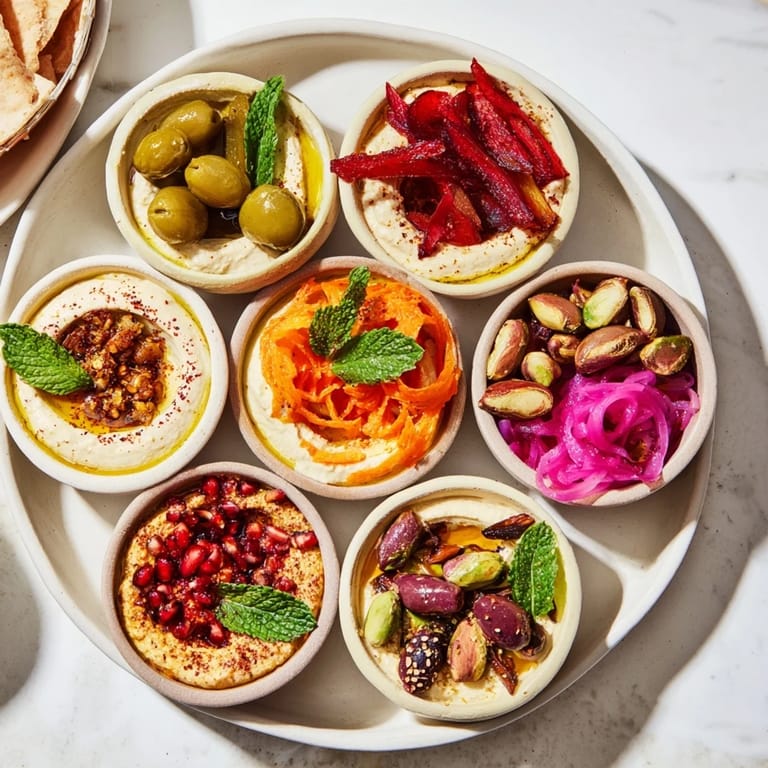
- Start with the largest tray or board you have. Think about color as much as flavor. Don't arrange bowls in a grid—clusters feel more alive. Place dips first, spacing them so there's room for smaller elements. Nestle vegetables around them, leaving visible gaps. Fill gaps with fresh herbs, pomegranate seeds, nuts, pickles. Step back. Does it feel balanced? Move things. The platter should feel like something you discovered rather than something you engineered. This is where your instinct matters more than rules.
- Finish with fragrance and oil:
- Just before serving, drizzle olive oil over the dips and vegetables. Sprinkle sumac across the top in places that draw the eye. Scatter fresh mint and cilantro. This final moment transforms the platter from prepared to alive.
- Serve with permission to explore:
- Encourage your guests to mix things. Put small serving spoons at each dip. Tell them there's no right way to eat this. That's when the real magic happens.
 Save
Save My favorite moment with this platter happened when my grandmother tried the preserved lemon for the first time. She'd lived through decades of cooking but had never encountered that flavor before. Her eyes widened slightly as she took a second bite, and then she looked at me and said, 'This tastes like somewhere.' That's what this dish does—it transports people. It makes them feel like they're traveling to a place they've only imagined or returning to a place they've always belonged.
Why This Platter Matters
In a world where meals often happen fast and solitary, this platter is an argument for slowness and togetherness. It's not efficient or streamlined. It's the opposite—it's meant to be lingered over, picked at, returned to. Every item exists to create moments of discovery. You find a flavor combination that speaks to you, then you find it again, then you share it with someone else who suddenly understands why you love it. The platter becomes less about feeding people and more about creating a shared experience where everyone's palate is celebrated.
The Art of Arranging Your Board
Think of your board like the zellige tiles that inspired it—each piece matters, but it's the relationship between pieces that creates the beauty. Cool colors (purples, blues, deep greens) can be balanced against warm ones (reds, golds, oranges). Tall elements like fresh herb bunches can give rhythm to an otherwise flat landscape. Negative space is just as important as filled space. A platter that's stuffed to the edges looks chaotic; a platter with breathing room looks deliberate and inviting. Trust that abundance doesn't require every inch to be covered.
Flavor Bridges and Palate Cleansers
The beauty of this platter is that it teaches your mouth how to taste. The preserved lemon cuts through richness. The fresh herbs reset your palate between bites. The pickled onions add brightness where things might feel heavy. Cornichons provide crunch and acidity. As you build your combinations, notice how these elements work together. A bite of hummus is pleasant. A bite of hummus with preserved lemon and cilantro is a story. Understanding how flavors support each other makes you a better cook and a more intentional eater.
- Always follow a rich dip with something acidic or fresh to reset your palate
- Nuts and seeds add texture contrast that makes every bite interesting
- The bread is the bridge between all flavors—choose sturdy enough bread that won't crumble under the weight of multiple dips
 Save
Save This platter is more than an appetizer—it's an invitation. An invitation to slow down, to taste carefully, to share flavors and moments with people you care about. Every time you arrange it, you're creating a small edible work of art that exists for the joy of bringing people together.
Recipe Q&A Section
- → What types of dips are used in this platter?
The platter includes classic hummus, baba ganoush, spicy muhammara, and creamy labneh drizzled with olive oil and zaatar.
- → Can this platter accommodate dietary restrictions?
Yes, it can be made vegetarian and gluten-free by using gluten-free crackers and plant-based yogurt alternatives.
- → How are the vegetables prepared for this mosaic?
Vegetables are marinated or roasted, including artichoke hearts, roasted red peppers, Moroccan carrot salad, and preserved lemon slices.
- → What nuts and seeds are included?
The platter features roasted almonds, pistachios, and toasted sesame seeds to add texture and flavor.
- → How should the platter be assembled for presentation?
Arrange dips, vegetables, pickles, olives, nuts, and garnishes tightly on a large tray to mimic a colorful mosaic pattern.
- → Are there any suggested pairings with this platter?
This platter pairs well with Moroccan mint tea or crisp white wines to enhance the flavors.