 Save
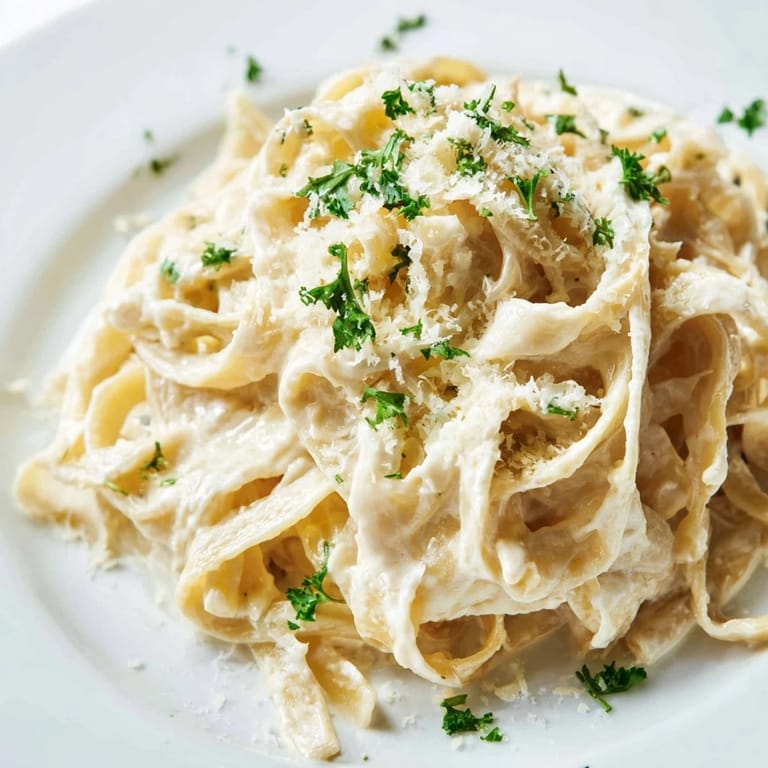
Save I discovered this cottage cheese Alfredo completely by accident on a Tuesday when I'd promised my family pasta but realized I'd forgotten to buy cream. Standing in my kitchen with a container of cottage cheese staring back at me, I wondered if I could pull off something creamy and luxurious without it. Twenty-five minutes later, plates were empty and someone asked when I'd be making it again. Turns out, the best kitchen solutions come from working with what you have on hand.
My neighbor stopped by just as I was draining the pasta, and the aroma pulled her into the kitchen before I could even finish the sauce. She tasted it straight from the wooden spoon, eyes widening, then asked for the recipe on the spot. That's when I realized this wasn't just a clever hack—it was something people genuinely wanted to cook again and again.
Ingredients
- Fettuccine or linguine (350 g / 12 oz): The flat ribbons catch the sauce beautifully, but any pasta works if that's what you have.
- Low-fat cottage cheese (1 cup / 240 g): This is the magic—it blends silky smooth and brings richness without requiring cream.
- Milk (1/2 cup / 120 ml): Whole or 2% works equally well; it loosens the cottage cheese into a pourable sauce.
- Grated Parmesan cheese (1/2 cup / 50 g): Freshly grated tastes sharper and melts faster than pre-shredded.
- Unsalted butter (2 tbsp / 30 g): The foundation for toasting garlic and adding savory depth.
- Garlic cloves, minced (2): Fresh garlic perfumes the entire dish; dried won't give you the same magic.
- Freshly ground black pepper (1/4 tsp): Grinding it yourself at the last moment tastes sharper and more alive.
- Salt (1/4 tsp): Taste as you go—pasta water is salty, so hold back at first.
- Freshly grated nutmeg (pinch, optional): A whisper of this transforms the sauce from good to memorable.
- Fresh parsley, chopped (2 tbsp) and extra Parmesan for serving: The final flourish that makes people think you fussed for hours.
Tired of Takeout? 🥡
Get 10 meals you can make faster than delivery arrives. Seriously.
One email. No spam. Unsubscribe anytime.
Instructions
- Boil the pasta and save the starchy water:
- Salt your water generously and let it reach a rolling boil before adding pasta. The key is tasting at a minute before the package suggests—al dente means it still has slight resistance when you bite it. Scoop out 1/2 cup of cooking water before draining; this liquid gold will loosen the sauce later.
- Blend cottage cheese into silk:
- This is non-negotiable: a blender or food processor transforms grainy cottage cheese into something so smooth it rivals heavy cream. If you blend it rough, you'll taste the curds, and that ruins the entire experience.
- Toast the garlic in butter:
- This 60-second step matters more than you'd think. Melt butter over medium heat, add minced garlic, and listen for a gentle sizzle. The moment it smells like honey and toasted nuts (around 1 minute), move to the next step.
- Warm the sauce gently:
- Pour the blended mixture in slowly, stirring constantly. Keep the heat at medium and never let it bubble rapidly—high heat curdles dairy. Season with salt, pepper, and that optional pinch of nutmeg, then let it warm for 2–3 minutes until it steams slightly.
- Toss pasta with sauce and adjust:
- Add drained pasta directly to the skillet and toss with two wooden spoons until every strand is coated. The sauce should flow loosely; if it's too thick, splash in reserved pasta water a little at a time, stirring between each addition.
- Plate and garnish immediately:
- Serve while it's warm and the sauce clings to the pasta. A shower of fresh parsley and a final grate of Parmesan over each plate is the difference between dinner and restaurant-quality dinner.
 Save
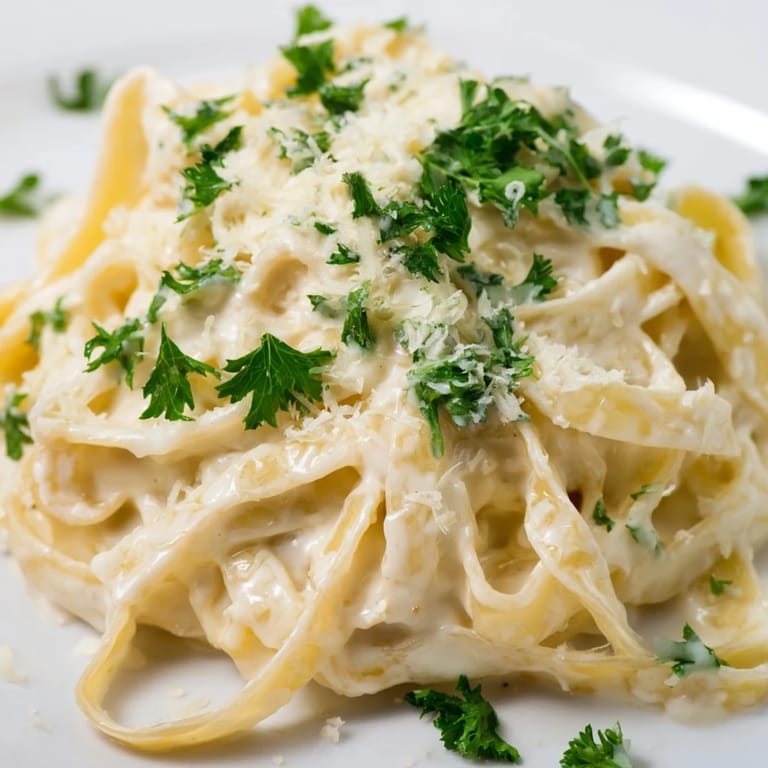
Save The first time my ten-year-old asked for seconds without being prompted, I knew I'd stumbled onto something special. He was usually a cream-sauce skeptic, suspicious of anything too rich, but this version felt light enough to enjoy without guilt.
Why This Works Better Than You'd Think
Traditional Alfredo relies on heavy cream, which is delicious but sits in your stomach like a stone. Cottage cheese delivers creaminess through protein and a touch of milk instead, so your body processes it more easily. The blender does all the work of emulsifying everything into something that tastes nothing like cottage cheese—it tastes like silk. You end up with a sauce that feels indulgent but leaves you satisfied, not stuffed.
Room to Play and Experiment
The foundation is solid, but this recipe loves variations. I've stirred in sautéed mushrooms on nights when I wanted something earthier, and the lemon zest version tastes almost Mediterranean with a brightness that feels like spring. Some evenings I'll toss in a handful of baby spinach at the last second, and it wilts right into the sauce, adding color and nutrition without changing the flavor.
Make It a Complete Meal
On its own, this is rich and satisfying, but it becomes a full dinner with one addition. Stir in shredded cooked chicken, toss with steamed broccoli, or add cherry tomatoes that have been quickly sautéed. My shortcut is buying a rotisserie chicken, shredding it, and mixing it in at the very end—takes two minutes and transforms this from side dish to main course.
- Roasted chicken and fresh thyme add savory warmth that tastes like real cooking.
- A squeeze of lemon juice at the table brightens everything and cuts through the richness.
- Keep a small dish of extra Parmesan handy—people always want more.
 Save
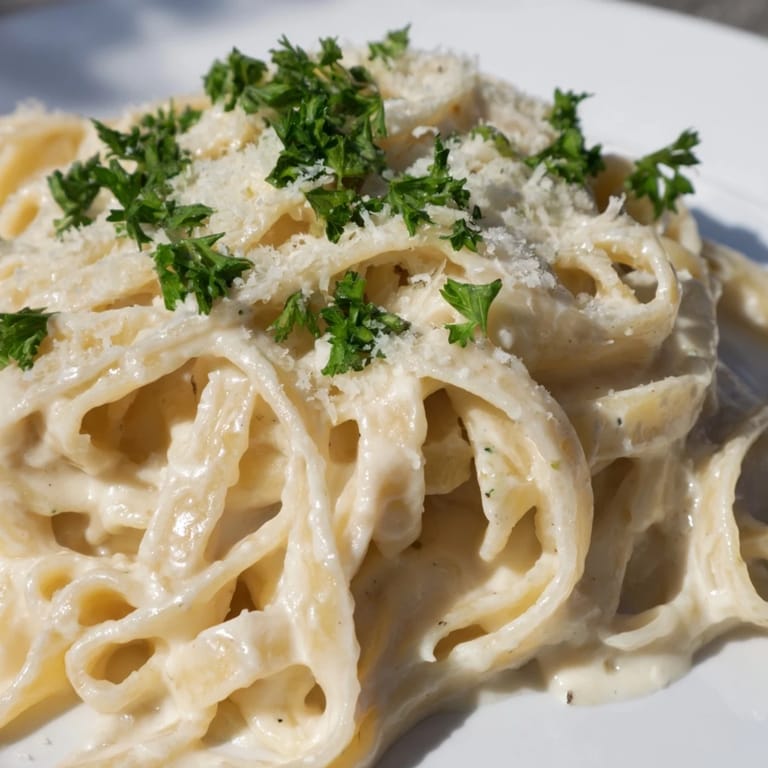
Save This is one of those recipes that quietly became part of my regular rotation because it works, tastes special, and never feels like a compromise. That's the real victory.
Recipe Q&A Section
- → Can I use other types of pasta?
Yes, fettuccine or linguine are preferred, but any pasta shape that holds sauce well will work.
- → How can I make the sauce creamier?
Blend the cottage cheese thoroughly with milk and Parmesan until ultra-smooth before heating.
- → Is nutmeg necessary in the sauce?
Nutmeg is optional but adds a subtle warmth that enhances the creamy flavors.
- → What can I add to boost protein content?
Consider adding cooked chicken or steamed broccoli for extra protein and texture.
- → Can I prepare this dish gluten-free?
Yes, substitute regular pasta with gluten-free varieties to accommodate dietary needs.