 Save
Save I discovered this bowl on a sticky Bangkok morning when a street vendor handed me a palm leaf packet before dawn, the rice still steaming and the mango so perfectly ripe it practically melted on my tongue. Years later, I recreated it in my own kitchen, tweaking it until it felt like breakfast could actually taste like a tropical escape, even on the coldest days. What started as a craving became my go-to when I needed something that felt both indulgent and deeply nourishing. The combination of warm coconut-soaked rice with cool, bright mango just makes sense, like the breakfast equivalent of a perfect conversation.
I made these for my sister's surprise visit last summer, and watching her close her eyes on that first bite while sitting on my back porch reminded me why I love cooking for people—it's not really about the food, it's about that moment when someone tastes something and forgets to say anything for a second. She asked for the recipe immediately, and now she makes it every Sunday. That's when I knew this dish had staying power.
Ingredients
- Glutinous (sticky) rice, 1 cup: This is the heart of the whole thing—regular rice won't give you that creamy, yielding texture that makes this bowl feel special. Rinsing it thoroughly removes excess starch and prevents mushiness.
- Water, 1 1/2 cups: The ratio matters more than you'd think; too much and you get mushy rice, too little and you're left with crunchy bits.
- Full-fat coconut milk (13.5 oz / 400 ml can): Don't skimp here—lite versions separate and won't coat the rice the same way, and you want that silky mouthfeel that only full-fat delivers.
- Maple syrup or agave nectar, 1/4 cup: This sweetens the coconut without overwhelming it; maple adds a subtle depth while agave is cleaner and lighter if you prefer it.
- Sea salt, 1/4 teaspoon: Just a whisper to balance the sweetness and make every other flavor pop without being obvious about it.
- Large ripe mangoes, 2: The fruit here is as important as the rice—find ones that yield slightly to pressure and smell sweet at the stem, not the fibrous ones that disappoint.
- Toasted sesame seeds or coconut flakes (optional): These add texture and a subtle nuttiness that keeps things interesting in every spoonful.
- Fresh mint leaves (optional): A handful scattered on top brings brightness and helps cut through the richness just when you need it.
Tired of Takeout? 🥡
Get 10 meals you can make faster than delivery arrives. Seriously.
One email. No spam. Unsubscribe anytime.
Instructions
- Rinse the rice until the water runs clear:
- Place your rice in a fine-mesh sieve and run it under cold water, stirring gently with your fingers until the water stops looking cloudy—this takes maybe a minute, but it's the difference between sticky rice and gummy rice. You'll feel it when it's right, when the individual grains separate slightly under your fingers.
- Cook the rice low and slow:
- Bring your water and rinsed rice to a boil in a covered saucepan, then immediately drop the heat to low and let it simmer undisturbed for 15 to 20 minutes until the water is completely absorbed and you can barely smell the steam escaping. Once the liquid is gone, keep it covered for another 10 minutes off the heat—this resting period is where the magic happens, letting the rice finish cooking gently in its own steam.
- Warm the coconut mixture gently:
- In a separate small saucepan, combine your coconut milk, sweetener, and salt, then warm it over medium heat just until it starts to steam and shimmer at the edges—you want it hot but never boiling, because boiling breaks down the coconut cream's silky texture. Give it a gentle stir as it warms so the sweetener dissolves evenly.
- Fold the coconut into the rice:
- Pour most of the coconut mixture over your cooked rice (saving about half a cup for drizzling later) and use a rice paddle or spatula to gently fold it in, being careful not to smash the grains. Let this sit covered for 10 minutes so the rice drinks in all that coconut flavor and becomes even creamier.
- Assemble your bowls with intention:
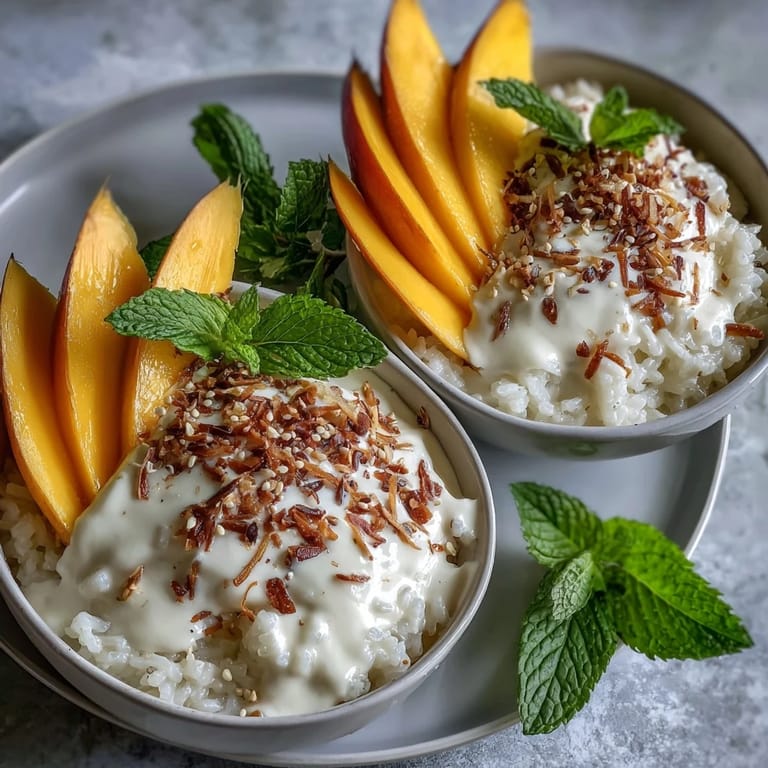
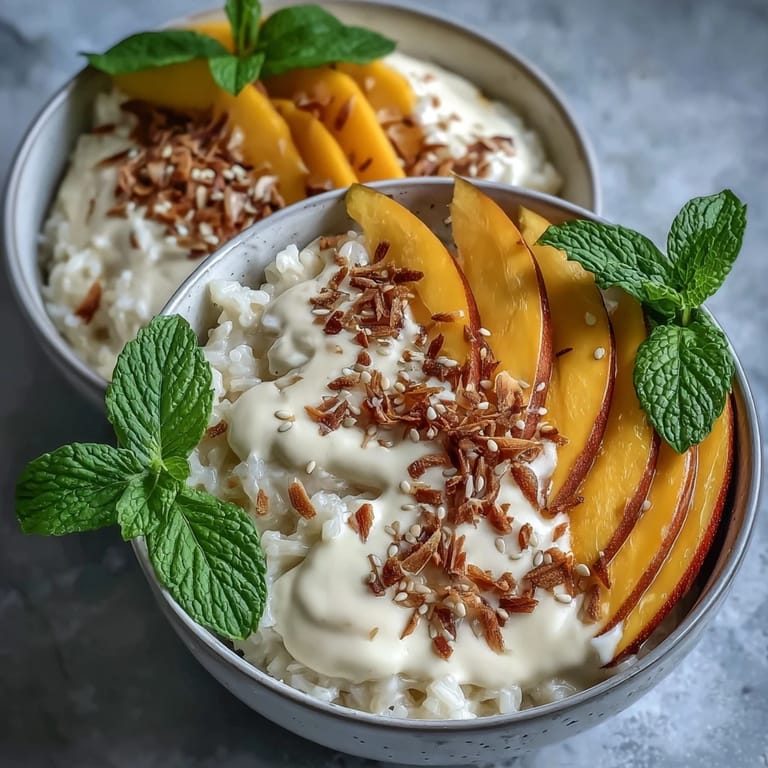
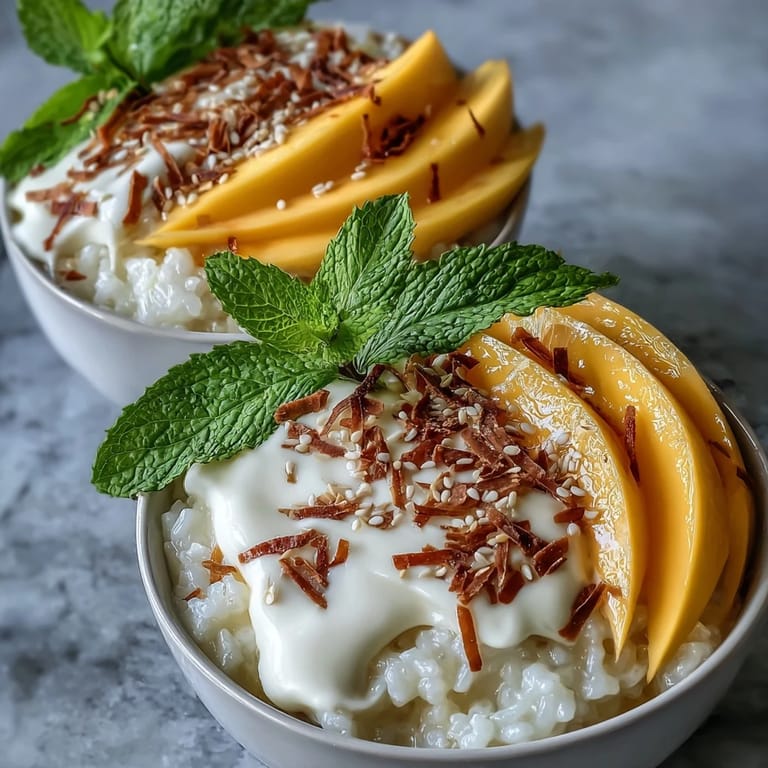
- Divide the coconut rice among your serving bowls, arrange your mango slices on top in whatever way makes you happy, then drizzle with that reserved coconut cream and scatter your sesame seeds or coconut flakes across everything. A few mint leaves on top finish the picture and add a cool brightness.
 Save
Save There's something about serving this in a beautiful bowl that transforms an ordinary Tuesday morning into something that feels ceremonial—like you're giving yourself permission to slow down and actually taste what you're eating. I think that's why I keep making it, even when my mornings are chaotic.
How to Pick the Perfect Mango
The mango is your co-star here, so choosing wisely changes everything. Look for ones that feel heavy for their size and smell faintly sweet near the stem—these are ripe enough to be juicy but not so overripe they'll fall apart when you slice them. The best mangoes for this bowl are the slightly larger ones because they slice more gracefully and give you longer pieces that look beautiful arranged on top.
Timing and Make-Ahead Tricks
You can cook the rice up to a day ahead and store it in the refrigerator, then warm it gently over low heat with a splash of water before assembling your bowls. The coconut mixture also holds beautifully for a couple of days, and honestly, having these components ready means you can throw together a stunning breakfast in five minutes when you're actually hungry. Just slice your mango fresh right before serving so it stays crisp and bright.
Flavor Variations That Work
Once you master the basic formula, you can play with it endlessly without losing what makes it special. Try swapping the sweetener—coconut sugar adds an almost molasses-like richness, while a touch of vanilla extract deepens everything beautifully. You can also switch up your fruit depending on the season; fresh pineapple brings a sharp brightness, and even fresh strawberries or blueberries create an entirely different but equally delicious bowl.
- Coconut sugar creates a richer, more complex sweetness than maple syrup if you want to explore that direction.
- A tiny pinch of cardamom in the coconut mixture adds an unexpected warmth that somehow feels right.
- Topping with granola or candied nuts gives you textural contrast if your household prefers crunch alongside creamy.
 Save
Save This breakfast bowl exists in that sweet spot where eating something nourishing doesn't feel like deprivation—it feels like a small act of kindness you're doing for yourself. That's the real reason I keep coming back to it.
Recipe Q&A Section
- → Can I use regular rice instead of glutinous rice?
Short-grain sushi rice works as an alternative, though the texture won't be as chewy and sticky. Avoid long-grain varieties like jasmine or basmati for this dish.
- → How do I know when the rice is properly cooked?
The rice should absorb all water and feel tender with a slight chew. Letting it rest covered for 10 minutes after cooking ensures the perfect texture.
- → Why shouldn't I boil the coconut milk mixture?
Boiling can cause coconut milk to separate and become grainy. Warm it gently until just steaming for the smoothest, creamiest consistency.
- → What mango variety works best?
Ripe Ataulfo or Manila mangoes offer the best sweetness and creamy texture. Kent or Tommy Atkins varieties also work well when fully ripened.
- → Can I make this ahead of time?
Prepare the coconut sticky rice up to 2 days ahead and refrigerate. Warm gently before serving and add fresh mango just before enjoying.
- → Is this dish suitable for meal prep?
Store the rice and toppings separately. The coconut rice keeps for 3-4 days refrigerated, while cut mango is best used within 1-2 days.