 Save
Save I discovered this sauce purely by accident one Tuesday evening when my crisper drawer was overflowing with vegetables I'd bought with good intentions but no plan. Rather than let them wilt, I tossed them into a pot with some tomatoes and decided to see what happened. The result was so vibrant, so secretly packed with goodness that nobody even noticed they were eating a rainbow of vegetables—they just knew it tasted like home. Now it's become my go-to move whenever I want pasta to feel nourishing without tasting like a health lecture.
I remember my sister's skepticism the first time I served this to her—she was convinced anything with that much vegetable content would taste like defeat. But one bite and she was quiet, which for her means everything. She's been requesting jars of it ever since, and I've stopped pretending it's complicated because watching someone's face shift when they realize something good for them actually tastes good is its own small joy.
Ingredients
- Medium carrot: The silent backbone that adds natural sweetness without announcing itself, cutting through the acidity of tomatoes with quiet grace.
- Small zucchini: This one disappears completely into the sauce, lending creaminess and moisture so you never need to worry about the sauce feeling thin.
- Bell pepper (red or orange): Red peppers are sweeter than green ones, and that matters here—they mellow the entire sauce into something almost velvety.
- Small onion: The flavor foundation that mellows during cooking, creating depth you'll taste but never quite identify.
- Garlic cloves: Add these after the softer vegetables or they'll burn and turn bitter—fresh, minced garlic scattered in just before the tomatoes is the timing that works.
- Celery stalk: A secret weapon for savory background notes that make people ask what makes this taste so good.
- Canned crushed tomatoes: Two cans give you substance and that jammy, concentrated flavor that fresh tomatoes often struggle to deliver.
- Tomato paste: A small spoon of this intensifies everything, turning simple into serious.
- Olive oil: Just enough to coat the pan and help vegetables release their flavors without making the sauce feel heavy.
- Dried oregano and basil: These dried herbs perform better here than fresh ones would—they infuse the sauce evenly rather than getting lost in blending.
- Salt and pepper: Taste as you go, because the tomato level varies between cans and seasons change how you perceive salt.
- Sugar (optional): A half teaspoon can be the difference between a sauce that feels bright or one that tastes aggressively tart, but add it slowly and taste before committing.
Tired of Takeout? 🥡
Get 10 meals you can make faster than delivery arrives. Seriously.
One email. No spam. Unsubscribe anytime.
Instructions
- Warm the pan and soften the heartier vegetables:
- Heat olive oil over medium heat until it shimmers, then add onion, carrot, celery, zucchini, and bell pepper all at once. Let them cook for 8 to 10 minutes, stirring occasionally, until they've softened and the kitchen fills with that unmistakable smell of vegetables releasing their sweetness. You'll notice the carrot starting to turn translucent at the edges—that's your signal you're almost there.
- Wake everything up with garlic:
- Add minced garlic and let it dance in the hot oil for exactly one minute—long enough to smell incredible, not so long that it scorches. This single minute creates the aromatic foundation that makes people stop mid-conversation to ask what you're cooking.
- Build the base with tomato paste:
- Stir in tomato paste and let it warm through for about a minute, which deepens the flavor and removes any metallic edge it might carry straight from the can. This small step makes an invisible but meaningful difference.
- Bring in the tomatoes and seasonings:
- Add both cans of crushed tomatoes along with oregano, basil, salt, pepper, and sugar if you're using it. Stir everything together and turn the heat up slightly until you see gentle bubbles breaking the surface. This is when the sauce comes alive, all the flavors starting their slow conversation with each other.
- Let time do the heavy lifting:
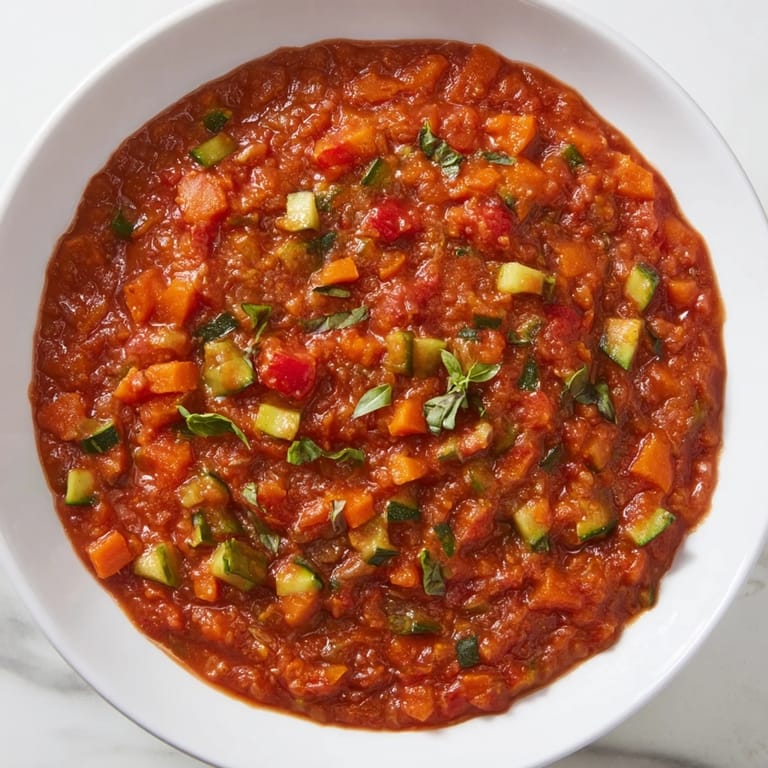
- Cover the pan, lower the heat to maintain a gentle simmer, and walk away for 20 to 25 minutes, stirring every few minutes. By the end, the vegetables will have completely softened and started surrendering themselves to the sauce—when you push a spoon through, it should move like silk.
- Transform it into smoothness:
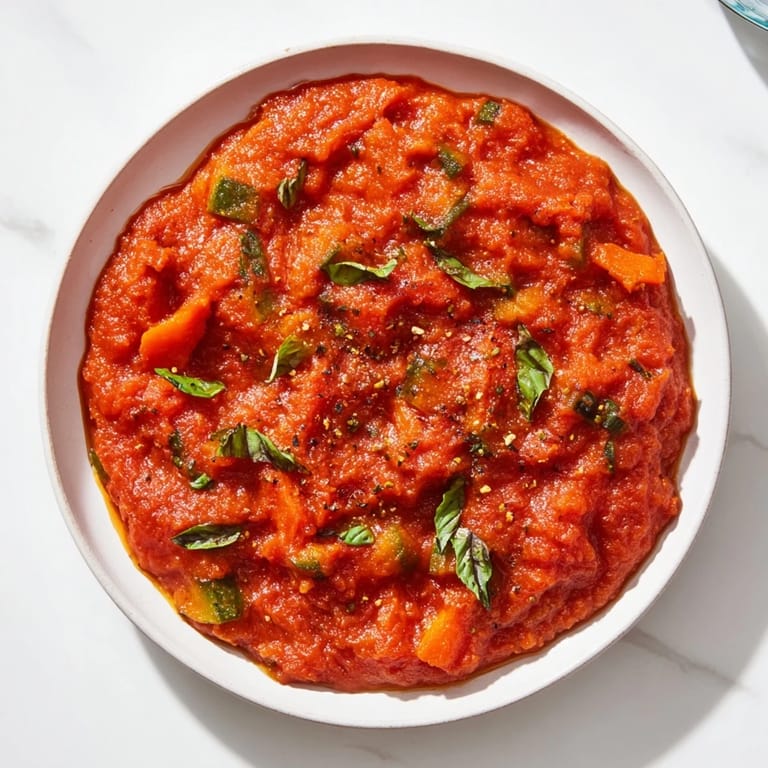
- Remove from heat and use an immersion blender to purée the sauce until it reaches the silkiest consistency you've ever seen. If you're using a countertop blender, work in batches and never fill it more than halfway—hot liquid needs room to expand. The transformation from chunky to velvet is one of cooking's quiet satisfactions.
- Finish and adjust:
- Return the sauce to low heat and let it simmer uncovered for another 5 to 10 minutes, which allows any excess moisture to evaporate and flavors to concentrate. Taste here, because this is your moment to add more salt, pepper, or a pinch of sugar if the sauce still tastes too sharp.
 Save
Save There's a moment that happens every time I make this sauce when someone tastes it and quietly says, 'This is really good,' with genuine surprise in their voice. That's the moment I remember why I bother cooking at all—not because it's complicated, but because something so simple can taste like you actually care.
The Hidden Vegetable Strategy
The whole philosophy behind this sauce is that vegetables don't need to announce themselves to be nourishing. When you purée everything into smoothness, people taste the depth and richness without getting defensive about eating their vegetables. My nephew, who would normally push anything green to the edge of his plate, ate two bowls before his mother asked what made it taste so good. I just smiled because the secret was that there was no secret—just patience and a blender. This approach works for picky eaters of all ages, which is why I keep jars of it ready in my freezer.
Making It Your Own
This sauce is a canvas, not a rule book. The vegetables I've listed are just suggestions based on what I keep around and what I know works, but your crisper drawer might hold different treasures. I've added spinach right before blending, stirred in cooked lentils for a heartier version, and once threw in a small handful of mushrooms just because they needed saving. The tomato base stays the same, but everything else adapts to what you have or what you're craving on any given day.
Storage and Second Life
This sauce freezes like a dream for up to three months, which means you can spend an hour on a weekend cooking and taste homemade pasta dinners for weeks. I pour it into ice cube trays first, then transfer the frozen blocks to bags so I can thaw exactly what I need without defrosting a whole container. Beyond pasta, I've used it as a base for shakshuka, a topping for baked sweet potatoes, and once stirred it into cauliflower for a vegetable curry that shocked everyone with how right it felt.
- Thaw frozen sauce in the refrigerator overnight or in a saucepan over low heat, never rushed because that's how you warm the flavors through properly.
- Add a splash of water if the sauce seems too thick after freezing, stirring until it's the consistency you remember wanting.
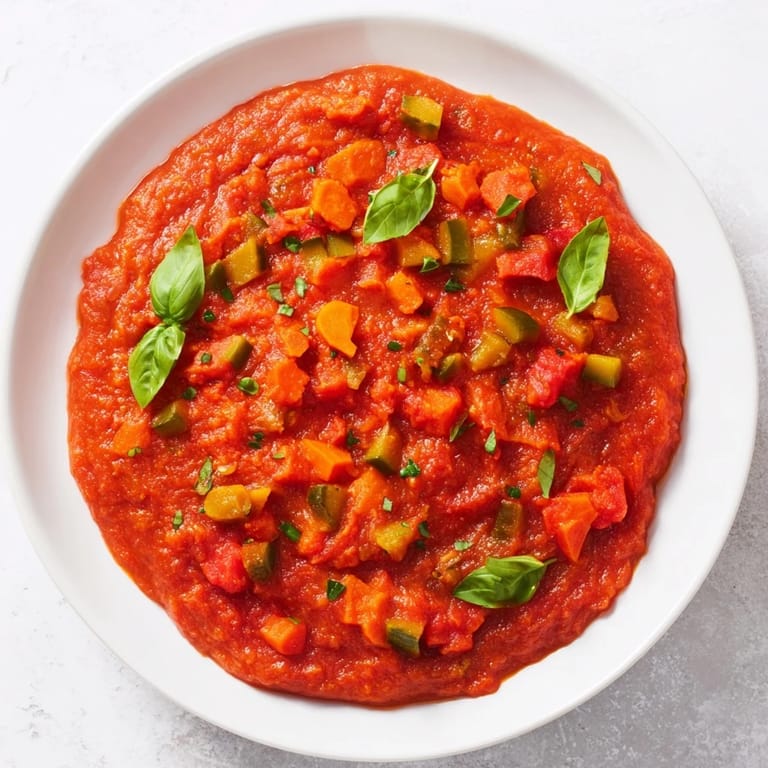
- Fresh basil scattered on top right before serving brings brightness that reminds you this sauce is as alive as your kitchen made it.
 Save
Save A good sauce is the kind you think about days later, the kind that makes you feel like you've taken care of someone, including yourself. This one does exactly that.
Recipe Q&A Section
- → What vegetables are used in the sauce?
Carrot, zucchini, bell pepper, onion, celery, and garlic form the vegetable base, providing sweetness and depth.
- → How is the sauce thickened?
The sauce is thickened naturally by simmering the crushed tomatoes and then blending the softened vegetables until smooth.
- → Can this sauce be made spicier?
Yes, adding red pepper flakes during cooking introduces gentle heat without overpowering the vegetables.
- → What herbs complement the sauce?
Dried oregano and basil enhance the tomato base, while fresh basil garnish adds a fragrant finish.
- → Is this sauce suitable for freezing?
Absolutely, the sauce freezes well for up to three months, maintaining its vibrant flavor and texture.
- → Can additional ingredients be added?
For a heartier twist, cooked lentils or white beans can be stirred in after blending to boost texture and protein.