 Save
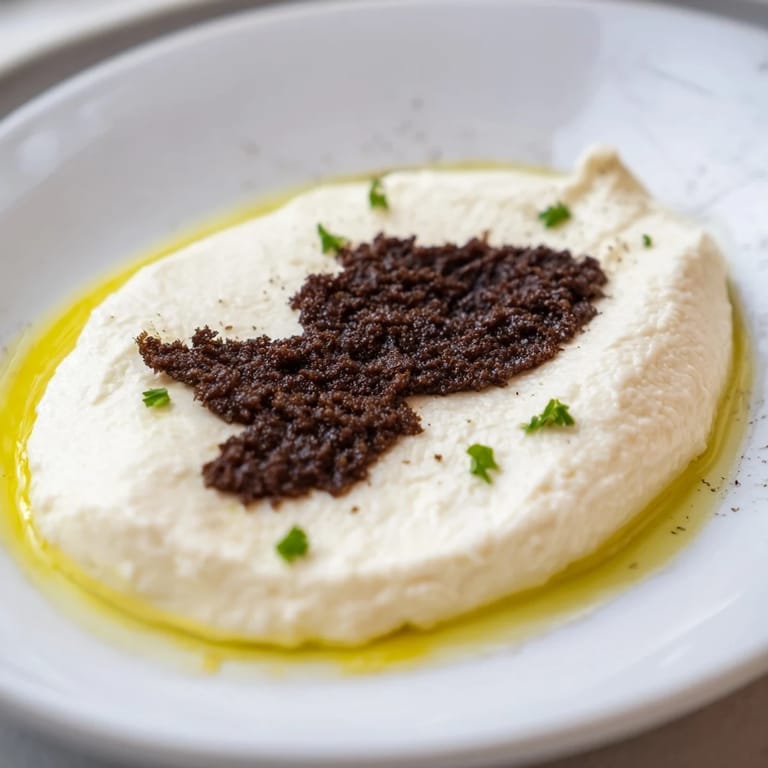
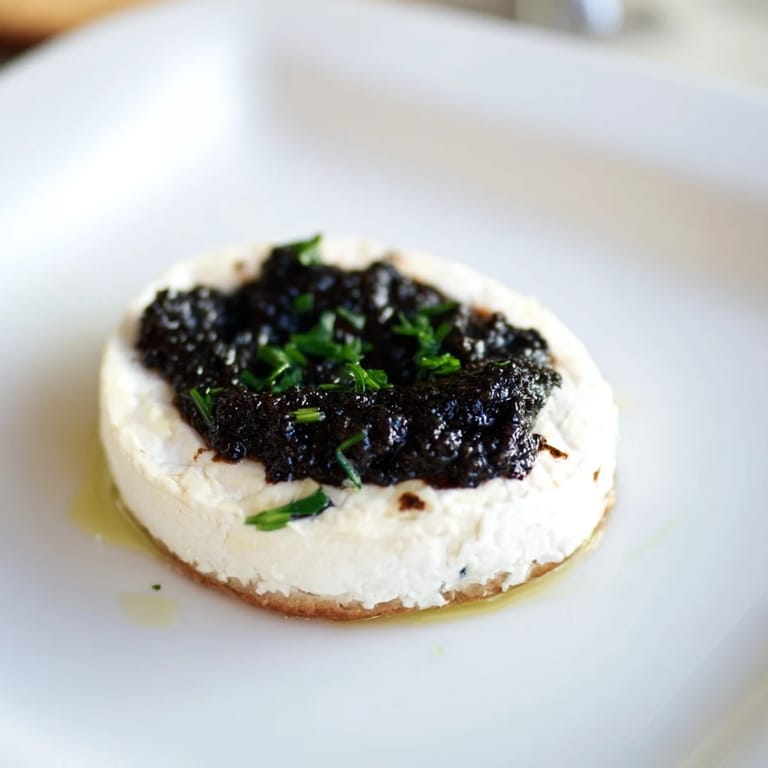
Save I discovered this dish at a gallery opening in a converted warehouse, where a server glided past with a tray of these striking little cheese cameos. The contrast of creamy white against deep olive instantly reminded me of Victorian jewelry, and I couldn't resist asking the chef how she'd created something so elegant in what looked like moments. She laughed and told me the whole magic was in the shaping and a steady hand with the tapenade, nothing more. That night, I went home determined to recreate it, and the simplicity of the technique paired with its undeniable sophistication became one of my most reliable dinner-party secrets.
I'll never forget the moment a usually chatty friend went completely quiet after tasting one of these, fork suspended in mid-air, genuinely considering what she was experiencing. She finally said, "This tastes like you know what you're doing," and I nearly burst out laughing because I'd made them for the first time that afternoon while listening to a podcast. That compliment taught me something crucial: people don't judge food by how hard you labored, but by how carefully you composed it.
Ingredients
- Fresh goat cheese or cream cheese (200 g): The foundation of everything—goat cheese brings a subtle tang that keeps the dish from feeling too rich, while cream cheese works beautifully if you prefer something milder and more buttery. Either way, take it out of the fridge about five minutes before shaping so it's pliable but still holds its form.
- Black olive tapenade (80 g): This is where your flavor comes from, so don't shortcut it with watery olives or overly salty versions. A good tapenade should taste briny and slightly funky, not aggressive.
- Rustic baguette or gluten-free crackers: These are optional but genuinely make the appetizer feel more substantial, turning a cheese bite into something you can actually hold and eat.
- Fresh herbs (thyme or chives): The final whisper of flavor and color that makes these look intentional rather than thrown together.
- Extra virgin olive oil: The drizzle isn't just for looks—it adds richness and brings all the flavors into focus.
Tired of Takeout? 🥡
Get 10 meals you can make faster than delivery arrives. Seriously.
One email. No spam. Unsubscribe anytime.
Instructions
- Shape your cheese ovals:
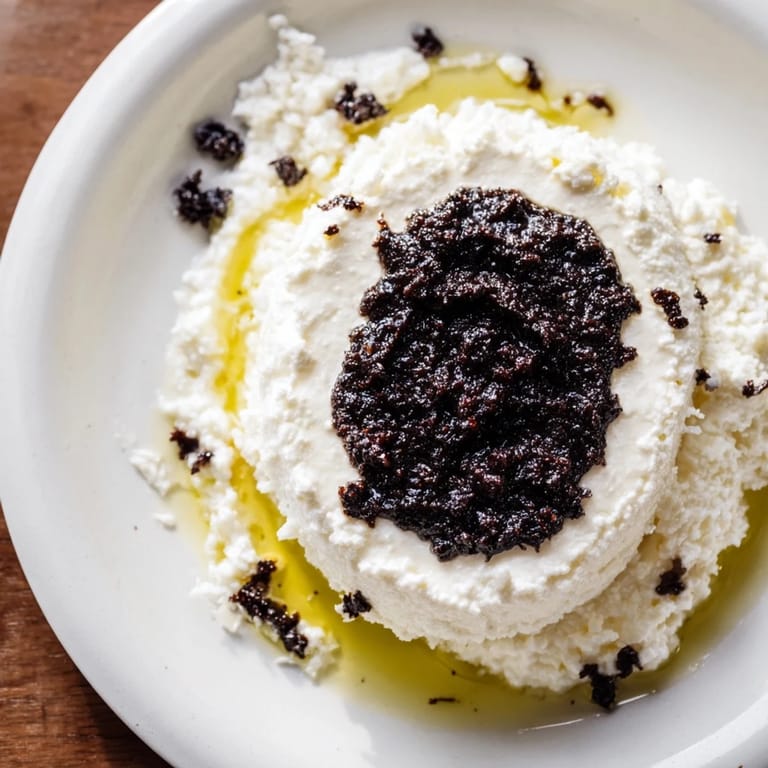
- Divide the cheese into four portions and use your hands or a small spoon to form each into a thick oval about two centimeters tall. The key is confidence—if you hesitate and keep reshaping, the cheese gets warm and loses its definition. Think of it like sculpting something ancient and precious.
- Create your cameo silhouette:
- Using the back of a spoon or a small spatula, spread a thin layer of tapenade across the top and down one side of each cheese oval, as if you're painting a delicate profile. If you're feeling artistic, you can freehand something specific or use a stencil, but even a simple sweeping arc looks sophisticated.
- Add your finishing details:
- Drizzle a small amount of olive oil in a thin circle around each cameo and scatter the fresh herbs over the top with a light hand. This is where the dish transforms from simple to intentional.
- Serve immediately:
- These are best eaten within a few minutes of assembly, while the cheese is still cool and the flavors haven't begun to blur together. Arrange them on a board or platter with extra bread or crackers nearby.
 Save
Save The moment these became essential to my hosting repertoire was when my sister-in-law, who generally tolerates my cooking with kind restraint, actually reached for a second one without being prompted. I watched her eat it slowly, and she said, "This tastes like something you'd order at a place where they charge you eight dollars each." Coming from her, that was a standing ovation.
Making Your Own Tapenade
Store-bought tapenade absolutely works and will save you time, but there's something quietly satisfying about blending your own. The ratio that works for me is about 100 grams of pitted black olives, one small garlic clove, a teaspoon of capers, a teaspoon of lemon juice, and a tablespoon of olive oil. The trick is stopping before it becomes a paste—you want it textured enough that you can still sense individual ingredients. Pulse it in a food processor for maybe thirty seconds, taste it, and stop.
Adapting for Your Table
The beauty of this recipe is that it bends easily to accommodate different needs and preferences. If someone at your table avoids dairy, a high-quality plant-based cream cheese works surprisingly well, though the flavor will be slightly less complex. For gluten-free guests, swapping in good gluten-free crackers is straightforward and feels intentional rather than like an afterthought. I've even served these on endive leaves for a no-carb version that somehow felt even more elegant than the traditional plated version.
Pairing and Serving Suggestions
These cameos are naturally suited to wine, and I've found that a crisp Sauvignon Blanc plays beautifully against the briny tapenade, while a lighter Pinot Noir brings out the creaminess of the cheese. I like to serve them as one element of a larger spread rather than alone—they feel right alongside cured meats, marinated vegetables, or good bread. The portion size means they work as either a substantial appetizer or a delicate one, depending on what else you're offering.
- Pair with white wines that have good acidity to cut through the richness of the cheese.
- Serve these early in the gathering while guests' palates are still fresh.
- Keep extras refrigerated and assemble them only minutes before serving to maintain the contrast between cold cheese and room-temperature tapenade.
 Save
Save What I love most about this recipe is that it proves you don't need complicated techniques or rare ingredients to create something that feels special. It's the kind of dish that makes you feel capable in the kitchen, which, honestly, is half the battle when it comes to wanting to cook at all.
Recipe Q&A Section
- → What type of cheese works best for this appetizer?
Fresh goat cheese (chèvre) or cream cheese provide a smooth, creamy base that pairs well with the olive tapenade.
- → Can the tapenade be made at home?
Yes, homemade tapenade can be prepared by blending pitted black olives with garlic, capers, lemon juice, and olive oil until smooth.
- → Are there gluten-free serving options?
Serving with gluten-free crackers offers a suitable option for those avoiding gluten.
- → How is the silhouette effect created on the cheese?
A thin layer of black olive tapenade is carefully spread on top of the cheese medallions, which can be shaped using a spoon, stencil, or freehand for a cameo look.
- → What herbs complement this dish?
Fresh thyme or chives sprinkled over the cheese and tapenade add a fragrant herbal note that enhances the overall flavor.