 Save
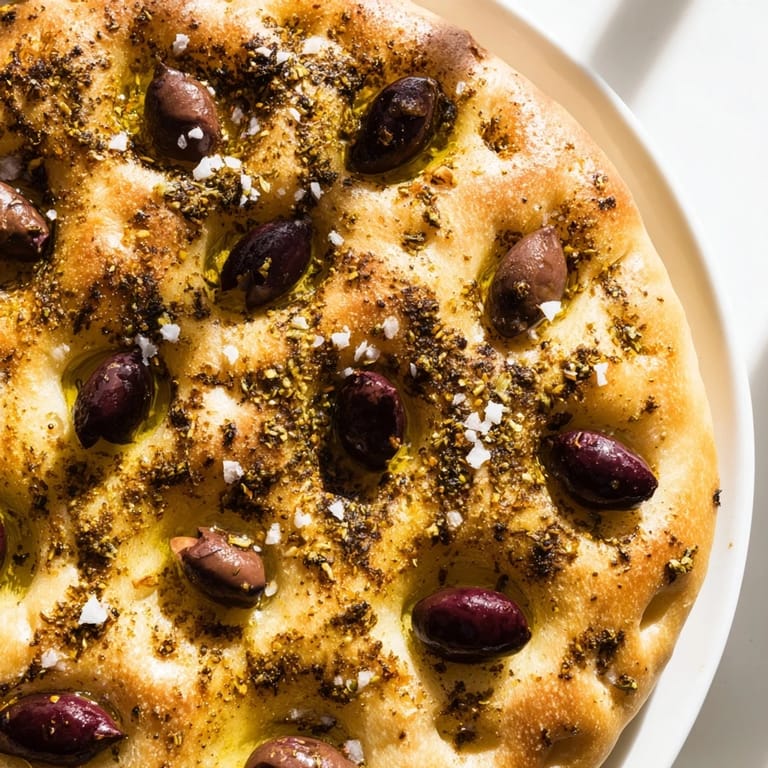
Save There's something about the smell of focaccia baking that stops you mid-thought. A few years back, I was standing in a tiny kitchen in Istanbul, watching a neighbor press dimples into soft dough with her thumbs, and she'd drizzle olive oil into each indent like she was painting. When she sprinkled zaatar across the top, the spice hit the air before it even touched the pan. That moment stuck with me. Now I make this version at home, and every time it bakes, I'm back in that kitchen.
I made this for a potluck once and brought it still warm, wrapped in a kitchen towel. People kept asking what bakery I'd bought it from, and when I casually mentioned I'd made it that morning, someone asked for the recipe before they'd even finished eating their slice. That's when I knew it was a keeper.
Ingredients
- Bread flour (500 g): Use bread flour instead of all-purpose for better structure and that slightly chewy interior; it'll give you those open crumbs you're after.
- Active dry yeast (7 g): Let it bloom in warm water for five minutes—if it doesn't get foamy, your yeast is likely dead and the whole batch will suffer.
- Fine sea salt (1½ tsp for dough): Measure carefully; too much salt will kill the yeast, too little and the dough feels bland.
- Warm water (325 ml): Test it on the inside of your wrist like baby formula—around 40°C is perfect, hot enough to wake the yeast but not so hot it kills it.
- Extra virgin olive oil (60 ml plus 2 tbsp for topping): Use the good stuff you actually like the taste of; cheap oil won't carry the flavor the way the focaccia deserves.
- Zaatar spice blend (2 tbsp): This is the soul of the bread—buy it from a Middle Eastern market if you can, or a specialty grocer, as the blend makes all the difference.
- Kalamata olives (100 g, halved): Pit them yourself if you buy whole ones; the briny juice adds unexpected depth to each bite.
- Flaky sea salt (1 tsp): Scatter this on top just before baking so it doesn't dissolve into the oil.
Tired of Takeout? 🥡
Get 10 meals you can make faster than delivery arrives. Seriously.
One email. No spam. Unsubscribe anytime.
Instructions
- Mix your dry base and wake the yeast:
- In a large bowl, whisk together flour and fine sea salt. In another bowl, sprinkle yeast into warm water and let it sit undisturbed for five minutes—you want to see a tan foam form on the surface, which means your yeast is alive and ready to work.
- Bring it together:
- Pour the yeast mixture and olive oil into the flour and stir until a shaggy, rough dough forms. Don't worry about it looking messy; that's exactly where you want to be right now.
- Knead until smooth:
- Turn the dough out onto a lightly floured surface and knead for eight to ten minutes—or use a stand mixer with the dough hook on medium speed for the same amount of time. You're looking for a dough that's smooth, elastic, and springs back slightly when you poke it.
- First rise:
- Oil a bowl lightly, place the dough in it, and cover with a damp kitchen towel or plastic wrap. Leave it in a warm corner of your kitchen for about an hour, until it's doubled in size. A sunny windowsill works beautifully.
- Shape and second rise:
- Oil a large baking sheet or a 23x33 cm pan. Punch down the dough with your fist—yes, this is satisfying—and press it out evenly into the pan, using your fingertips to stretch it toward the edges. Cover and let it rise again for thirty minutes.
- Dimple and dress:
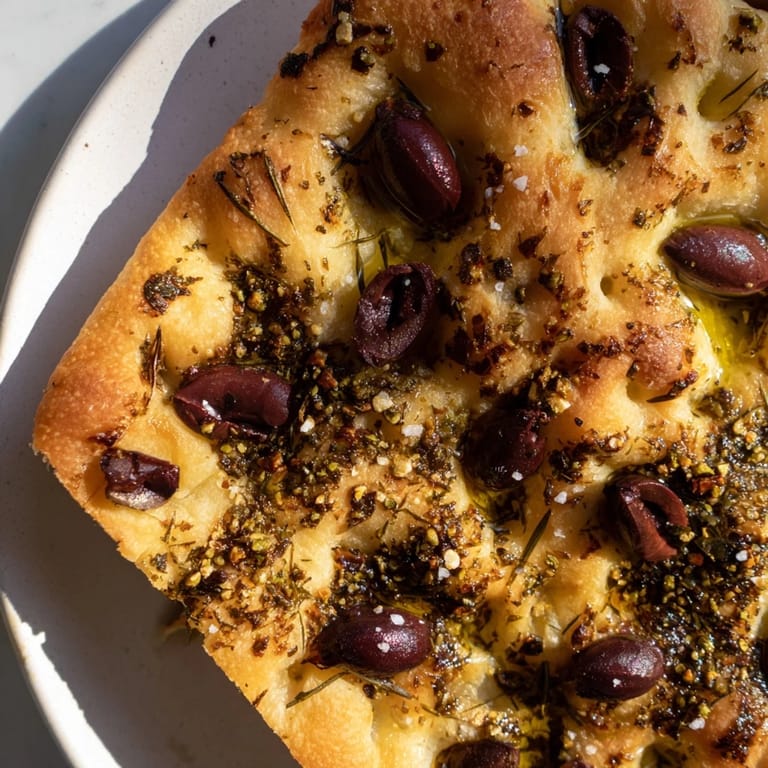
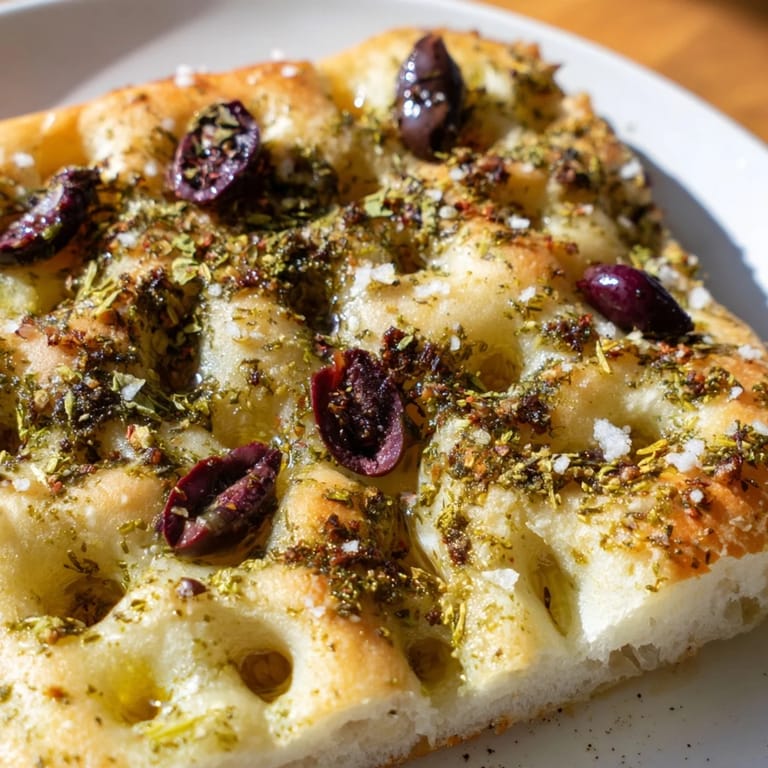
- Preheat your oven to 220°C. Using your fingertips, press deep dimples all over the dough's surface, creating little pockets that'll hold the oil and toppings. Drizzle the two tablespoons of olive oil over the top, scatter the zaatar across generously, arrange the olives, and finish with a light sprinkle of flaky sea salt.
- Bake until golden:
- Bake for twenty to twenty-five minutes, watching for the edges to turn golden and crispy while the top deepens in color. The focaccia is done when the edges are burnished and the smell coming from your oven makes you almost impatient to slice into it.
- Cool and serve:
- Let it cool for a few minutes on the pan—just long enough that you can handle it without burning your fingers—then slice and serve warm or at room temperature.
 Save
Save A friend once served this focaccia sliced alongside a simple salad and a bowl of hummus, and suddenly it felt like a meal, not just bread. That's the magic of it—it's humble enough for a snack but substantial enough to anchor a table.
The Secret to Crispy Edges
The dimpling matters more than people realize. When you press those deep indents with your fingertips, you're creating surfaces for the olive oil to pool and the heat to reach. Those dimples also give you more edge-to-crumb ratio, which means more of that golden, crispy texture you're after. I learned this the hard way by being too gentle on my first attempt and ending up with focaccia that was soft all the way through—edible, yes, but missing that crucial contrast.
When to Use Zaatar
Zaatar has a bright, tangy flavor that tastes best when it hasn't been cooked into submission. Some people mix it into the dough itself, but I prefer to scatter it on top just before baking, so the heat toasts it gently rather than baking it into the crumb. If you're feeling experimental, you can always brush a little zaatar-infused olive oil over the warm bread right after it comes out of the oven for an extra hit of flavor.
Variations and Serving
This bread is a canvas, honestly. I've made it with sun-dried tomatoes folded into the dough, with roasted garlic cloves pressed into the dimples, and even with a mix of green and Kalamata olives for color variation. The base recipe is forgiving enough to handle additions without falling apart. Serve it warm with hummus, labneh, or even just a small bowl of your favorite olive oil for dipping.
- Try mixing a handful of sun-dried tomatoes into the dough if you want a sweeter, more complex flavor.
- If you don't have Kalamata olives, green olives work too—the flavor will be slightly sharper and fresher.
- Leftover focaccia reheats beautifully in a warm oven for about five minutes, though honestly, cold slices disappear just as quickly.
 Save
Save This focaccia has become my go-to when I want to feel like a baker without spending half the day in the kitchen. It's the kind of bread that makes people pause mid-conversation to compliment it.
Recipe Q&A Section
- → What is zaatar and how does it affect flavor?
Zaatar is a Middle Eastern spice blend made from dried herbs, sesame seeds, and sumac, lending a herbal, tangy, and nutty flavor to the bread.
- → Can I substitute Kalamata olives with other olives?
Yes, milder olives like green olives can be used for a less intense, softer briny taste.
- → How important is the rising time for the dough?
Proper rising is crucial for a light and fluffy texture; the dough should double in size during the first rise and puff again after shaping.
- → What variations can enhance the focaccia's flavor?
Adding sun-dried tomatoes or roasted garlic can introduce extra depth and aromatic complexity.
- → How should I serve this focaccia for best taste?
Serve warm or at room temperature alongside dips like hummus or labneh, or simply with olive oil for dipping.