 Save
Save The first time I experimented with buffalo cauliflower in ramen, it was purely accidental. I'd picked up a head of cauliflower intending to roast it plain, but halfway through prepping dinner, I realized I had leftover buffalo sauce from a wing night three days prior. Something clicked—why not coat the florets and crisp them up while the broth simmered? The result was so unexpectedly perfect that I've made it dozens of times since, each bowl a small rebellion against the idea that ramen has to follow rules.
I made this for my roommate on a rainy Tuesday after she'd had the worst day at work. She walked in, smelled the ginger and garlic toasting in that first moment of broth-making, and just closed her eyes. Twenty minutes later, watching her taste that first spoonful—the way her expression shifted from exhausted to genuinely happy—reminded me why I love cooking for people. Food isn't just sustenance; sometimes it's an apology the world owes you, served in a bowl.
Ingredients
- Cauliflower florets (1 medium head): The star that deserves respect—cut them all roughly the same size so they crisp evenly in the oven, and don't be shy about the batter coating.
- All-purpose flour and water: This simple batter crisps up beautifully without heaviness; the water-to-flour ratio keeps things light and keeps the focus on that buffalo kick.
- Garlic powder, paprika, and salt: These season the batter itself, so every bite has flavor before the sauce even touches it.
- Buffalo hot sauce and melted butter: The butter mellows the heat just enough to make it craveable rather than punishing, and it helps the sauce cling to each floret.
- Vegetable oil and fresh garlic and ginger: Toast these together first—it's the foundation that makes people ask what smells so good before they even see the bowl.
- Vegetable broth, coconut milk, miso paste, soy sauce, and rice vinegar: Miso brings umami depth, coconut milk adds richness, and the vinegar keeps everything bright and balanced.
- Ramen noodles: Fresh noodles are ideal if you can find them, but dried work beautifully too—just don't skip the cooking time on the package.
- Toppings (green onions, carrots, cabbage, sesame seeds, cilantro, lime): These are your texture and freshness anchors; they're not optional if you want the full experience.
Tired of Takeout? 🥡
Get 10 meals you can make faster than delivery arrives. Seriously.
One email. No spam. Unsubscribe anytime.
Instructions
- Set up for success:
- Preheat your oven to 425°F and line a baking sheet with parchment paper. This matters—it prevents sticking and makes cleanup genuinely easy.
- Make the batter:
- Whisk flour, water, garlic powder, paprika, and salt in a large bowl until it's smooth like thin pancake batter. The consistency should coat a floret without dripping off immediately.
- Coat the cauliflower:
- Toss your florets in that batter until every piece is covered, then arrange them on the baking sheet in a single layer with some breathing room between each one. Crowding them means they'll steam instead of crisping.
- First bake:
- Bake for 20 minutes, then flip each floret halfway through. You're looking for them to firm up and start turning golden, not necessarily deep brown yet.
- Make the buffalo glaze:
- While the cauliflower bakes, stir together buffalo sauce and melted butter in a small bowl. Taste it—this is your spice baseline.
- Second bake with sauce:
- After the first 20 minutes, brush each floret generously with the buffalo mixture and return to the oven for another 10 minutes. The sauce will deepen in color and the edges will crisp up in a way that's absolutely worth waiting for.
- Build the broth:
- While the cauliflower finishes, heat oil in a pot over medium heat and sauté minced garlic and ginger for 1–2 minutes until the kitchen smells incredible. Then add the vegetable broth, coconut milk, miso paste, soy sauce, rice vinegar, and sriracha if you want extra heat, whisking constantly so the miso dissolves smoothly.
- Simmer and taste:
- Let the broth bubble gently for 10 minutes, then taste it and adjust—maybe it needs more soy sauce for saltiness, more vinegar for brightness, or more sriracha for kick. This is your moment to own the flavor.
- Cook the noodles:
- Follow the package instructions exactly because timing matters; you want them tender but with just a tiny bit of bite left.
- Assemble the bowls:
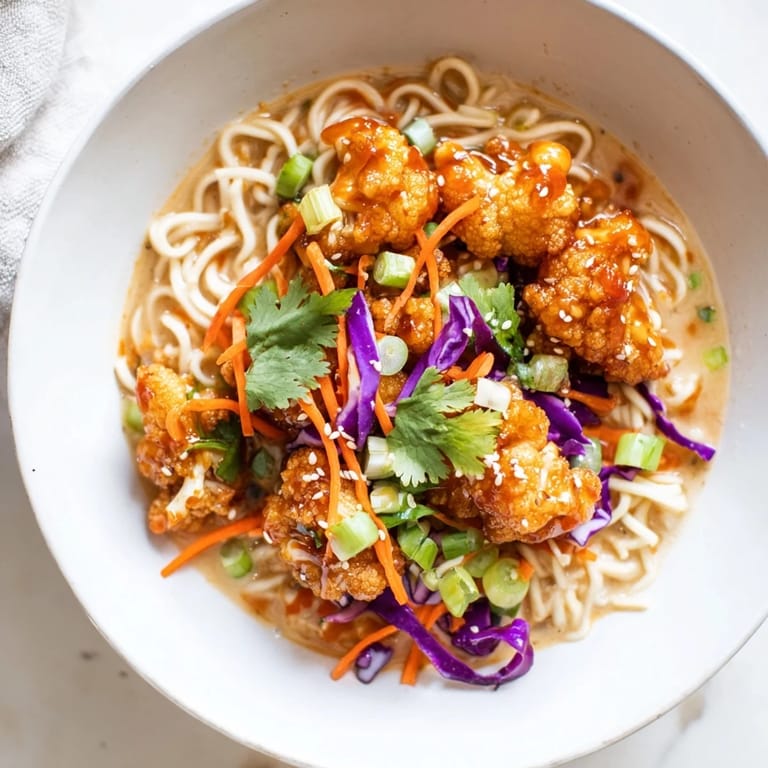
- Divide noodles among four bowls, ladle the hot broth over them, then crown each bowl with buffalo cauliflower bites and scatter the carrots, cabbage, green onions, sesame seeds, and cilantro on top. Serve with lime wedges on the side.
 Save
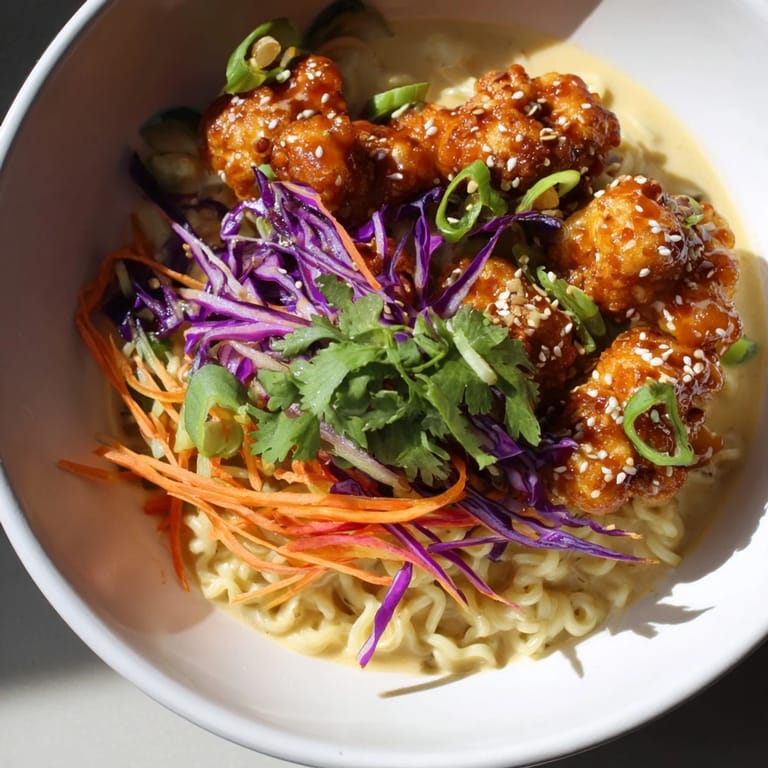
Save There's a particular moment right after you pour the hot broth over the noodles and everything steams up into your face—that's when this dish stops being just dinner and becomes something you're genuinely excited to eat. It's messy and bold and unapologetic, which feels like the point.
Why the Buffalo-Coconut Combination Works
At first glance, buffalo sauce and coconut milk seem like they're from different universes, but they actually complete each other. The buffalo brings heat and tangy acidity, while the coconut milk wraps around those sharp flavors and softens them into something creamy and craveable. The miso adds an umami undertone that grounds both elements, so instead of feeling chaotic, it feels intentional and harmonious. This is fusion cooking at its most honest—not trying to force two cuisines together, but finding genuine harmony between them.
Customizing Your Heat Level
The beauty of this dish is that you control how spicy it actually is. If you like things mild, use less buffalo sauce on the second coating and skip the sriracha entirely. If you're after serious heat, brush the cauliflower more generously and add a full tablespoon of sriracha to the broth—or even more if you're feeling brave. Some people add extra hot sauce drizzled right into their bowl. The heat should be exciting, not punishing; it's there to wake up your palate, not clear it out completely.
Toppings and Build-Your-Own Flexibility
Everything I've listed as toppings is there for a reason—the shredded vegetables add crunch, the sesame seeds bring nutty flavor, the cilantro adds freshness. But this is also where you make it yours. Like soft-boiled eggs? Add them. Have leftover corn? Throw it in. Want sliced radishes for extra bite? Go for it. The dish is structured enough that it won't fall apart if you adjust, but intentional enough that each topping actually contributes something.
- The green onions and cilantro should be added right before eating so they stay fresh and don't wilt into the broth.
- If you're making this ahead, assemble everything except the noodles and toppings, then finish them individually when you're ready to eat.
- Lime wedges make a genuine difference—don't skip them just because they seem optional.
 Save
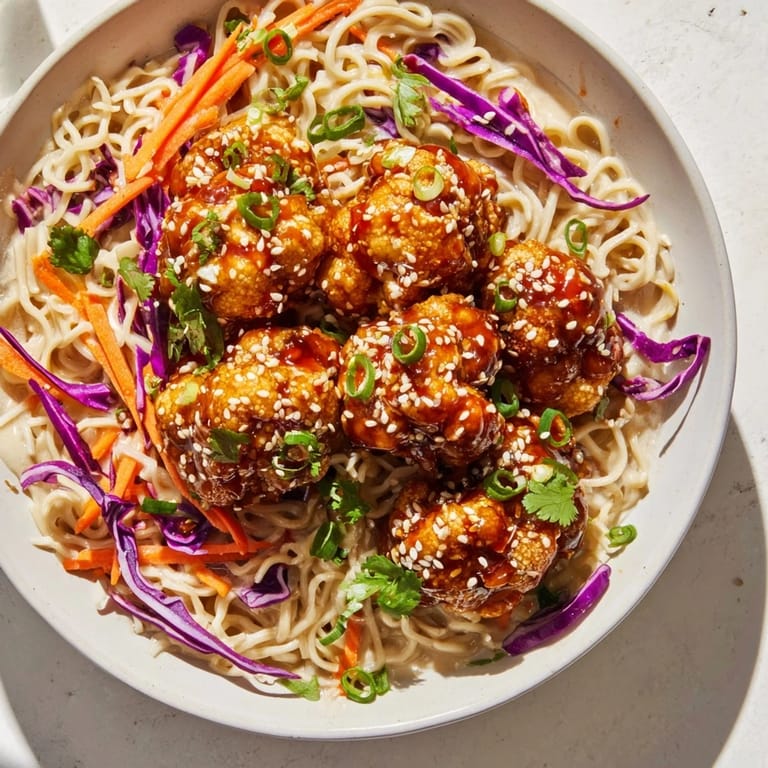
Save This dish proves that ramen doesn't need to be traditional to be deeply satisfying. It just needs to be made with intention and eaten with enthusiasm.
Recipe Q&A Section
- → How do I achieve crispy buffalo cauliflower bites?
Coat cauliflower florets in a seasoned flour batter, bake at high heat, then brush with buffalo sauce and bake again to crisp the coating.
- → Can I make the broth creamier without coconut milk?
Yes, you can substitute coconut milk with other plant-based creams or a splash of cashew cream for richness.
- → What noodles work best for this dish?
Wheat-based ramen noodles, either fresh or dried, offer ideal texture and absorb the creamy broth well.
- → Can the spice level be adjusted?
Absolutely, reduce or omit sriracha and buffalo sauce to lower heat or add more for extra kick.
- → Are there vegan alternatives for butter in the buffalo sauce?
Use vegan butter or margarine melted with buffalo sauce to keep the flavor and maintain vegan-friendly status.