 Save
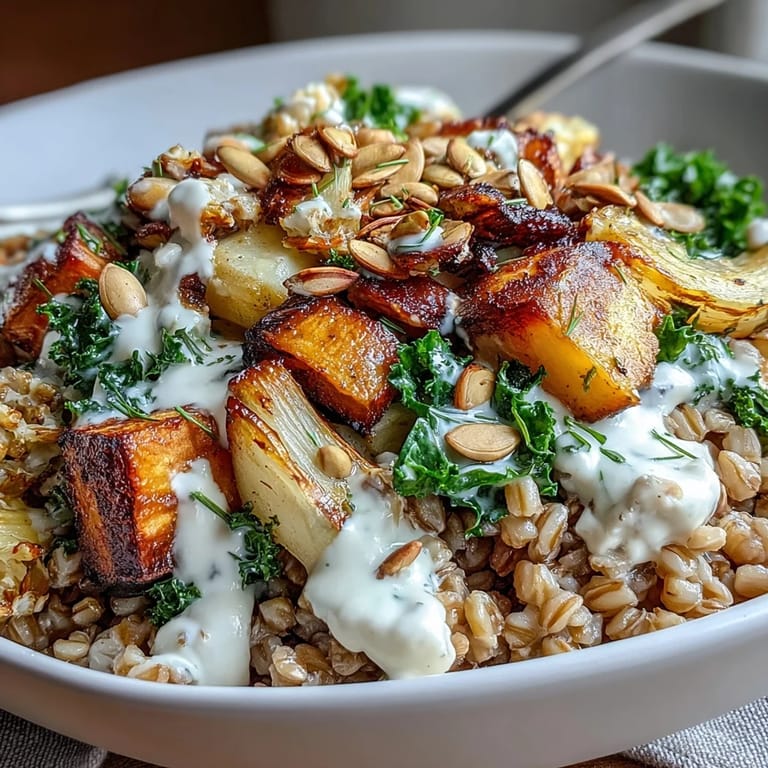
Save Last January, I was standing in my kitchen on a particularly gray afternoon, staring into my nearly empty fridge and feeling that familiar winter fatigue. A half-cooked pot of farro sat on the stove from the night before, and I suddenly thought: what if I stopped trying to make dinner complicated and just built something warm and layered instead? That bowl changed how I think about winter cooking. It became less about effort and more about intention.
I made this for my neighbor Sarah on a snowy Thursday, and she ate it so quietly I thought something was wrong. Then she looked up and said it was the first meal in weeks that made her feel like winter wasn't just something to survive. Now she texts me for the dressing recipe every other month.
Ingredients
- Farro or quinoa: Farro gives you that chewy, satisfying bite that makes the bowl feel substantial, but quinoa works beautifully if you're keeping things gluten-free and honestly cooks faster.
- Vegetable broth or water: Broth is worth the small effort—it adds flavor that makes the grains taste like they were made with intention.
- Carrots, parsnips, and sweet potato: These three together create a roasted sweetness that balances the earthiness of the greens and the tang of the dressing.
- Olive oil: Use enough to coat everything generously; this is what makes them golden instead of sad and shriveled.
- Dried thyme: Just enough to hint at warmth without overwhelming the vegetables.
- Kale or Swiss chard: Kale holds its texture better when wilted, but Swiss chard feels lighter and more delicate if that's what you prefer.
- Garlic: One clove minced is the right amount—enough to make you notice it, not enough to make the bowl garlicky.
- Tahini: This is the soul of the dressing; creamy, slightly nutty, and it takes three whisks to go from separated to silky.
- Lemon juice: Fresh squeezed makes a difference, though bottled works in a pinch.
- Maple syrup: A small amount brings everything together and softens the tahini's intensity.
- Dijon mustard: It adds a subtle sharpness that keeps the dressing from feeling one-note.
- Pumpkin seeds: These add a slight crunch and toast yourself if you have time—the smell is worth it.
- Feta cheese: Optional, but it adds a salty, creamy note that makes the whole bowl feel complete.
- Fresh parsley: A small handful of chopped parsley at the end brightens everything up.
Tired of Takeout? 🥡
Get 10 meals you can make faster than delivery arrives. Seriously.
One email. No spam. Unsubscribe anytime.
Instructions
- Heat your oven and prep the vegetables:
- Set the oven to 400°F. While it warms, peel and dice your carrots, parsnips, and sweet potato into roughly the same size so they roast evenly. This is the only real prep work, and it takes maybe ten minutes if you go slowly.
- Toss and roast:
- In a large bowl, coat the vegetables with olive oil, thyme, salt, and pepper until everything is glistening. Spread them on a baking sheet in a single layer and slide them into the oven. They'll take 25 to 30 minutes, and you'll know they're ready when the edges start to caramelize and the centers are tender when you poke them with a fork.
- Get the grains going:
- While the vegetables roast, rinse your grains under cold water. In a medium saucepan, combine them with vegetable broth or water and bring to a boil. Once it boils, reduce the heat to low, cover the pot, and let it simmer quietly for about 20 minutes if you're using quinoa, or 30 if you chose farro. When the liquid is absorbed and the grains are tender, you're done.
- Wilt the greens:
- Heat a large skillet over medium heat with a tablespoon of olive oil. Add your minced garlic and let it warm through for about 30 seconds until it becomes fragrant. Add your chopped greens and a pinch of salt, then stir constantly for three or four minutes until they collapse into something soft and dark. The transformation happens quickly.
- Make the dressing:
- In a bowl or measuring cup, whisk together tahini, lemon juice, maple syrup, two tablespoons of warm water, and Dijon mustard. The mixture will seem thick at first, but keep whisking and it'll suddenly become smooth and creamy. If it's too thick, add a little more warm water until it reaches a pourable consistency that still clings to the spoon.
- Assemble your bowl:
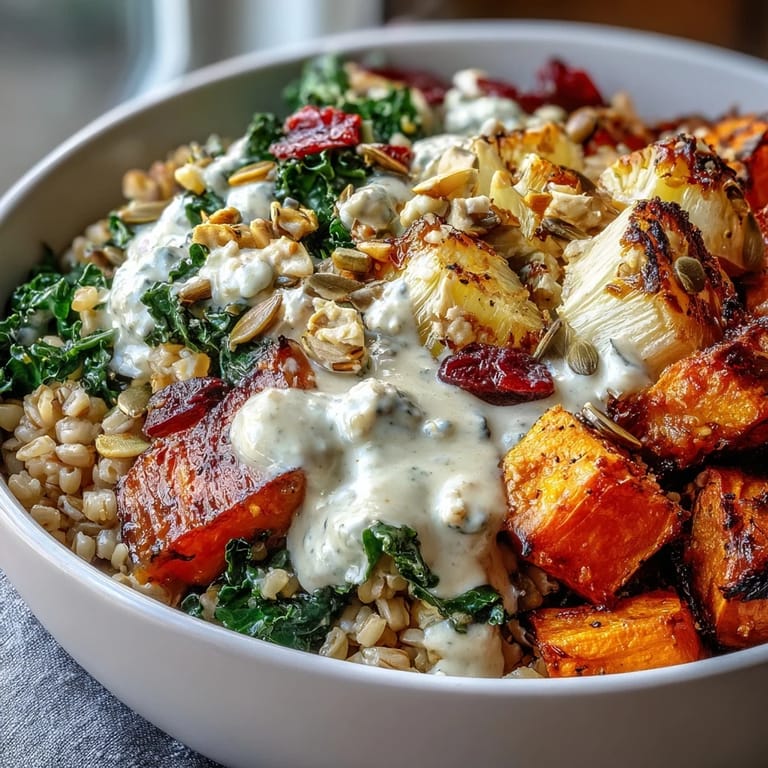
- Divide the warm grains among four bowls as your base. Arrange the roasted vegetables and wilted greens on top, then drizzle the dressing generously over everything. It should pool slightly in the grain, creating pockets of creaminess with every spoonful.
- Finish and serve:
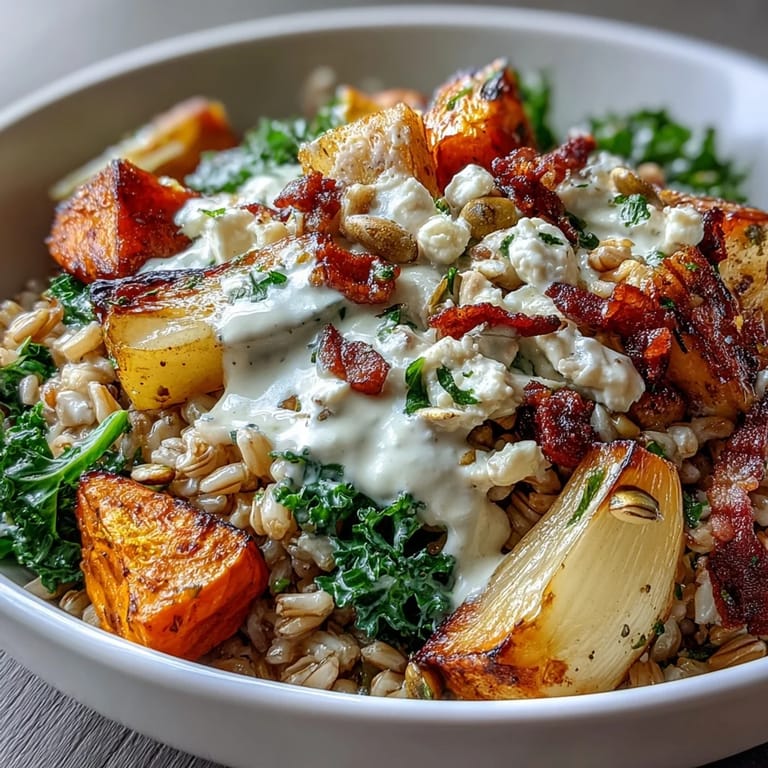
- Top with toasted pumpkin seeds, crumbled feta if you're using it, and a small handful of fresh parsley. Serve it while everything is still warm, so the grains absorb the dressing and the vegetables haven't cooled down yet.
 Save
Save My partner brought this bowl to work one afternoon, and his coworker asked if he was trying to make everyone else jealous. He laughed and said no, but honestly, there's something about a bowl this thoughtfully put together that makes you want to eat it slowly and pay attention.
Why Root Vegetables Are Winter's Secret Weapon
Root vegetables become something entirely different when you roast them. Their natural sugars concentrate, their edges turn golden and crispy, and they develop a warmth that's almost meditative to eat on a cold day. I've learned to never rush the roasting—thirty minutes matters more than twenty.
The Tahini Dressing Changes Everything
This dressing is proof that you don't need cream or dairy to make something rich and satisfying. The tahini becomes this luxurious vehicle for the lemon juice and maple syrup, and somehow it pulls the entire bowl together into something that feels intentional and complete. I started making double batches because I found myself drizzling it on almost everything.
Making This Bowl Your Own
The beauty of grain bowls is that they're flexible without being chaotic. You can swap vegetables based on what's around, adjust the grains to your preference, and even change the entire flavor profile by adjusting the dressing. I've made versions with roasted beets instead of carrots, added crispy chickpeas for extra protein, and once used leftover roasted chicken when I needed something heartier.
- Try roasting any root vegetable you find—parsnips, beets, turnips, or even celeriac all become something special in the oven.
- If you make this vegan, skip the feta and maybe double the pumpkin seeds for that salty, satisfying element.
- Prep the components ahead and assemble the bowls fresh when you're ready to eat, so everything stays warm and nothing gets soggy.
 Save
Save This bowl taught me that winter cooking doesn't have to feel like deprivation. It can be warm, nourishing, and genuinely delicious. Make it once and it becomes something you want again and again.
Recipe Q&A Section
- → Can I make this grain bowl ahead?
Yes! Cook the grains and roast vegetables up to 3 days ahead. Store separately in the refrigerator. Reheat grains and vegetables before assembling, then add fresh dressing and greens.
- → What other grains work well?
Brown rice, wheat berries, barley, or millet all work beautifully. Just adjust cooking time according to package directions. Each grain brings its own texture and flavor profile.
- → Can I use other root vegetables?
Absolutely! Try beets, turnips, rutabaga, or butternut squash. Keep pieces uniform in size for even roasting. Harder vegetables may need a few extra minutes in the oven.
- → Is the dressing make-ahead friendly?
The tahini dressing keeps well in the refrigerator for up to a week. It may thicken when cold—simply whisk in a teaspoon of warm water to reach desired consistency again.
- → How can I add more protein?
Roasted chickpeas, grilled chicken, baked tofu, or a poached egg all make excellent additions. You could also serve with a side of seasoned white beans or lentils.