 Save
Save The earthy aroma of cabbage takes me right back to an evening when I impulsively decided to test out a vegetarian spin on the beloved schnitzel after a day at the farmers market. I remember the sound of breadcrumbs crackling in hot oil, mingling with the gentle sizzle of cabbage slices holding their shape under a golden crust. Trying to recreate that satisfying crunch of a classic schnitzel—without the meat—turned into a small competition with myself. The whole kitchen felt warmer and more inviting as each batch finished, their crisp edges lining up like edible trophies. By the end, I realized cabbage can be far more than a humble sidekick.
I first made these cabbage schnitzels when my roommate and I hosted a last-minute dinner for friends—we laughed about how slicing cabbage became our shared meditative moment, pausing to admire the circular layers before breading and frying together. Every slice turned into a small collaborative triumph as flavors and textures came together behind our chatter.
Ingredients
- Cabbage: Choose a medium green cabbage—look for one that's heavy for its size and tightly layered, which helps keeps those rounds intact through all the flipping and frying.
- Eggs: They act as the essential glue between the flour and crunchy coating—crack them into a wide bowl for easy dipping.
- All-purpose flour: Gives a flawless base layer for breading; don't skip the light dusting, or the crumbs won't hold.
- Breadcrumbs (panko): Panko breadcrumbs create that addictive, airy-crisp crust—it feels like a treat with every bite.
- Salt, black pepper: Just enough to wake up the cabbage and boost the flavor of the crumb coat.
- Sweet paprika: Adds subtle warmth and a hint of color that always looks so inviting after frying.
- Garlic powder: Brings gentle savoriness—if you love garlic, don't be afraid to sneak in a pinch more.
- Vegetable oil: The right oil is neutral and stands up to high heat—sunflower or canola are my go-tos for frying.
- Fresh parsley, lemon wedges (optional): Sprinkling fresh parsley and squeezing lemon at the table makes everything brighter; it's a finishing touch that never fails.
Tired of Takeout? 🥡
Get 10 meals you can make faster than delivery arrives. Seriously.
One email. No spam. Unsubscribe anytime.
Instructions
- Prep the cabbage slices:
- Slice your cabbage into 1-inch thick rounds, trying to keep the core intact so each piece stays together; you'll notice the leaves fanning out beautifully when you cut through.
- Blanch the cabbage:
- Bring a large pot of salted water to a boil, then gently slide in your cabbage rounds—cook for 3–4 minutes until slightly tender but not falling apart; drain and pat them dry so the breading sticks well.
- Set up your breading station:
- Line up three shallow bowls—flour in the first, beaten eggs in the second, and a mix of breadcrumbs, salt, pepper, paprika, and garlic powder in the third; it's amazing how quickly your kitchen turns into an assembly line.
- Bread each slice:
- Coat the cabbage in flour, dip it in egg, then press it into the breadcrumb mixture, gently patting so it all clings evenly—your fingers might get a little messy, but it's worth it.
- Pan-fry to crispy perfection:
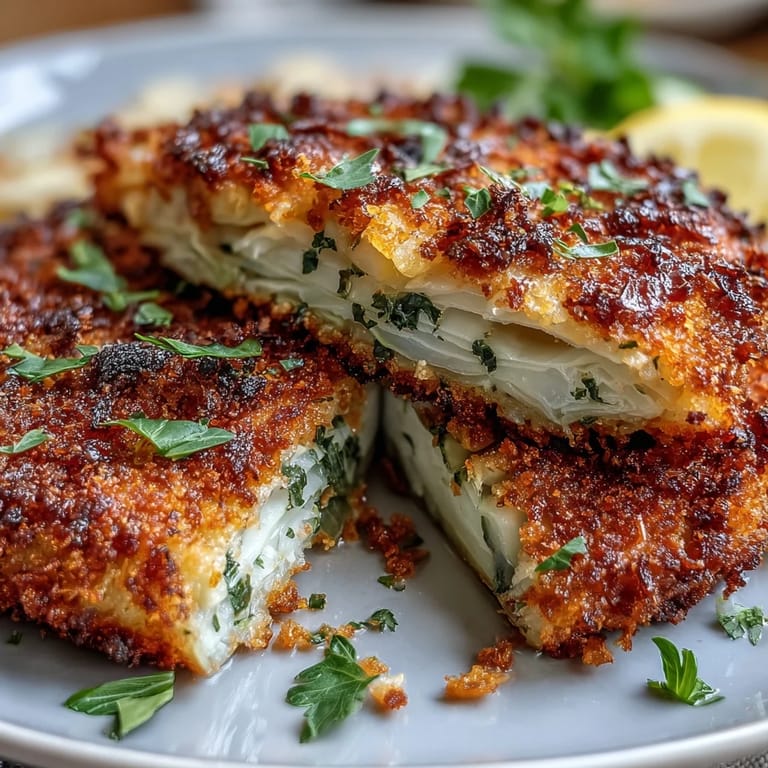
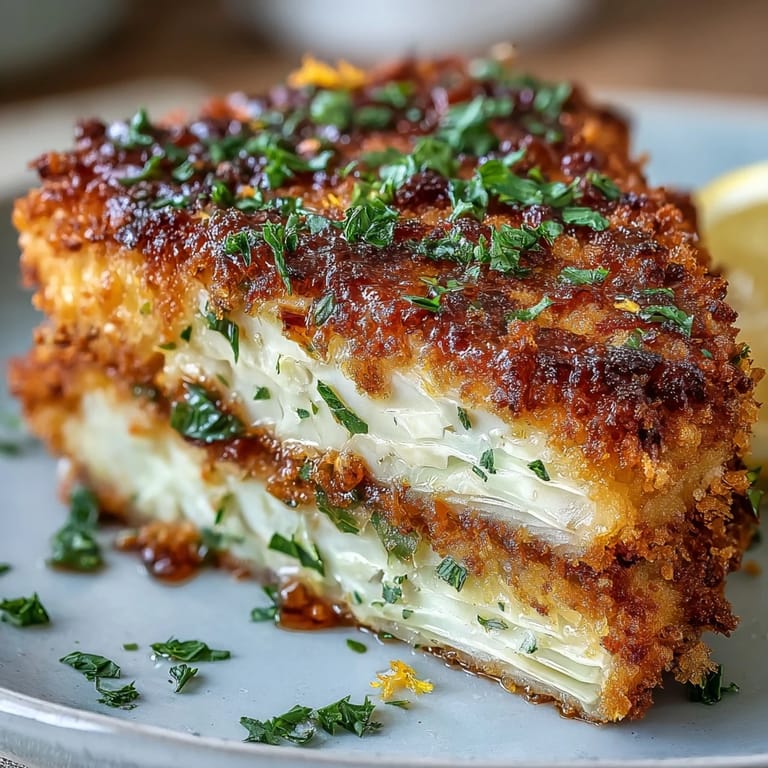
- Heat oil in a large skillet over medium heat and fry the breaded cabbage slices for about 4–5 minutes each side; they should make a lively hiss and develop a deep golden color, like a tempting crust you can't wait to tap.
- Drain and garnish:
- Set the schnitzels on a paper towel-lined plate to wick away extra oil, then, while still hot, finish with chopped parsley and a squeeze of lemon if you like things bright.
 Save
Save 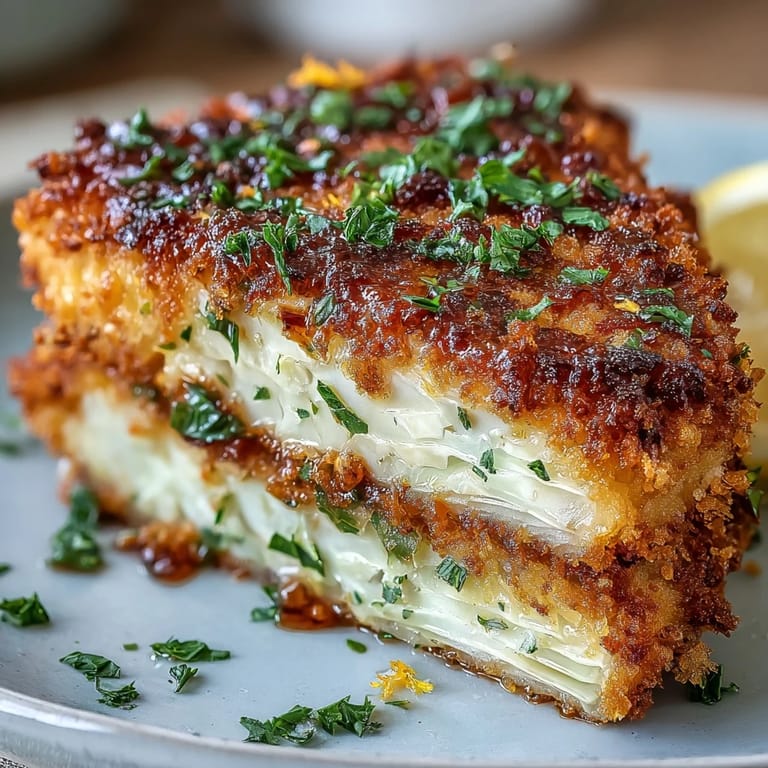 Save
Save The first bite that made everyone at the table pause was a tiny victory—no meat, just shatteringly crisp cabbage, a squeeze of lemon, and a surprising sense of pride. For a moment, the dish stopped all the usual dinner conversations and everyone grinned in disbelief.
A Few Flavor Boosters
I've tried sneaking a little grated Parmesan into the breadcrumb mix for extra depth; when I did, it was polished off faster than I expected. Other times, dusting the schnitzels with smoked paprika right after frying gave a subtle campfire aroma. If you're feeling bold, a quick swipe of mustard on the cabbage before dredging in flour makes a secret savory layer underneath all that crunch.
Serving Ideas to Savor
For a casual supper, I like piling the schnitzels over creamy mashed potatoes or alongside potato salad—the contrast in textures always wins. A fresh green salad tossed in a mustardy vinaigrette balances the richness beautifully. Leftover schnitzels are unbeatable tucked into a crusty sandwich with slaw or as a crispy element in a wrap.
Keeping Things Simple and Crispy
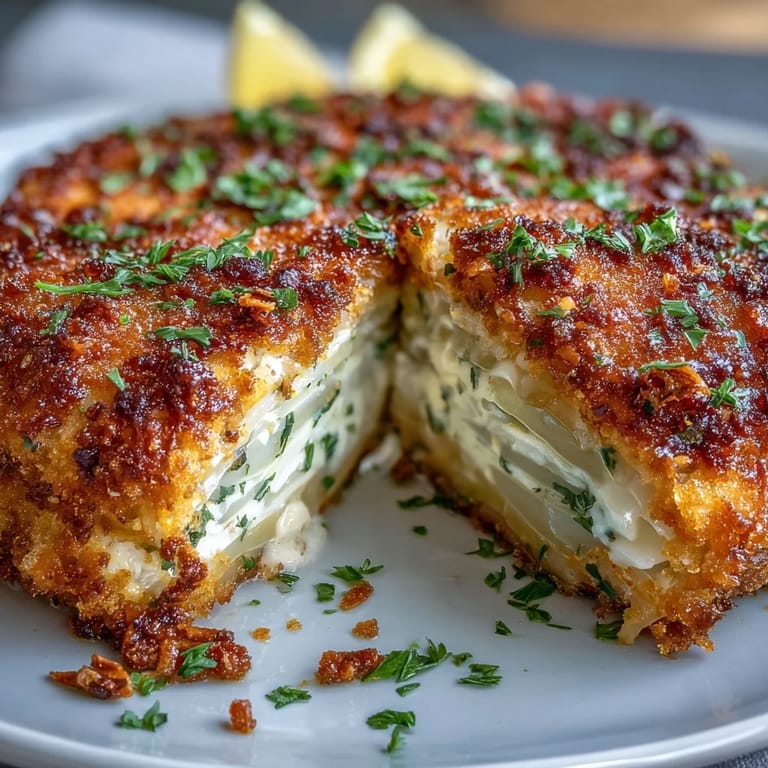
Don't worry if some slices seem more rustic—those caramelized edges are secretly the cook's reward. Getting the oil up to the right sizzle before each new batch keeps every schnitzel as crispy as you want. And if you're prepping ahead, let the breaded cabbage slices rest for 10 minutes before frying, which helps the crust stay put.
- Be generous with paper towels when draining after frying to keep the crunch alive.
- Panko really does make all the difference—regular breadcrumbs work but the texture just isn't as light.
- If your skillet gets crowded, fry in batches so steam doesn't sneak in and soften that crisp shell.
 Save
Save 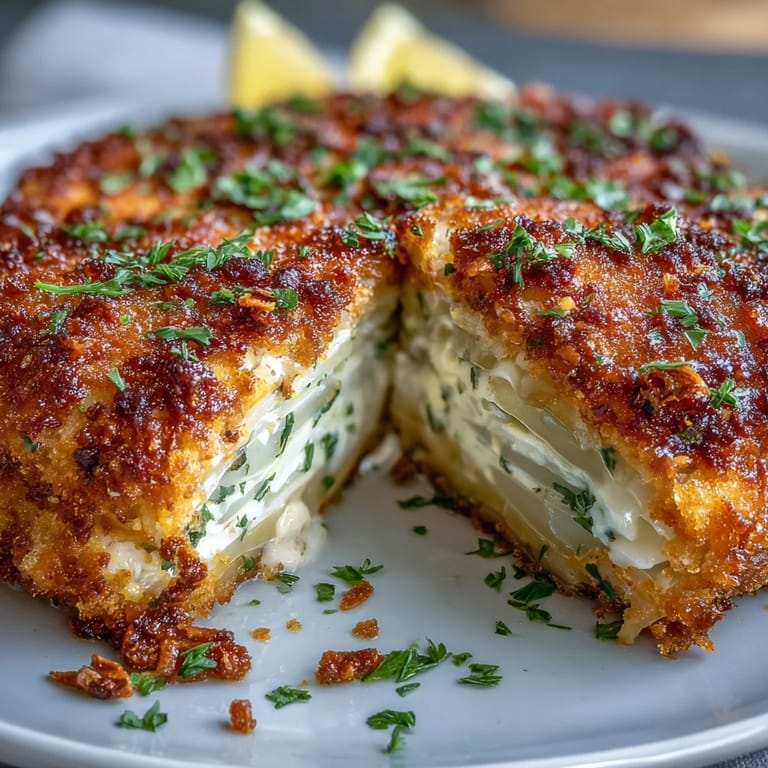 Save
Save Next time you need a dish that surprises everyone, let cabbage schnitzel take center stage—there's genuine joy in transforming the ordinary into something extraordinary. A crunchy, golden reward is waiting, whether you're new to cabbage or a longtime fan.
Recipe Q&A Section
- → How thick should the cabbage slices be?
Slice the cabbage into about 1-inch thick rounds and keep the core intact so each slice holds together during blanching and frying; you should get 4–6 slices from a medium head.
- → How long do I blanch the cabbage?
Blanch slices in boiling, salted water for 3–4 minutes until just tender but still firm. Drain well and pat completely dry to help the breading adhere and reduce oil splatter.
- → What breadcrumbs work best for crispiness?
Panko breadcrumbs give an especially light, crunchy crust, but regular breadcrumbs will work. For extra flavor, mix in grated hard cheese or chopped fresh herbs if desired.
- → What oil and temperature should I use for frying?
Use a neutral oil with a high smoke point such as sunflower or canola. Heat over medium so the exterior becomes golden without burning; fry 4–5 minutes per side and adjust heat as needed.
- → Can this be made vegan or gluten-free?
For vegan, replace eggs with a slurry of plant milk and a tablespoon of flour or cornstarch. For gluten-free, use gluten-free flour and breadcrumbs. Press coatings firmly so they stay on during frying.
- → What are good serving suggestions?
Serve hot with lemon wedges and chopped parsley. Pairs well with potato salad, mashed potatoes or a simple green salad for a hearty, balanced plate.