 Save
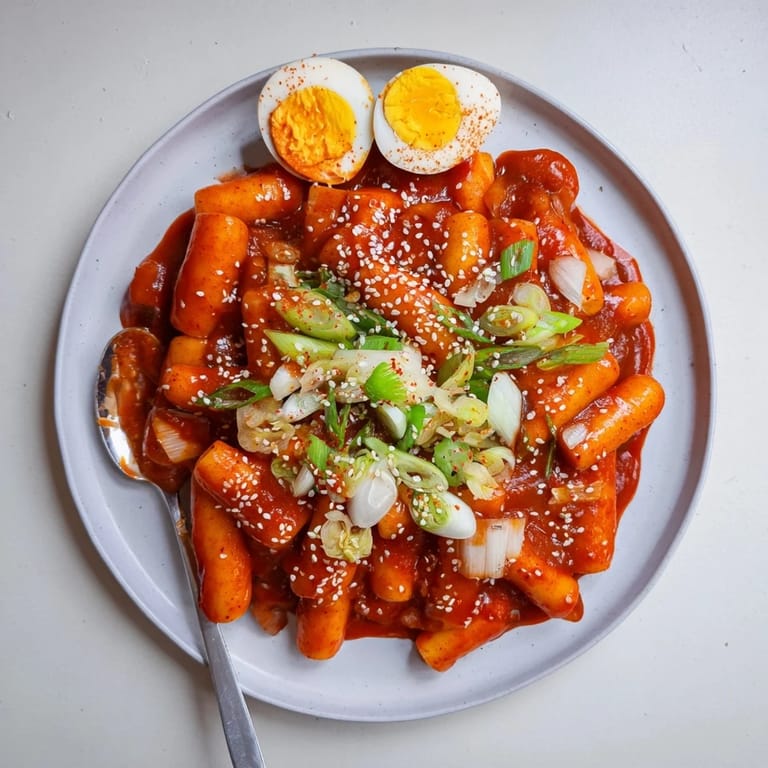
Save My tiny Seoul apartment kitchen had just enough counter space for one cutting board and exactly three feet of walking room. The first night I made tteokbokki, I accidentally set off the smoke detector because I was too busy staring at the sauce thickening and forgot the broth was bubbling over. My neighbors probably thought I was burning down the building, but when I finally pulled that steaming pot of chewy rice cakes in their crimson sauce from the burner, I knew Id be making this forever. The way the sauce clings to each cylinder, that perfect balance of sweet and heat hitting your tongue, the chew that somehow never gets old.
Last winter, my friend who swears she cannot handle spicy food took one tentative bite and immediately asked for the recipe. We spent the entire evening dipping whatever we could find in the leftover sauce, and I realized this is not just a dish but a reason to gather people around a communal pot.
Ingredients
- 500 g Korean rice cakes (tteok, cylindrical): Fresh ones need no soaking, but if you find refrigerated or frozen, give them a warm water bath to bring back that signature chew
- 3 tbsp gochujang (Korean chili paste): The fermented base that gives the sauce its deep, complex flavor and that gorgeous red color
- 1 tbsp gochugaru (Korean chili flakes): Adjust this up or down based on your heat tolerance, but do not skip it entirely
- 2 tbsp soy sauce: Adds the necessary saltiness and umami depth to balance the sweetness
- 1 tbsp sugar and 1 tbsp honey: This double sweetness mimics what you find on Korean streets, with sugar providing body and honey adding a floral note
- 2 cloves garlic, minced: Fresh garlic makes all the difference, so avoid the pre-minced stuff in jars
- 3 cups water: The foundation of your broth, enhanced with kelp and anchovies if you are not vegetarian
- 1 dried kelp (kombu): Even if you skip the anchovies, keep the kelp for that subtle ocean sweetness
- 2 green onions, sliced diagonally: Add these at the end so they stay bright and provide a fresh contrast to the rich sauce
Tired of Takeout? 🥡
Get 10 meals you can make faster than delivery arrives. Seriously.
One email. No spam. Unsubscribe anytime.
Instructions
- Prep your rice cakes:
- If your tteok feel rock hard or have been sitting in the fridge, drop them into a bowl of warm water for 10 minutes while you make the broth
- Build the flavor foundation:
- Combine 3 cups water, the dried kelp, and anchovies in a medium pot and let it simmer gently for 10 minutes, then fish out the solids with tongs
- Create the sauce:
- Whisk in the gochujang, gochugaru, soy sauce, sugar, honey, and minced garlic until the paste dissolves completely and the broth turns a deep red
- Add the heart:
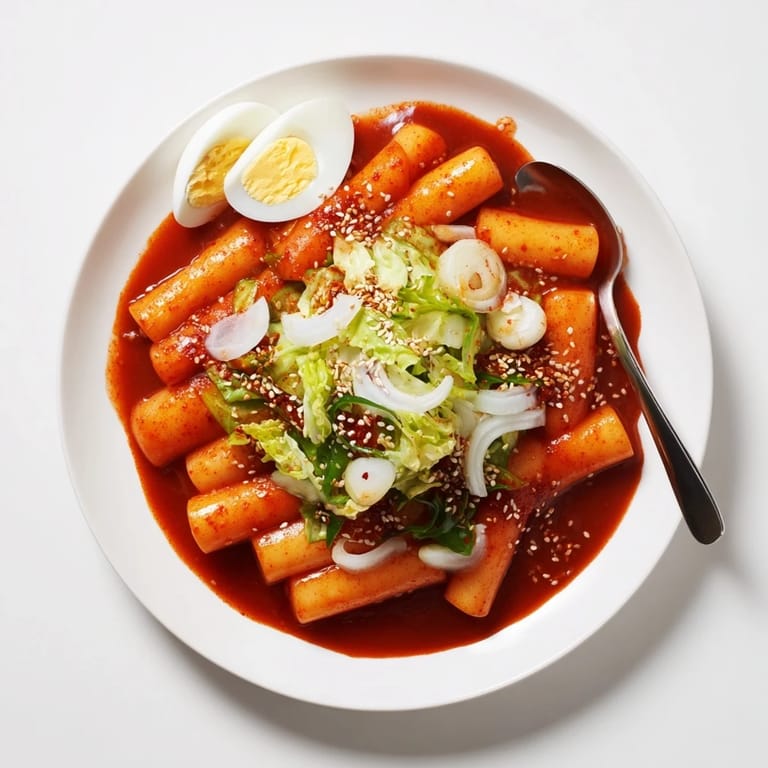
- Drop in the rice cakes along with sliced onion and cabbage, bring everything to a gentle bubble, and stir occasionally so nothing sticks to the bottom
- Let it thicken:
- Simmer for 10 to 15 minutes until the sauce coats the back of your spoon and the rice cakes feel soft and pillowy when you press them
- Finish with freshness:
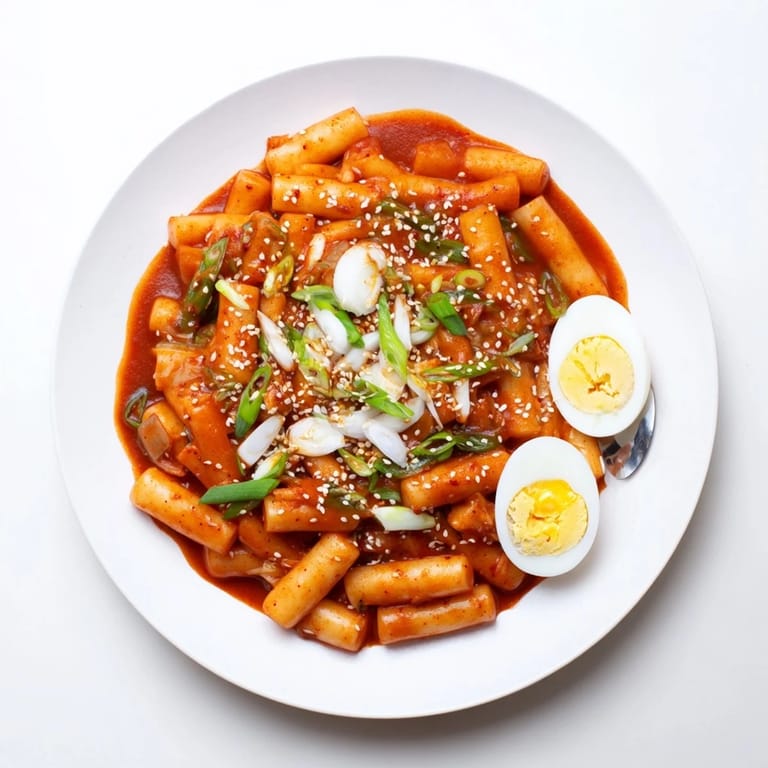
- Toss in the green onions and boiled eggs during the last 2 minutes, then scatter sesame seeds over everything before serving
 Save
Save There is something almost meditative about standing over the pot, watching the sauce transform from watery broth to glossy coating, the smell of garlic and fermented chili filling your kitchen. This is the kind of food that demands you slow down and pay attention.
Making It Your Own
The beauty of tteokbokki lies in how adaptable it is to whatever you have on hand. Throw in sliced fish cakes during the last 5 minutes for a more traditional street food experience, or add ramen noodles for a carbo loaded hybrid that students in Korea swear by.
Serving Suggestions
Pair this with something cool and crisp to cut through the heat. A simple cucumber salad dressed lightly in vinegar works beautifully, or serve alongside pickled radish squares which you can often find at Asian markets already prepared.
Storage Wisdom
This dish is best eaten immediately, as rice cakes tend to harden when refrigerated and reheating can make them gummy. If you must store leftovers, keep them in the sauce and reheat gently with a splash of water.
- Cook only as many rice cakes as you plan to eat in one sitting
- The sauce can be made ahead and stored separately for up to a week
- Never freeze cooked rice cakes unless you want to rediscover them as small rocks
 Save
Save Make this on a Tuesday night when you need something that feels like a warm hug, and watch how quickly it becomes part of your regular rotation.
Recipe Q&A Section
- → Can I make tteokbokki less spicy?
Yes, reduce the amount of gochugaru (Korean chili flakes) or omit it entirely. The gochujang provides the base flavor, so adjust gradually to your heat preference while maintaining the sauce's signature taste.
- → What should I do if my rice cakes are too hard?
Soak refrigerated or frozen rice cakes in warm water for 10-15 minutes before cooking. This softens them and ensures they become perfectly chewy rather than tough when simmered in the sauce.
- → How do I make tteokbokki vegetarian?
Skip the dried anchovies and use only kelp (kombu) for the broth. Ensure your gochujang and soy sauce are vegetarian-certified, and avoid adding fish cakes as an optional ingredient.
- → Can I add other ingredients to tteokbokki?
Absolutely! Common additions include fish cakes (eomuk), boiled eggs, cabbage, scallions, and Korean dumplings (mandu). Cheese is a popular modern twist that creates a creamy, indulgent variation.
- → How do I store leftover tteokbokki?
Store in an airtight container in the refrigerator for up to 2 days. Reheat gently with a splash of water to loosen the sauce, as the rice cakes will absorb liquid and firm up when cold.
- → What makes the sauce thick and glossy?
The starch from the rice cakes naturally thickens the sauce as they simmer. Stirring occasionally and cooking until the liquid reduces creates that signature glossy, clingy coating on each rice cake.