 Save
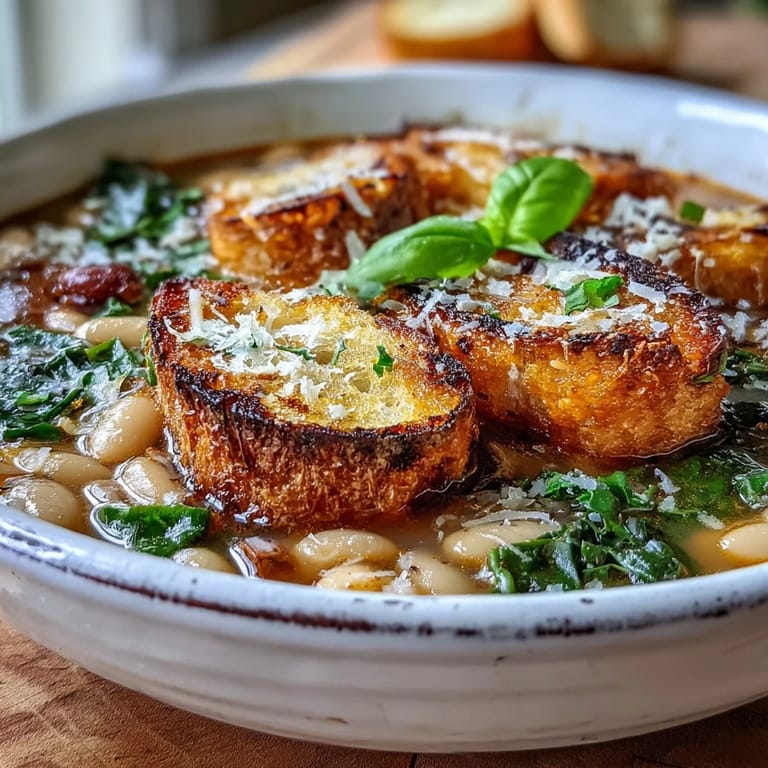
Save There's something about watching a pot of ribollita come together that makes you feel like you've stumbled onto an Italian grandmother's best-kept secret. I learned this soup during a rainy afternoon in my kitchen when I had almost nothing in the pantry except canned beans, day-old sourdough, and stubborn determination to make something warm. The first spoonful hit different—crispy croutons shattering against creamy beans, earthy kale, and that perfect salty broth that tastes like someone's been simmering it all day. It became the soup I make when I want to feel grounded, when I need comfort that doesn't apologize for being simple.
I made this for a dinner party once and my friend Sarah actually asked for the recipe before dessert even hit the table, which never happens. She was the type who picked at salads and ordered pasta everywhere, but she went back for seconds of ribollita with this look of surprise on her face. Watching someone discover that beans and vegetables can be this satisfying, this comforting—that's when I knew this recipe was keeper material.
Ingredients
- Extra-virgin olive oil: Use the good stuff here; it's one of few ingredients, so it actually matters. This is where you taste the quality.
- Yellow onion, carrots, and celery: The holy trinity of Italian cooking—they build the flavor foundation everything else rests on.
- Garlic cloves: Mince them fine and add after the softer vegetables so they don't burn; burnt garlic tastes bitter and ruins the whole thing.
- Fennel bulb: Skip it if you can't find it, but if you do use it, that subtle anise flavor elevates the whole pot in ways you won't see coming.
- Zucchini and Yukon gold potato: The zucchini keeps things light, the potato adds body and creaminess when it breaks down.
- Tuscan kale (cavolo nero): Don't use regular curly kale; the texture is all wrong and you'll miss the more delicate, slightly sweet flavor that cavolo nero brings.
- Canned diced tomatoes: Keep the juices in—that's liquid gold for your broth.
- Cannellini beans: Canned works perfectly fine; rinsing them removes excess sodium so the seasoning stays in your control.
- Vegetable broth: Good quality matters; cheap broth tastes like salty water and there's nowhere to hide it here.
- Bay leaf, thyme, and oregano: These dried herbs create that distinctive Italian warmth without needing fresh herbs you might not have on hand.
- Sourdough bread: Day-old is crucial—fresh bread turns to mush, but aged bread crisps up like it was meant to.
Tired of Takeout? 🥡
Get 10 meals you can make faster than delivery arrives. Seriously.
One email. No spam. Unsubscribe anytime.
Instructions
- Sauté the aromatic vegetables:
- Heat olive oil in a large Dutch oven over medium heat and add your diced onion, carrots, celery, and fennel if you're using it. Let them soften for 8–10 minutes, stirring now and then—you want them tender and just starting to turn golden at the edges, which means the natural sugars are caramelizing and building flavor.
- Add garlic and the rest of the vegetables:
- Stir in minced garlic and cook for just a minute until your kitchen smells unreal, then add the zucchini, potato, and chopped kale. Cook for another 3–4 minutes, letting the kale start to wilt slightly and everything marry together.
- Build the soup:
- Pour in the tomatoes with all their juice, add your rinsed beans, vegetable broth, bay leaf, dried herbs, and red pepper flakes if you like a whisper of heat. Season generously with salt and pepper—this is your moment to taste and adjust before it all simmers down.
- Simmer and partially mash:
- Bring everything to a boil, then drop the heat to low and let it simmer uncovered for 35–40 minutes, stirring occasionally so nothing sticks. As it cooks, use the back of your spoon to gently mash some of the beans and vegetables against the pot's side—this thickens the soup naturally and makes it taste luxurious without needing cream.
- Make golden croutons:
- While the soup simmers, preheat your oven to 400°F and toss sourdough cubes with olive oil on a baking sheet. Bake for 10–12 minutes, shaking the pan halfway through, until they're deeply golden and crisp—the sound when you break one in half should be satisfying and loud.
- Finish the croutons with garlic:
- As soon as the croutons come out of the oven, rub them with a halved garlic clove while they're still warm so the garlic melts slightly and flavors them throughout. This small step is what makes store-bought croutons seem sad and defeated.
- Taste and serve:
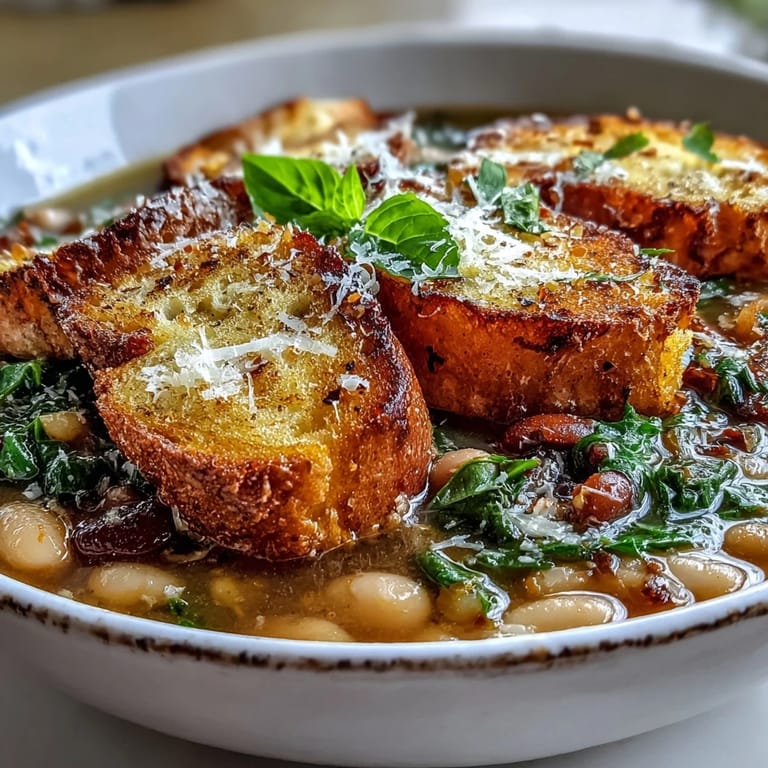
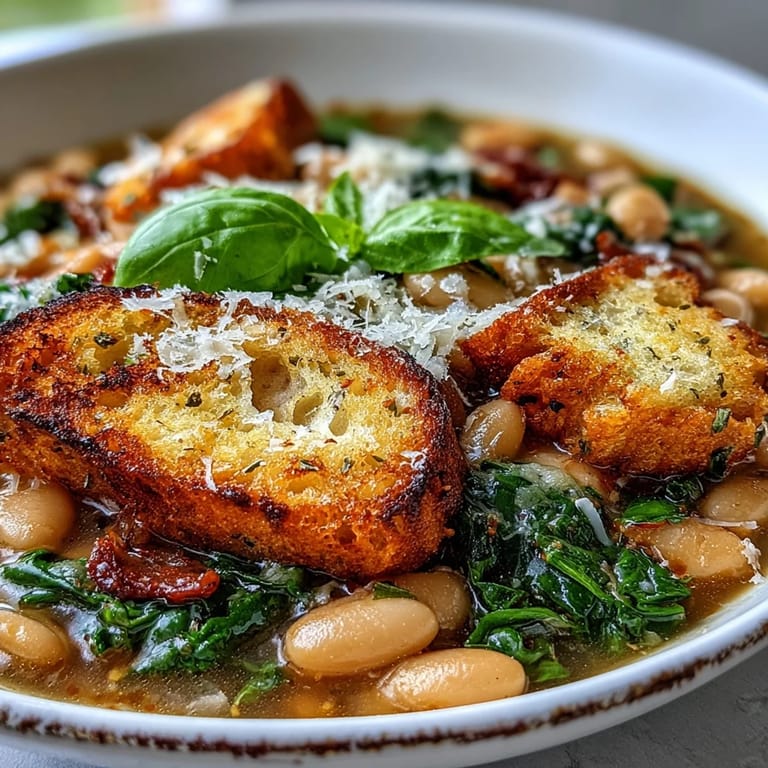
- Remove the bay leaf, taste the soup, and adjust salt and pepper if needed. Ladle into bowls and crown each one generously with warm croutons, a thin stream of your best olive oil, and a scatter of Parmigiano-Reggiano if that's your style.
 Save
Save The best part about this soup is serving it to someone on a cold night when they didn't expect to feel so cared for by a bowl of vegetables. There's something profound about simple food that takes a little time and tastes like someone actually thought about you while cooking it.
Why This Soup Never Gets Old
Ribollita is one of those dishes that tastes different depending on what you put into it and when you make it. In fall I add more root vegetables, in spring the kale goes lighter, and in winter I sometimes sneak in a parmesan rind while it simmers for that umami depth. The structure stays the same but it feels like a new dish every season, which is probably why Italians have been making versions of it for centuries.
Troubleshooting the Common Mistakes
I once made this soup and used fresh bread instead of day-old, and by the time the croutons hit the bowl they'd turned into sad little sponges. I also learned the hard way that if you skip the partial mashing, you end up with a soup that tastes more like vegetable stew than the silky, bean-thickened magic that ribollita should be. The lesson: pay attention to the small moves and you'll eat something that feels effortless to everyone else.
How to Make It Your Own
The beauty of ribollita is that it's forgiving in the best way possible. If you hate fennel, leave it out entirely; if you have Swiss chard instead of kale, use that. Some people add white beans and some add red kidney beans, and both versions taste authentic because this soup was born from Italian home cooks using whatever was in the garden. You can even add a parmesan rind while it simmers to create a richer, deeper broth that tastes like it's been stewing for hours.
- Parmesan rind trick: Drop one in during the last 15 minutes of cooking and remove before serving for instant umami magic.
- Cold soup option: Ribollita is just as good cold the next day, which makes it a perfect lunch-box meal.
- Vegan version: Skip the cheese entirely and this soup is naturally vegan, which surprises people every single time.
 Save
Save This is the soup I make when I want to feel like I've done something right in the kitchen without actually struggling. It tastes like you care, like you took time, but it asks for almost nothing except patience and decent ingredients.
Recipe Q&A Section
- → What vegetables are used in this Tuscan soup?
The soup features onion, carrot, celery, fennel (optional), zucchini, Yukon gold potato, and Tuscan kale.
- → How are the sourdough croutons prepared?
Day-old sourdough bread cubes are tossed with olive oil, baked until golden and crisp, then rubbed with garlic for extra flavor.
- → Can I substitute kale with other greens?
Yes, Swiss chard or spinach can be used as alternatives to Tuscan kale for a different but delicious twist.
- → How is the soup thickened?
Partly mashing some of the beans and vegetables during simmering adds a thicker, creamier texture.
- → Is this dish suitable for vegetarians?
Yes, it suits vegetarian diets and can be made vegan by omitting cheese or using vegan substitutes.