 Save
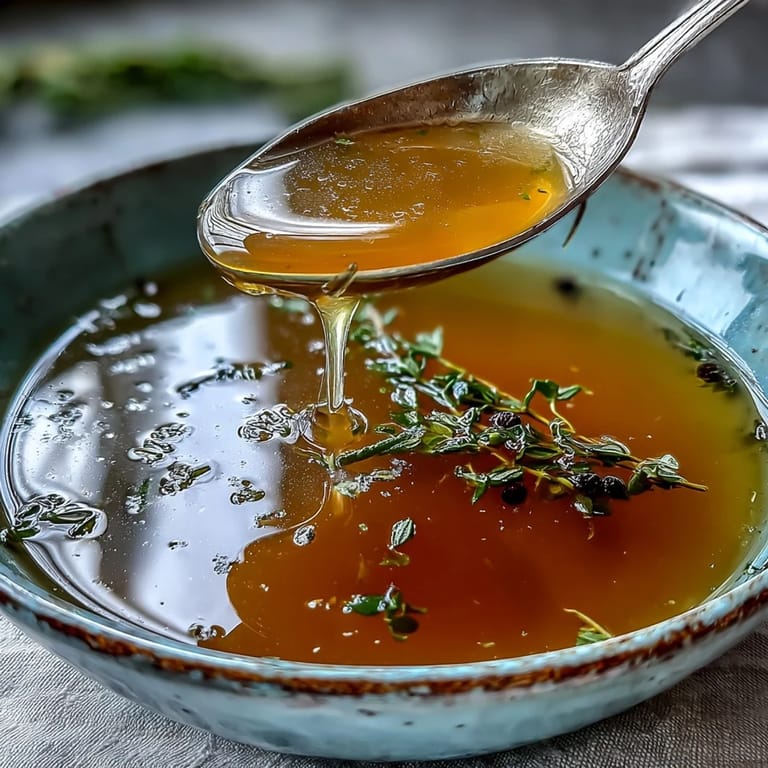
Save Making your own vegetable broth from scraps is a rewarding way to transform kitchen leftovers into a nourishing, liquid-gold base for your cooking. This aromatic broth is simple to prepare and offers a fresh, clean flavor that is far superior to store-bought alternatives.
Save Whether you keep a bag of trimmings in your freezer or collect them as you prep your nightly meals, this recipe ensures that every carrot peel and onion skin contributes to a rich, aromatic stock.
Ingredients
Tired of Takeout? 🥡
Get 10 meals you can make faster than delivery arrives. Seriously.
One email. No spam. Unsubscribe anytime.
- 4 cups assorted vegetable trimmings (carrot peels, onion skins, celery ends, leek tops, mushroom stems, parsley stems, garlic skins, etc.)
- 1 bay leaf
- 5–7 black peppercorns
- 2 cloves garlic (crushed, optional)
- 1 teaspoon salt (optional, adjust to taste)
- 1 sprig fresh thyme or 1/2 teaspoon dried thyme (optional)
- 8 cups (2 liters) cold water
Instructions
- Step 1
- Collect clean, fresh vegetable scraps in a large bowl. Avoid using potato peels, brassicas (like broccoli, cauliflower, cabbage), or overly starchy/sweet vegetables, as they may add bitterness or cloudiness.
- Step 2
- Place the vegetable scraps, bay leaf, peppercorns, garlic, salt, and thyme in a large stockpot.
- Step 3
- Add the cold water, ensuring all scraps are submerged.
- Step 4
- Bring to a boil over medium-high heat, then reduce to a gentle simmer.
- Step 5
- Simmer uncovered for 45–60 minutes, occasionally skimming off any foam.
- Step 6
- Taste and adjust seasoning if needed.
- Step 7
- Strain the broth through a fine-mesh sieve or cheesecloth into a clean container. Discard the solids.
- Step 8
- Let the broth cool, then store in airtight containers. Refrigerate for up to 5 days or freeze for up to 3 months.
Zusatztipps für die Zubereitung
For a richer flavor, roast the vegetable scraps in the oven at 200°C (400°F) for 20 minutes before simmering. Be mindful of the salt content; avoid adding too much if you intend to use the broth as a base for other recipes that will be seasoned later.
Varianten und Anpassungen
To increase the umami profile of your broth, consider adding a small piece of kombu or a dried mushroom. You can also vary the herbs based on what is available in your pantry or fridge.
Serviervorschläge
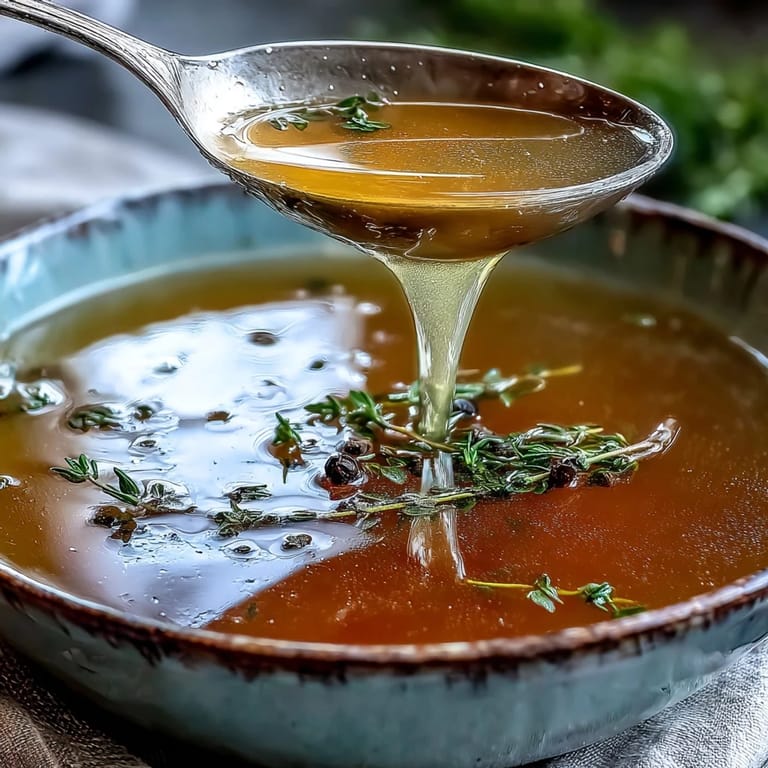
This versatile broth serves as an excellent base for hearty soups, silky risottos, and flavorful grains. It can also be enjoyed on its own as a warm, nourishing drink.
 Save
Save Mastering this simple technique not only elevates your cooking but also honors a zero-waste philosophy in the kitchen, providing you with a nutritious and delicious staple year-round.
Recipe Q&A Section
- → Which vegetable scraps work best?
Carrot peels, onion skins, celery ends, leek tops, mushroom stems, and parsley stems create excellent depth. Avoid potato peels, brassicas (broccoli, cauliflower, cabbage), and overly starchy or sweet vegetables, as they can introduce bitterness or cloudiness.
- → How long does the broth stay fresh?
Properly stored in airtight containers, the broth keeps refrigerated for up to 5 days. For longer storage, freeze for up to 3 months without losing flavor or quality.
- → Can I enhance the flavor?
Roast vegetable scraps at 200°C (400°F) for 20 minutes before simmering for deeper, caramelized notes. Kombu seaweed or dried mushrooms add umami richness.
- → Should I salt during cooking?
Keep salt minimal or optional since this serves as a base for other dishes. Adjust seasoning when using in final preparations to avoid over-salting.
- → What makes this zero-waste?
Instead of discarding vegetable trimmings, you extract every bit of nutrition and flavor. One batch yields approximately 2 liters of versatile cooking liquid from scraps that would otherwise be composted.
- → Is straining necessary?
A fine-mesh sieve or cheesecloth removes all solids, ensuring a clear, smooth liquid. This step is essential for professional texture and easy incorporation into other dishes.