 Save
Save My first okonomiyaki experience happened on a humid Tokyo side street where a vendor flipped these pillowy pancakes with the confidence of someone who'd done it ten thousand times. I watched the bonito flakes dance from the residual heat, mesmerized, and decided right then I needed to master this at home. What started as curiosity became an obsession, and now these savory cabbage pancakes are my go-to when I want to impress without exhausting myself. The magic isn't in complexity—it's in understanding how a simple batter transforms into something deeply satisfying.
I made these for friends who were skeptical about savory pancakes, and watching their faces change after that first bite was worth every minute of prep. One friend asked if I'd somehow found the original Tokyo vendor and smuggled her into my kitchen. That moment crystallized why I love cooking from other cultures—it's a small way of bridging distance and creating something shared that feels a little bit special.
Ingredients
- All-purpose flour: This is your structural foundation; don't skip it or substitute with cake flour, which will make the pancakes too tender to flip.
- Dashi stock: If you can find it, use real dashi for authentic depth—it's the quiet backbone that makes these taste nothing like American pancakes.
- Eggs: These bind everything together while creating a slightly custardy texture inside; use room temperature eggs for better mixing.
- Salt and baking powder: A small amount of each lifts the batter without making it cake-like or overly puffy.
- Green cabbage: The star ingredient, and you want it finely shredded so it softens evenly during cooking without making the batter soggy.
- Green onions, carrot, and bean sprouts: These add freshness and texture; don't skip them even if you think you will.
- Bacon or pork belly: Optional but genuinely transformative—the rendered fat flavors everything around it.
- Okonomiyaki sauce: It's slightly sweet and deeply savory; bottled versions from Japanese markets taste closest to the real thing, but you can absolutely make your own.
- Japanese mayonnaise: The difference between this and regular mayo is real and worth seeking out—it's richer and slightly sweeter.
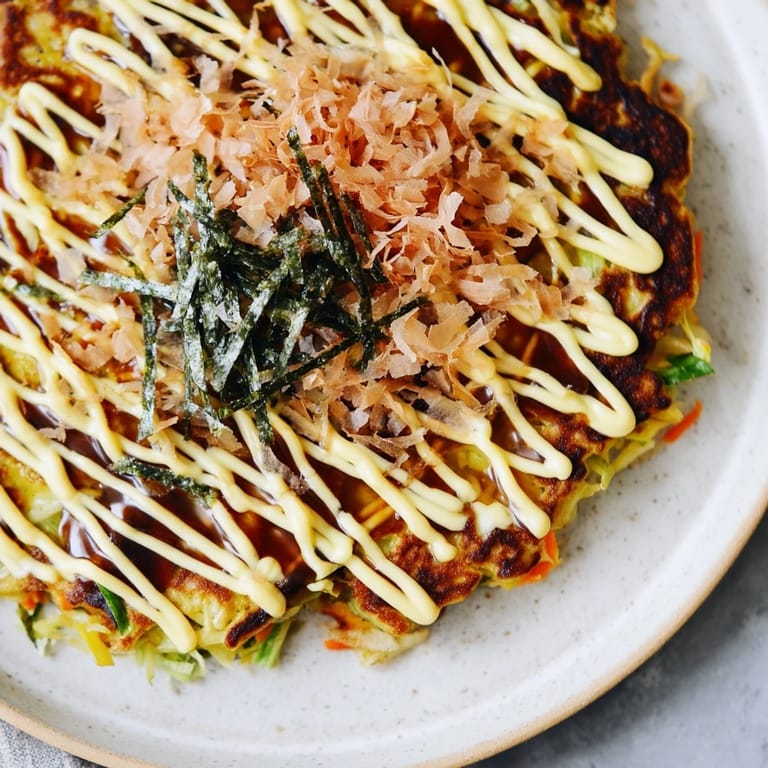
- Bonito flakes: These aren't just garnish; they flutter from the heat and infuse the whole pancake with umami.
- Aonori and pickled ginger: Finishing touches that add color, aroma, and brightness that cuts through the richness.
Tired of Takeout? 🥡
Get 10 meals you can make faster than delivery arrives. Seriously.
One email. No spam. Unsubscribe anytime.
Instructions
- Mix Your Batter Base:
- Whisk flour, dashi, eggs, salt, and baking powder until smooth and lump-free. The mixture should look like thick pancake batter, not thin crepe batter, and that's exactly what you want.
- Fold in the Vegetables:
- Add cabbage, green onions, carrot, bean sprouts, and shrimp if using, stirring gently until everything is coated. The mixture will look loose but becomes cohesive once it hits the hot pan.
- Heat Your Pan:
- Use a nonstick skillet or griddle on medium heat and brush lightly with oil. If your pan is too hot, the outside burns before the inside cooks through; too cool, and they become dense.
- Shape and Cook the First Side:
- Pour about a quarter of the batter onto the hot surface and gently shape into a round pancake roughly half an inch thick. If using protein, lay bacon or pork belly halves across the top now, pressing them in slightly.
- Achieve Golden Color:
- Cook undisturbed for four to five minutes until the bottom turns golden brown and smells toasted. You'll know it's ready when you can slide a spatula underneath without the pancake tearing.
- Flip with Confidence:
- Use a wide spatula and flip decisively in one smooth motion—hesitation is the enemy here. Cook the second side for another four to five minutes until the interior feels set when you press it gently.
- Repeat and Stack:
- Transfer finished pancakes to a plate and repeat with remaining batter. You'll get better with each one as you develop a feel for timing.
- Finish with Toppings:
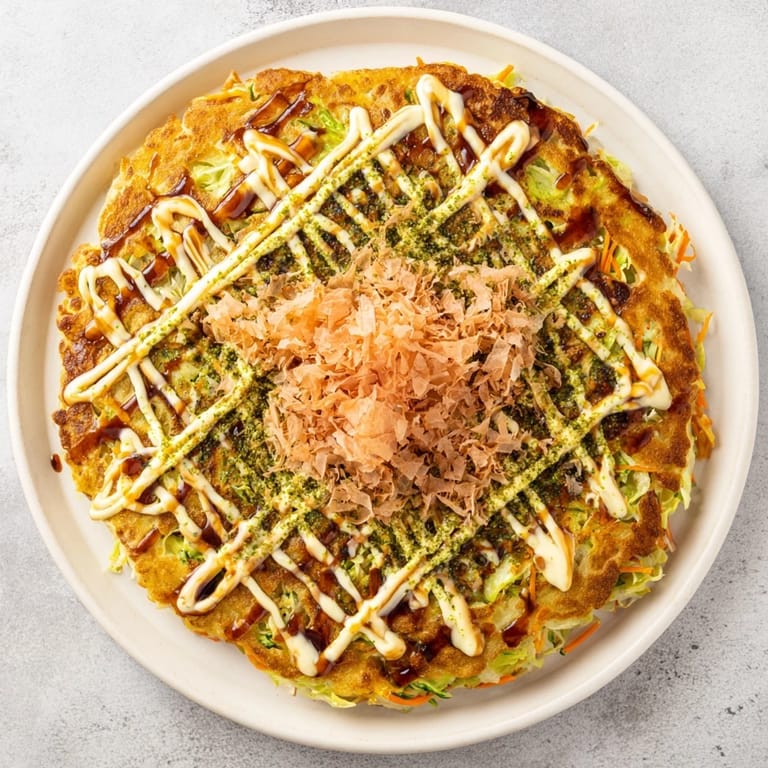
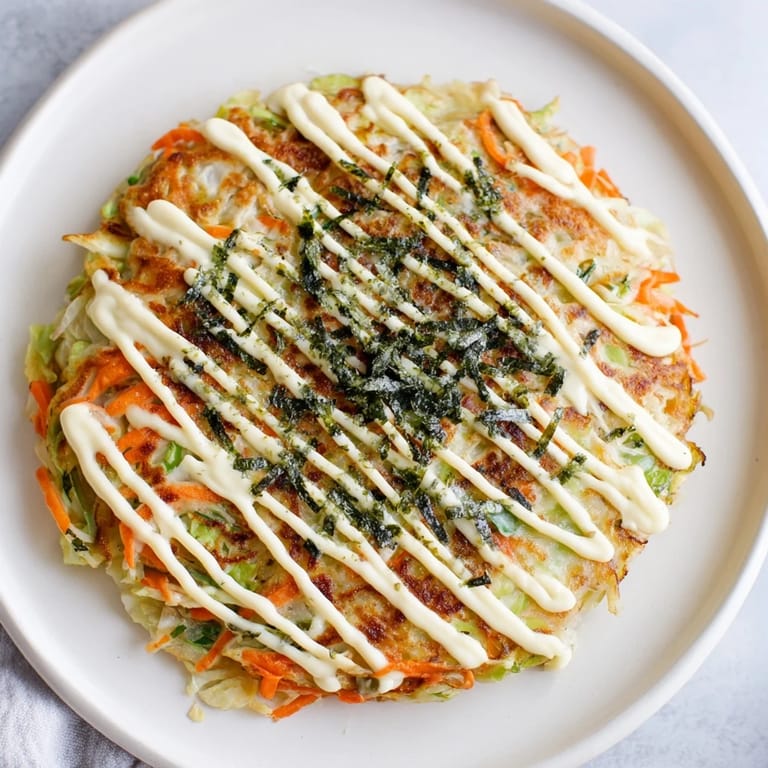
- Drizzle okonomiyaki sauce and mayonnaise in a crisscross pattern over each warm pancake. Shower with bonito flakes, aonori, and pickled ginger while the pancake is still steaming so everything adheres beautifully.
 Save
Save There's a moment when a perfectly flipped okonomiyaki lands back in the pan with just the right sound—a soft sizzle that means you nailed it—and you realize why Japanese street vendors take such quiet pride in this dish. It's comfort food elevated not through fancy ingredients but through technique and respect for balance.
Choosing Your Proteins Wisely
The beauty of okonomiyaki is that it embraces whatever proteins you have on hand, but timing matters differently for each one. Bacon and pork belly need to be laid on top so they finish cooking as the pancake does, creating crispy edges that contrast beautifully with the soft interior. Shrimp should be chopped small and folded into the batter directly so it's distributed evenly; larger pieces cook through unevenly and can become rubbery. I've experimented with scallops, squid, and even leftover roasted chicken, and honestly, the vegetarian versions are equally satisfying if you load up on the umami from the sauce and toppings.
Sauce and Topping Strategy
The okonomiyaki sauce is tart and slightly sweet in a way that prevents these from tasting one-dimensional, and the crisscross drizzle isn't just decorative—it ensures every bite has flavor. Japanese mayonnaise is noticeably different from American mayo because it's made with just yolk and contains a touch of sugar, which creates a richer mouthfeel. The bonito flakes are the final magic touch; their slight fish-forward flavor somehow makes everything taste more like itself, not fishier. If you can't find authentic versions, you can substitute with a homemade sauce (mix two parts ketchup, one part Worcestershire, and a splash of soy sauce), but try to find real bonito flakes at least—they're the ingredient that turns a good pancake into a memorable one.
Troubleshooting and Variations
If your pancakes fall apart when you flip, your batter may be too loose or you flipped too early—wait for that golden crust to form completely, it's your insurance policy. Too many wet ingredients like excess shrimp or fresh mushrooms will introduce steam that breaks down the structure, so account for moisture when adding mix-ins. I've found that adding corn, cheese, or kimchi creates completely different but equally delicious versions, and the base technique stays exactly the same no matter what direction you take it.
- For a vegetarian version, simply omit the shrimp and bacon and let the okonomiyaki sauce and aonori carry the umami.
- Make-ahead tip: You can prepare the batter mixture the morning of but don't add the cabbage until you're ready to cook, or it becomes watery.
- Leftover okonomiyaki reheats beautifully in a skillet over low heat—better than cold, and the sauce won't slide right off like it might in a microwave.
 Save
Save These okonomiyaki have become my answer to the question of what to cook when I want something that tastes a little bit adventurous but doesn't demand hours of labor. They're proof that the most satisfying foods often come from combining simple ingredients with a technique worth learning well.
Recipe Q&A Section
- → What does okonomiyaki taste like?
Okonomiyaki has a savory, umami-rich flavor with a fluffy yet slightly crispy texture. The cabbage adds freshness and crunch, while the toppings provide tangy, sweet, and smoky notes that complement the pancake perfectly.
- → Can I make okonomiyaki without dashi stock?
Yes, you can substitute dashi with plain water or vegetable broth. While dashi adds authentic umami depth, the dish will still be delicious with the flavorful toppings and fillings.
- → What can I use instead of okonomiyaki sauce?
Mix together Worcestershire sauce, ketchup, and soy sauce in equal parts for a homemade alternative. You can also use tonkatsu sauce or even hoisin sauce as substitutes.
- → How do I flip okonomiyaki without breaking it?
Use a large, wide spatula and flip confidently in one smooth motion. Make sure the first side is well-cooked and golden before flipping, as this creates structure that holds the pancake together.
- → Can I prepare okonomiyaki ahead of time?
The batter can be prepared a few hours ahead and refrigerated. However, okonomiyaki is best cooked fresh and served immediately, as the texture and toppings are most enjoyable when hot off the griddle.
- → What proteins work best in okonomiyaki?
Traditional options include pork belly, bacon, or shrimp. You can also use squid, octopus, or keep it vegetarian with mushrooms and extra vegetables. The key is choosing ingredients that complement the cabbage base.