 Save
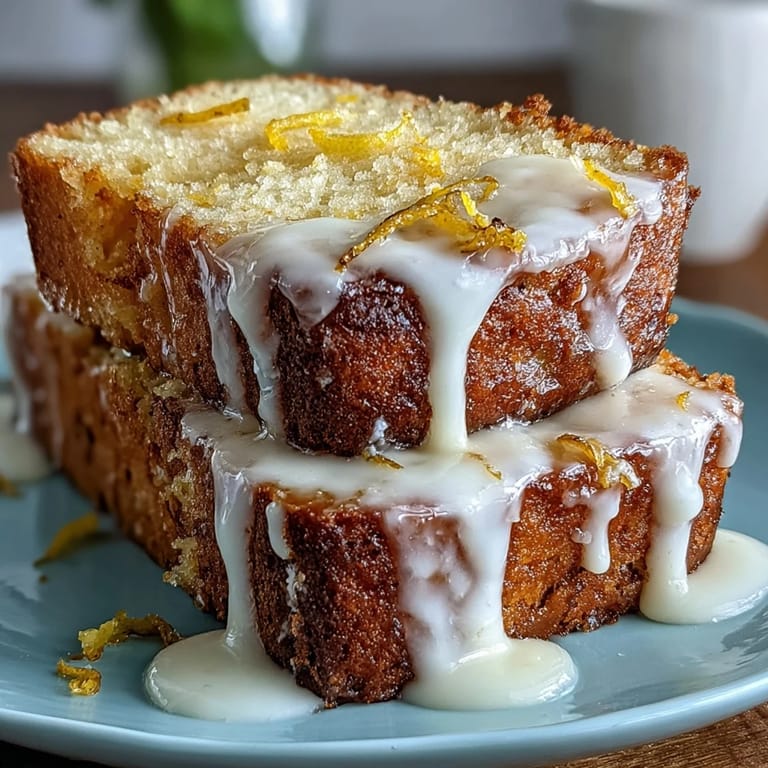
Save There's something about the smell of lemon zest hitting a warm mixing bowl that makes you feel like spring arrived early, even if it's still grey outside. My neighbor brought over a slice of her lemon drizzle cake one Tuesday afternoon, and I remember standing in my kitchen with crumbs on my fingers, realizing I'd been eating it without properly tasting it—just inhaling it whole because it was that good. The cake was impossibly moist, bright without being sharp, and that glaze soaked into warm sponge like it was always meant to be there. I asked for her recipe the next day, and what she handed me was basically permission to stop buying sad supermarket cakes forever.
I made this for my book club once, and honestly it was a strategic move—lemon cake is hard to mess up, and I needed something that looked effortless but tasted like I'd been planning it for days. What I didn't expect was watching four different people lean over the counter to photograph their slice before eating it, or hearing someone mutter 'why doesn't my kitchen smell like this' into their napkin. That's when I realized this cake had crossed from recipe to weapon of kindness.
Ingredients
- Unsalted butter, softened (200 g): Room temperature butter creams properly and builds air into the cake, so don't skip the softening step—it actually makes a difference you can taste.
- Caster sugar (200 g): Finer than regular sugar, it dissolves faster and keeps the crumb delicate rather than gritty.
- Large eggs, room temperature (3): Cold eggs won't emulsify smoothly, so let them sit out while you prep; this is worth the five minutes.
- Finely grated lemon zest (1 tbsp from 2 lemons): This is where the personality lives—don't use bottled zest, and grate only the yellow part because the white pith tastes bitter.
- Self-raising flour (200 g): Already has leavening built in, which keeps this cake foolproof.
- Baking powder (1/2 tsp): Extra lift to ensure the cake rises evenly without deflating.
- Salt (1/4 tsp): A tiny amount makes lemon sing by balancing sweetness.
- Whole milk (3 tbsp): Keeps the crumb tender and prevents the cake from becoming dense or dry.
- Freshly squeezed lemon juice (2 tbsp for cake, 3 tbsp for glaze): Bottled juice tastes flat; fresh juice is the whole point, so squeeze it yourself.
- Icing sugar (80 g): For the glaze; it dissolves into a pourable consistency faster than granulated sugar.
Tired of Takeout? 🥡
Get 10 meals you can make faster than delivery arrives. Seriously.
One email. No spam. Unsubscribe anytime.
Instructions
- Get your oven ready and prepare the tin:
- Preheat to 180°C (350°F) and grease a 900g loaf tin generously, then line it with baking parchment—this keeps the edges from catching and makes turning out the cake foolproof. Take a breath; the hardest part is done.
- Cream the butter and sugar:
- Beat softened butter with caster sugar for about two minutes until it looks pale, fluffy, and almost cloud-like. You'll know it's right when you lift the beaters and soft peaks form; if it still looks grainy, keep going because this step builds the structure of your cake.
- Add the eggs one at a time:
- Crack one egg in, beat until it's fully incorporated and the mixture looks smooth again, then repeat with the next two eggs. If the mixture looks split or curdled, don't panic—add a tablespoon of flour and it'll come back together.
- Stir in the lemon zest:
- Mix the finely grated zest into the batter so the bright yellow specks are distributed evenly. This is worth doing by hand so you don't lose any of those little flavor bombs.
- Fold in the flour and baking powder:
- Sift the flour, baking powder, and salt together, then fold them gently into the wet mixture using a spatula—this keeps the cake light by not overdeveloping the gluten. Stop folding as soon as you don't see white streaks.
- Mix in the milk and lemon juice:
- Stir the milk and lemon juice together, then fold into the batter until everything is smooth and the batter has a thick, glossy consistency. The batter should drop lazily from the spatula, not be thick like dough.
- Pour into the tin and bake:
- Transfer the batter to your lined loaf tin, smooth the top with a spatula, and slide it into the oven. Set a timer for 45 minutes and don't open the door to peek until at least 40 minutes have passed—baking is all about patience.
- Make the lemon drizzle while it bakes:
- Whisk icing sugar and freshly squeezed lemon juice together until you get a thick but pourable consistency, like honey. If it's too thick, add lemon juice one teaspoon at a time; if it's too thin, add more icing sugar.
- Test for doneness and cool slightly:
- Insert a skewer into the center of the cake—it should come out clean or with just a few moist crumbs clinging to it. Leave the cake in the tin for 10 minutes to cool slightly so it holds together when you poke holes in it.
- Poke, drizzle, and finish cooling:
- While the cake is still warm, use a skewer to poke holes all over the top, then slowly drizzle the glaze over so it soaks in and creates those pockets of intense flavor. Let it cool completely in the tin before turning out—this takes about an hour, but it's worth waiting for the glaze to set.
 Save
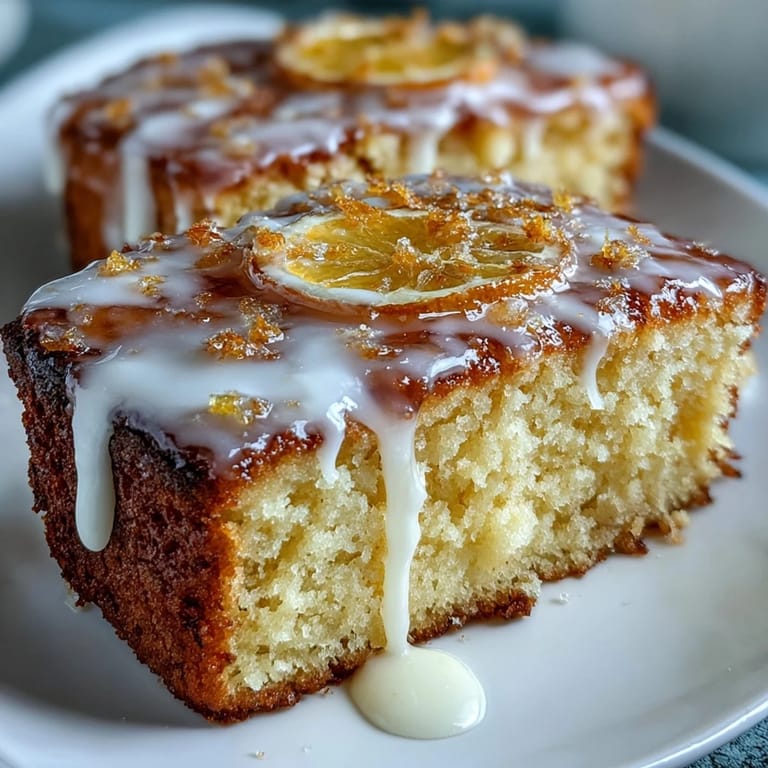
Save I once brought this cake to a potluck where someone had also brought a lemon cake, and mine disappeared while theirs sat there looking lonelier than a cake should. Not to brag, but it wasn't luck—it was the glaze and the patience to let it soak in properly. That's the moment I stopped thinking of this as a recipe and started thinking of it as a reputation builder.
Why the Glaze Changes Everything
The drizzle isn't just decoration; it's the whole point. When you poke holes into warm sponge and slowly pour that lemon glaze over, something magical happens—instead of sitting on top like icing, it seeps down into the cake, creating little pockets of intense flavor that hit you with brightness on every bite. I once skipped the holes and just drizzled on top, thinking it would be fine, and I learned the hard way that those holes are non-negotiable. The cake itself is lovely, but the glaze transforms it into something that feels intentional and special.
Timing and Temperature Matter
Baking is the one place in cooking where precision actually matters, and this cake proved it to me. I used to think room temperature ingredients were a myth that food bloggers invented to make baking sound more complicated, until I made this cake with cold eggs straight from the fridge and ended with a dense, tight crumb that tasted fine but felt wrong. The difference between good and great was literally five minutes of letting eggs and butter sit on the counter. Now I'm that person who pulls ingredients out early, and I'm okay with it because the cake knows the difference.
Variations and Serving Ideas
This cake is honestly beautiful on its own, but it also plays well with others. I've added poppy seeds for texture, made a limoncello version for grown-up gatherings, and once served it with fresh raspberries and whipped cream when I wanted to feel fancy. The base is forgiving enough that you can play with it while the lemon flavor stays the star, which is why I keep coming back to it season after season.
- Poppy seeds add a subtle crunch and nutty depth that makes the lemon feel more complex.
- A limoncello glaze transforms this into an after-dinner cake that feels sophisticated without requiring any new techniques.
- Serve with berries and cream, or honestly, just eat it plain with a cup of tea because sometimes simple is actually the smartest choice.
 Save
Save This cake has become the recipe I reach for when I want to feel like a proper baker without spending all day in the kitchen. It tastes like someone spent hours on it, but it only takes an hour, which might be the best-kept secret in home baking.
Recipe Q&A Section
- → What makes the loaf moist and light?
The combination of softened butter, eggs, and milk in the batter helps achieve a moist, tender crumb.
- → How is the lemon flavor incorporated?
Lemon zest and freshly squeezed lemon juice are folded into the batter and the glaze for a bright, zesty taste.
- → Can I add texture to the loaf?
Adding a handful of poppy seeds to the batter provides a pleasing crunch and extra texture.
- → How is the lemon drizzle applied?
After baking, poke small holes in the warm loaf with a skewer and slowly drizzle the lemon glaze to soak into the cake.
- → Are there alternative options for the drizzle?
Substitute half the lemon juice in the glaze with limoncello for a subtle adult twist.