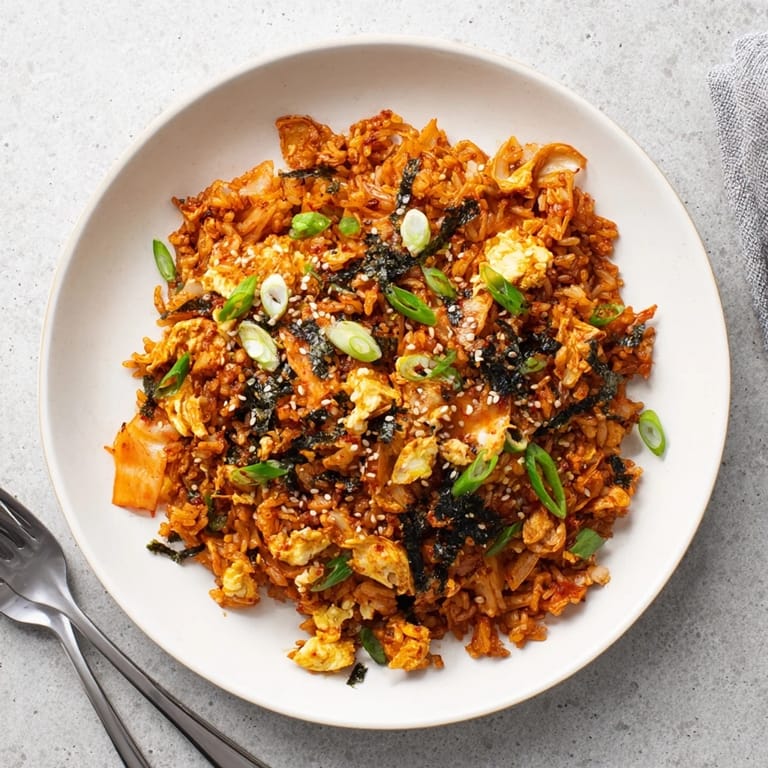
 Save
Save There's something about a half-full container of kimchi at midnight that makes you feel resourceful instead of like you're making leftovers work. My roommate brought home a jar from an H Mart run, and three days later when I was staring at congealed rice and an almost-empty fridge, I remembered my grandmother mentioning that good food is just good ingredients having a conversation. Twenty minutes later, the kitchen smelled like roasted chili and sesame, and suddenly I understood why she kept a wok and a jar of gochujang in permanent rotation.
I made this for a friend who'd been skeptical about Korean food, convinced it was all too spicy or too adventurous for her taste. She took one bite, went quiet for a moment, and then asked if I could write down the recipe because she wanted to make it for her kids. That's when I realized this dish bridges something—it's bold enough to be exciting but familiar enough to feel safe, a little bit dangerous but never reckless.
Ingredients
- Cold cooked white rice (2 cups, preferably day-old): Day-old rice is non-negotiable here because the grains separate cleanly instead of clumping into paste; if you only have fresh rice, spread it on a plate to cool faster and it'll do in a pinch.
- Napa cabbage kimchi, chopped (1 cup plus 2 tbsp juice): The soul of this dish, tangy and alive; use the juice too, it's liquid gold that brings everything together.
- Large eggs (2): They scramble into pillowy clouds that catch all the sauce and spice.
- Onion, finely diced (1/2 small): The aromatics start here, sweating out into something mellow and foundational.
- Green onions, sliced (2, parts separated): White parts go into the pan early for depth, green parts scatter on top at the end for freshness and a little crunch.
- Carrot, finely diced (1 small, optional): Adds sweetness and texture; leave it out if you're in a rush, include it if you want the dish to feel more complete.
- Gochujang (2 tbsp): This chili paste is thick, funky, and essential; it's what transforms fried rice into something with personality.
- Soy sauce (1 tbsp): The backbone of savory depth, measured carefully so salt doesn't overshadow the chili's complexity.
- Toasted sesame oil (1 tsp): A drizzle at the end that smells like toasted hazelnuts and completeness; don't skip it.
- Vegetable oil (1 tbsp): High heat needs neutral oil without character, so reserve the sesame for finishing.
- Sugar (1 tsp, optional): A tiny compromise that softens gochujang's fermented edge if your kimchi is particularly funky.
Tired of Takeout? 🥡
Get 10 meals you can make faster than delivery arrives. Seriously.
One email. No spam. Unsubscribe anytime.
Instructions
- Get your pan hot and start with the aromatics:
- Heat vegetable oil over medium-high until it moves like water across the pan. Add diced onion, white parts of green onion, and carrot if using, stirring until the onion turns translucent and the kitchen fills with that sweet, cooked onion smell—about 2 to 3 minutes.
- Let the kimchi announce itself:
- Add chopped kimchi and keep the heat up, stirring occasionally so the edges catch and darken slightly, releasing all that tangy, complex fragrance. This takes 2 to 3 minutes and feels like the dish is coming alive.
- Build the flavor base:
- Stir in gochujang, soy sauce, and sugar if using, coating everything evenly so the chili paste dissolves into the oil rather than sitting in stubborn clumps. The color should deepen and smell like something alive and fermented.
- Make space for the eggs:
- Push the kimchi mixture to the side of the pan, creating a bare section where you'll crack both eggs. Let them set for 20 seconds, then scramble gently with your spatula until they're soft and just cooked through, about 1 minute.
- Marry it all with rice:
- Add cold rice in handfuls, breaking up clumps with your spatula as you fold everything together; it should take a minute or two for the rice to absorb the heat and the sauce. Pour in that reserved kimchi juice, stirring constantly for another 3 to 4 minutes until every grain is warm and coated.
- Finish with heat and fragrance:
- Drizzle sesame oil across the top and fold in the green parts of green onion along with any optional protein, stirring just until combined so the green onion stays bright and the sesame oil distributes evenly.
- Taste and trust your instincts:
- Let a small spoonful cool for a second, taste it, and adjust salt or chili heat if needed; remember that gochujang is salty and funky, so sometimes less is more.
- Plate and celebrate:
- Divide between bowls while everything is still steaming, garnish with sesame seeds, extra green onion, and seaweed strips if you have them, then eat immediately while the rice is hot and the textures are distinct.
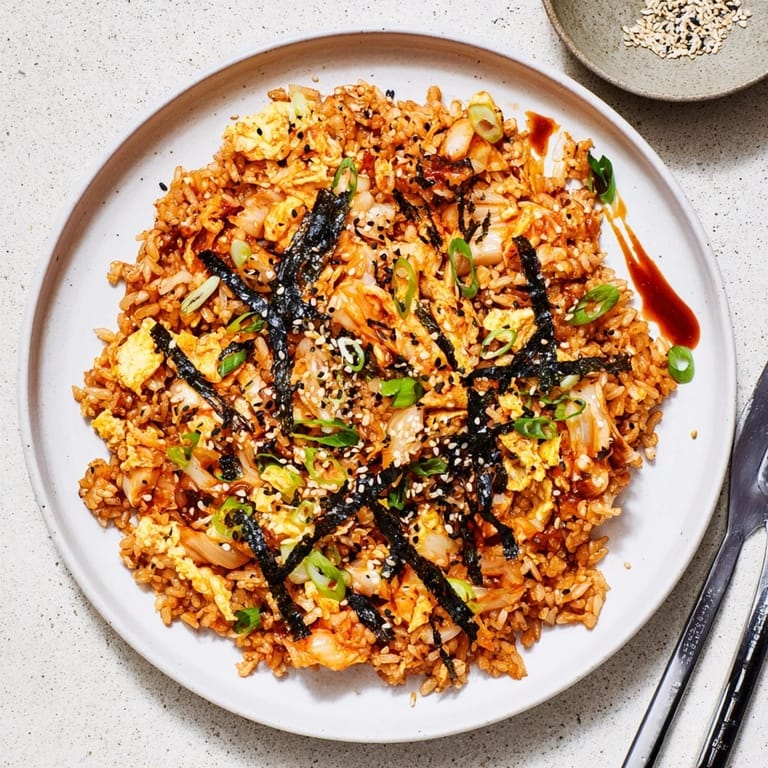 Save
Save A few months after that first time, I was having a bad day—the kind where everything feels like it's unraveling—and I made this dish almost without thinking. My hands knew what to do, my nose recognized every smell, and somewhere between the first bite and the second bowl, the day felt smaller and more manageable. There's something quietly powerful about cooking something you've made enough times that it becomes muscle memory instead of following orders.
When to Use Leftover Rice
This recipe is actually more forgiving when you've got rice that's been in the fridge for a day or two. The starch has settled and tightened, so each grain stays separate instead of absorbing every drop of liquid and melting into the pan. I learned this the hard way on a morning when I tried to make this with rice I'd just cooked, and ended up with something between soup and paste that still tasted good but taught me a valuable lesson about timing and patience.
The Flexibility Game
This dish is genuinely flexible without becoming unrecognizable. If you don't have carrots, add diced bell pepper or mushrooms. If eggs aren't your thing, crumble firm tofu into the pan instead, or skip the protein entirely. If gochujang feels too intense, you can use a milder chili sauce or even regular hot sauce, though the flavor profile shifts slightly. The core of the dish—rice, kimchi, heat, and a little umami—holds everything together, so you're free to improvise within reason.
Small Moments That Make a Difference
The details matter here in ways that don't always make sense until you've lived through them. Separating the green and white parts of the green onion means one part gets cooked down into the rice where it sweetens and mellows, while the other stays raw and bright on top, giving you two distinct flavors in one bite. The juice from the kimchi jar isn't just liquid—it's concentrated flavor and acid that wakes up the entire dish. Toasted sesame oil drizzled at the very end smells like something precious instead of disappearing into the heat.
- Always separate your green onion into white and green parts; they do different jobs and together they're better than either one alone.
- Save that kimchi juice because it's the bridge between all the components, bringing the acid and fermented funk that ties everything together.
- Let the gochujang paste slightly caramelize in the oil before adding liquid, so it develops depth instead of just dissolving into flavored paste.
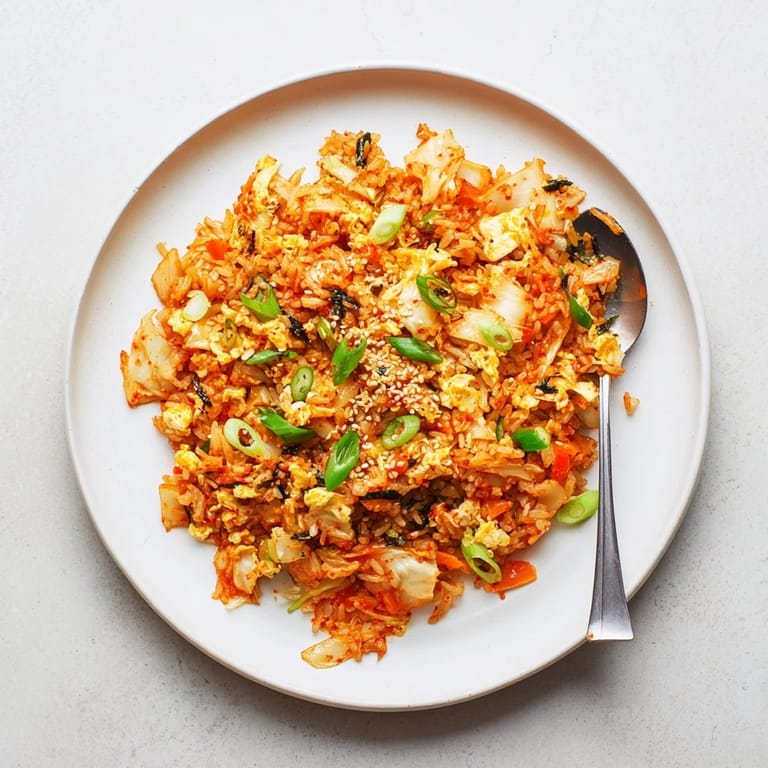 Save
Save This dish has become my go-to when I want to feel connected to cooking without spending hours in the kitchen, when I want flavors that feel adventurous but ingredients that are simple. It reminds me that good meals don't need to be complicated or precious—they just need to be made with a little bit of attention and the willingness to trust that spice and funk and heat are not something to be afraid of.
Recipe Q&A Section
- → Why is day-old rice better for fried rice?
Day-old rice is drier and firmer, preventing mushy results. Fresh rice contains too much moisture and tends to clump together when stir-fried, while refrigerated rice separates easily and achieves the ideal texture.
- → Can I make this without gochujang?
Gochujang provides essential depth and heat, but you can substitute with a mix of sriracha and miso paste, or use Korean chili flakes (gochugaru) with a touch of tomato paste for a similar fermented complexity.
- → How do I prevent the rice from sticking to the pan?
Use a well-heated wok or large skillet with adequate oil, ensure the rice is cold and separated before adding, and stir-fry over medium-high heat with constant motion to prevent sticking and achieve light caramelization.
- → What type of kimchi works best?
Well-fermented napa cabbage kimchi offers the best tangy flavor. Avoid overly fresh kimchi as it lacks depth. The fermentation develops complex umami notes that enhance the overall dish significantly.
- → Can I make this dish vegan?
Yes, omit the eggs and use firm tofu instead. Ensure your kimchi is vegetarian (some contain fish sauce or shrimp paste) and verify that your gochujang doesn't contain animal products.
- → How spicy is this dish?
The heat level is moderate, primarily from gochujang and kimchi. Control spiciness by adjusting gochujang quantity or choosing milder kimchi. Adding sugar helps balance the heat with subtle sweetness.